THE CLASSIC COLLECTION✦An outlaw’s diary: the CommuneCLASSIC FREE BOOKS
An outlaw’s diary: the Commune
Cécile Tormay
THE CLASSIC COLLECTION · 1885
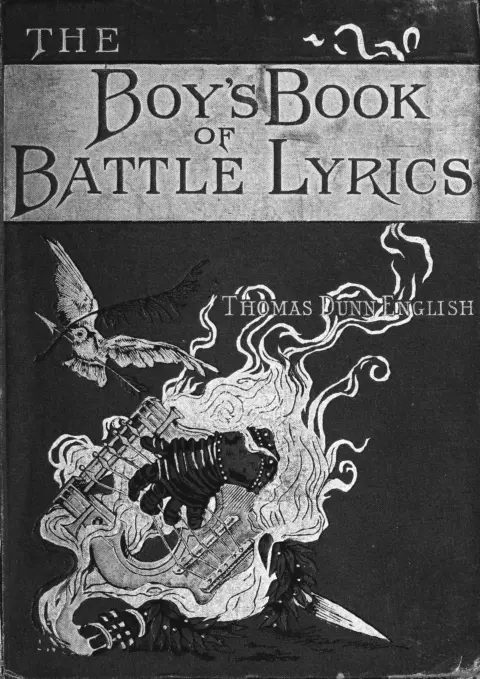
"The Boy’s Book of Battle-Lyrics" by Thos. Dunn English is a collection of verses written in the late 19th century, focusing on significant battles and historical events in the history of the United States from the colonial era up to the outbreak of the sectional war. The text aims to present metrical narratives that highlight the courage and patriotism of those involved in these conflicts, making it an engaging blend of poetry and history. The opening of the collection introduces the author and provides context for the work, outlining his intentions to immortalize notable events through lyrical storytelling. Themes of bravery and loss are prevalent, as demonstrated in accounts from battles such as De Soto's expedition, Bacon's Rebellion, and the Siege of Trenton. The author emphasizes both the valor of the soldiers and the harrowing experiences of those affected by the wars, setting a dramatic tone that underpins the entire collection. The groundwork laid in these verses establishes a sense of reverence for the sacrifices made by soldiers and civilians alike throughout American history.
Introduction adapted from the source catalogue; source summaries may be automatically generated.
Free to read · English · 45,708 words · No account needed
MAKE TIME FOR A GOOD BOOK
On by default. Untick to stop anonymous reading totals. Each page counts after 10 seconds in view. How this works.
Anonymous counting is on unless you have switched it off.
As eastward the shadows were steadily creeping, Fair wives were at spinning, stout husbands at reaping.
Loud chattered the children with no one to hush them; None knew that the thunder was stooping to crush them.
But soon from the forest, the hill, and the dingle, Came footmen and horsemen, in bodies and single.
Wild, painted Cayugas, relentless and fearless, More barbarous Tories, black-hearted and tearless.
To hearth-stone and roof-tree destruction to carry, The cruel M’Donald came down on Schoharie.
No mercy was offered, no quarter was given;
The souls of the victims departed unshriven.
Their requiem only the shrieks of the flying, The yells of the slayers, the groans of the dying.
Too weak in our numbers to venture a sally,
We sat in our fortress and looked on the valley.
We heard the wild uproar, the screaming and yelling, The firing and crashing, of butchery telling.
No tiger imprisoned in iron-bound caging
Felt half of our fury or equalled our raging.
Yet what could we hinder? Revenge was denied us, While ten times our number to battle defied us.
Though wild was our anguish and deep our despairing, With three hundred to fight would be imbecile daring.
But Colonel John Harper, who chafed at the ravage, The pillage and murder, by Tory and savage,
Urged us on to the combat, and angrily showered Hot words on our chief as a cold-blooded coward.
We heard all his raving of anger in sadness;
We never resented, but pitied his madness.
John Harper looked round him, and said he scorned favor, He’d seek for assistance from men who were braver.
He called for his horse, and defied us to stay him, And scoffed at the cowards who dared not obey him.
His foot in the stirrups, he hearkened to no man, Sank spurs to their rowels, and charged through the foeman.
He scattered them fiercely, and, ere they could rally, Away like an arrow he shot through the valley.
He broke through the circle created to bound him; The bullets they showered fell harmlessly round him.
When fair in the saddle, he never was idle; He rode through the darkness, and kept a loose bridle.
On, on through the darkness, till daylight was o’er him, And Albany’s houses rose proudly before him.
We heard the shots rattle, we saw his foes rally, And thought that his life-blood had moistened the valley.
Meanwhile in the fortress, through all the night dreary, We watched till the sunrise, disheartened and weary.
Noon came in its splendor; we saw them preparing To storm our rude ramparts, and laughed at their daring.
Your reading position is saved on this browser. Take it to another device with a library code. Reading pages adapt to text, rather than matching a printed edition.
BEHIND THE BOOK
This eBook is for the use of anyone anywhere in the United States and most other parts of the world at no cost and with almost no restrictions whatsoever. You may copy it, give it away or re-use it under the terms of the Project Gutenberg License included with this eBook or online at www.gutenberg.org. If you are not located in the United States, you will have to check the laws of the country where you are located before using this eBook. Read the source licence.
The original source file, including credits and licence, is retained by this library. Request an original-format copy at no charge. Please include the book title and Project Gutenberg identifier #70415.
KEEP YOUR CURIOSITY GOING
Cécile Tormay

Moritz Busch
John L. Ransom
Frances Wright
Cécile Tormay

Mabel Potter Daggett