THE CLASSIC COLLECTION✦The ocean wireless boys of the iceberg patrolCLASSIC FREE BOOKS
The ocean wireless boys of the iceberg patrol
John Henry Goldfrap
THE CLASSIC COLLECTION · 1915
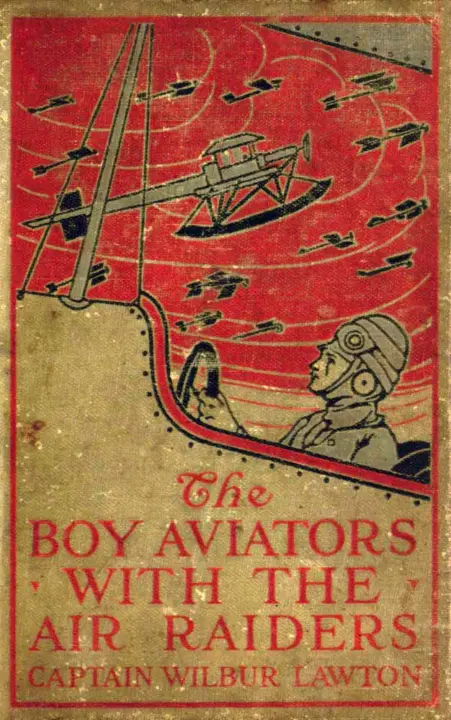
"The Boy Aviators with the Air Raiders: A Story of the Great World War" by Captain Wilbur Lawton is a historical fiction novel likely written in the early 20th century. The story focuses on a group of young aviators, particularly two brothers named Frank and Harry, as well as their friend Pudge, who navigate the challenges and dangers of World War I aviation while trying to protect their innovative seaplane from enemy forces. At the start of the narrative, the boys are in Dunkirk, preparing for an important flight that could demonstrate their seaplane's capabilities to the French government. The opening sets up a tense atmosphere as the boys discuss potential German spies lurking nearby, suggesting that danger is imminent. Each character is well-established, with Frank emerging as the determined leader, Pudge as the comic relief and good-natured friend, and Billy providing a practical perspective; they discover evidence of espionage when suspicious wax is found on their padlock. As the boys ready themselves to safeguard their plane and conduct their test flight, they become acutely aware that they are playing a significant role in the larger conflict of the war, hinting at both adventure and peril that awaits them.
Introduction adapted from the source catalogue; source summaries may be automatically generated.
Free to read · English · 57,569 words · No account needed
MAKE TIME FOR A GOOD BOOK
On by default. Untick to stop anonymous reading totals. Each page counts after 10 seconds in view. How this works.
Anonymous counting is on unless you have switched it off.
"On second thought," Frank ventured to say, "I don't believe that could have been a bomb. It didn't make near enough noise, though perhaps we thought it pretty loud on being waked up so suddenly."
"Then what could it have been, Frank?" demanded Billy.
"I've got an idea one of the guards may have fired at some prowler," replied the other; "in a minute or so I'll take the lantern and go out to see."
He insisted on going alone, and the other two remained back of the barred door awaiting his report. Frank was gone about twenty minutes when his signal was heard on the other side of the door. Upon being admitted he at once eased their fears.
"After all, it was the discharge of a gun, just as we guessed," he observed. "One of the guards believed he saw a shadowy figure creeping along. He challenged, and on hearing the bushes shake as the unknown started away, the sentry shot."
"Perhaps, after all, it was a false alarm?" suggested Billy.
"No, it was a prowler, all right," said Frank, "for the sergeant and myself went out to where he told us he had aimed, and we found not only footprints in the dirt, but specks of blood as well, showing that the soldier had winged the spy."
"Tamales and terrapins, but that is thrilling news, Frank!" exclaimed Pudge. "Did you try to follow the trail, and see if the poor fellow was lying around anywhere?"
"It made for the road, and we lost it there," said Frank. "I reckon it was not a very severe wound, for while the man evidently limped he did not lose much blood. Not wanting to be away from the hangar any longer than we could help, the sergeant and myself came back."
"One good thing," remarked Billy, "those chaps will have learned that we are on the job, all right. They'll be careful how they come sneaking around here again, or try to blow up our plant. What time is it now?"
"Just two o'clock," announced Pudge, referring to his nickel watch by the light of the lantern which had not as yet been extinguished.
"Between four and five hours more to put in before day comes 'a-peeping over the hills,'" half sang Billy, as he started to arrange his rude bed again, for in the haste of their turning out, things had been thrown aside rather recklessly.
There was no further alarm that night. Apparently, those who would have given much to have wrecked the hangar with its contents, so as to prevent its being taken over by the French military authorities, feared to again approach the guarded stockade.
Your reading position is saved on this browser. Take it to another device with a library code. Reading pages adapt to text, rather than matching a printed edition.
John Henry Goldfrap
John Henry Goldfrap
John Henry Goldfrap

John Henry Goldfrap
BEHIND THE BOOK
This eBook is for the use of anyone anywhere in the United States and most other parts of the world at no cost and with almost no restrictions whatsoever. You may copy it, give it away or re-use it under the terms of the Project Gutenberg License included with this eBook or online at www.gutenberg.org. If you are not located in the United States, you will have to check the laws of the country where you are located before using this eBook. Read the source licence.
The original source file, including credits and licence, is retained by this library. Request an original-format copy at no charge. Please include the book title and Project Gutenberg identifier #45727.
KEEP YOUR CURIOSITY GOING
Cécile Tormay

Moritz Busch
Coulson Kernahan
John L. Ransom

Maurice Baring
Frances Wright