THE CLASSIC COLLECTION✦Ewing’s LadyCLASSIC FREE BOOKS
Ewing’s Lady
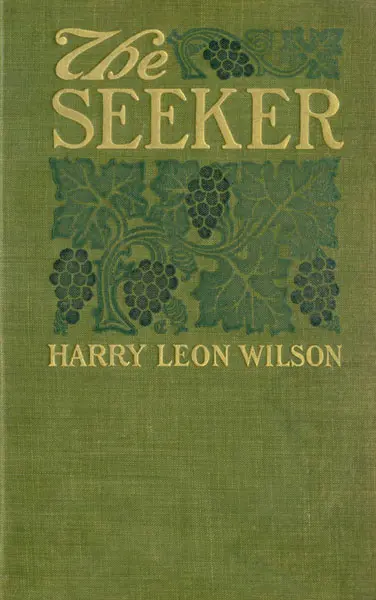
Harry Leon Wilson
THE CLASSIC COLLECTION · 1905
"The Boss of Little Arcady" by Harry Leon Wilson is a novel written in the early 20th century. The story centers around the comically dysfunctional life in the small town of Little Arcady, showcasing the antics of its absurdly unwelcome inhabitant, Colonel J. Rodney Potts, and the townspeople's schemes to rid themselves of him. The opening of the novel introduces us to Colonel Potts, a braggart and obnoxious figure whose presence the townspeople wish to escape. The townsfolk, led by the editor Solon Denney, concoct a humorous plan to convince Potts to leave by flattering him and gifting him money to start anew in a larger town. Through witty commentary and irony, the narrative explores themes of social dynamics, identity, and the absurdities of human behavior as the plot unfolds the unintended consequences of their scheme. The portrayal of the townspeople, with their various personalities and motivations, sets the stage for a lively exploration of community life.
Introduction adapted from the source catalogue; source summaries may be automatically generated.
Free to read · English · 87,472 words · No account needed
MAKE TIME FOR A GOOD BOOK
On by default. Untick to stop anonymous reading totals. Each page counts after 10 seconds in view. How this works.
Anonymous counting is on unless you have switched it off.
"I am glad we left you,"--she had meant to say "that arm," I judge, but there was a break in her voice, a swift movement, and she suddenly said "this arm," with a little shudder in which she could not meet my eyes; for, such as the arm was, she had finished her speech from within it. Close I held her, like a witless moonling, forgetting all resolves, all lessons, all treaties--all but that she was not a dream woman.
"Oh, Little Miss!" was all I could say; and she--"Calvin Blake!" as if it were a phrase of endearment.
"Little Miss, that loss has put me out, but never has it been the
hardship it is now--one arm!"
I had not thought it possible for her to come nearer, but a successful nestling movement was her answer.
"I feel the need of a thousand arms, and yet their strength is--"
"Is in this one." She completed my sentence with her own nestling
emphasis for "this one."
"Can you believe now, Little Miss?"
"Yes--you gave it to me again."
"Can you believe that I--I--"
"That was never hard. I believed that the first evening I saw you."
"A womanish thing to say--I didn't know it myself."
But she laughed to me, laughed still as I brought her face nearer--so near. Only then did her parted lips close tensely in the woman fear of what she read in my eyes. I have reason to believe that she would have mastered this fear, but at that instant Miss Caroline coughed rather alarmingly.
"You should do something for that right away," I said, as we struck ourselves apart. "You let a cough like that run along and you don't know what it may end in." Whereupon, having kissed no one on this occasion, I now kissed Miss Caroline,--without difficulty, I may add.
"I've been meaning to do it for a year," I explained.
"I must remind you that they were far less deliberate in my day," said she, with a delicate hint of reminiscence in her tone. Whereupon she looked searchingly at each of us in turn. Then, with a little gasp, she wept daintily upon my love's shoulder.
I had long suspected that tears were a mere aesthetic refreshment with Miss Caroline. I had never known her weaken to them when there seemed to be far better reasons for it than the present occasion furnished.
"I must take her home," said my love, without speaking.
"Do!" I urged, likewise in silence, but understandably.
"And I must be alone," she called, as they stepped out on to the lawn.
Your reading position is saved on this browser. Take it to another device with a library code. Reading pages adapt to text, rather than matching a printed edition.
Harry Leon Wilson
Harry Leon Wilson
Harry Leon Wilson
Harry Leon Wilson
BEHIND THE BOOK
This eBook is for the use of anyone anywhere in the United States and most other parts of the world at no cost and with almost no restrictions whatsoever. You may copy it, give it away or re-use it under the terms of the Project Gutenberg License included with this eBook or online at www.gutenberg.org. If you are not located in the United States, you will have to check the laws of the country where you are located before using this eBook. Read the source licence.
The original source file, including credits and licence, is retained by this library. Request an original-format copy at no charge. Please include the book title and Project Gutenberg identifier #10358.
KEEP YOUR CURIOSITY GOING
Coulson Kernahan

Maurice Baring
Frances Wright
Cécile Tormay

Frederic Jesup Stimson

W. H. P. (William Henry Pope) Jarvis