THE CLASSIC COLLECTION✦Ewing’s LadyCLASSIC FREE BOOKS
Ewing’s Lady
Harry Leon Wilson
THE CLASSIC COLLECTION · 1905
"The Boss of Little Arcady" by Harry Leon Wilson is a novel written in the early 20th century. The story centers around the comically dysfunctional life in the small town of Little Arcady, showcasing the antics of its absurdly unwelcome inhabitant, Colonel J. Rodney Potts, and the townspeople's schemes to rid themselves of him. The opening of the novel introduces us to Colonel Potts, a braggart and obnoxious figure whose presence the townspeople wish to escape. The townsfolk, led by the editor Solon Denney, concoct a humorous plan to convince Potts to leave by flattering him and gifting him money to start anew in a larger town. Through witty commentary and irony, the narrative explores themes of social dynamics, identity, and the absurdities of human behavior as the plot unfolds the unintended consequences of their scheme. The portrayal of the townspeople, with their various personalities and motivations, sets the stage for a lively exploration of community life.
Introduction adapted from the source catalogue; source summaries may be automatically generated.
Free to read · English · 87,472 words · No account needed
MAKE TIME FOR A GOOD BOOK
On by default. Untick to stop anonymous reading totals. Each page counts after 10 seconds in view. How this works.
Anonymous counting is on unless you have switched it off.
"Soon," said Potts, after the first drink, "ah, too soon, I shall be miles away from your thriving little hamlet,--as pretty a spot, by the way, as God ever made,--seeing none but strange faces, longing for the old hearty hand-clasps, seeking, perhaps, in vain, for one kindly look which--which is now to be observed on every hand. But, friends, Colonel J. Rodney will not forget you. I have rare prospects, but no matter. To this little spot, the fairest in all Nature,--here among your simple, heartfelt faces, where I first got my start,--here my feelings will ever and anon return; for--why should I conceal it?--it is you, my friends, who have made me the man I am."
Here Potts put an arm over the shoulder of Big Joe and urged pleadingly: "Another verse of that sweet old song, boys. I tell you that has the true heart-stuff in it--now--"
They roared out a verse of "Auld Lang Syne," with execrable attempts at part-singing, little Dan Lefferts, a dissolute house-painter, contributing a tenor that was simply maniacal.
Potts ordered more drinks. This done, he leaned heavily upon the bar and burst into tears. The varlets crowded about him with tender, soothing words, while we in the other room anxiously watched them and the clock.
He was overcome, it seemed, by the affection which it now transpired that Little Arcady bore for him. Presently he half dried his tears and drew from an inner pocket of his coat the package of our letters.
With eyes again streaming, in a sob-riven voice, he read them all to the pleased crowd. At the end, he regained control of himself.
"Gentlemen, believe it or not, nothing has touched me like this since I bade farewell to my regiment in '65. You are getting under the heart of Jonas Rodney this time--I can't deny that."
He began on the letters again, selecting the choicest, and not forgetting at intervals to rebuke the bar-tender for alleged inactivity.
At last the clock marked ten-forty, and we heard the welcome rumble of the 'bus wheels. There was a hurried consultation with Amos Deane, the driver. He was to enter the bar in a brisk, businesslike way, seize the bag, and hustle the Colonel out before he had time to reflect. We peered over the screen, knowing the fateful moment was come.
We saw the Colonel resist the attack on his bag and listen with marked astonishment to the assertion of Amos that there was just time to catch the train.
"Time was made for slaves," said Potts.
Your reading position is saved on this browser. Take it to another device with a library code. Reading pages adapt to text, rather than matching a printed edition.
Harry Leon Wilson
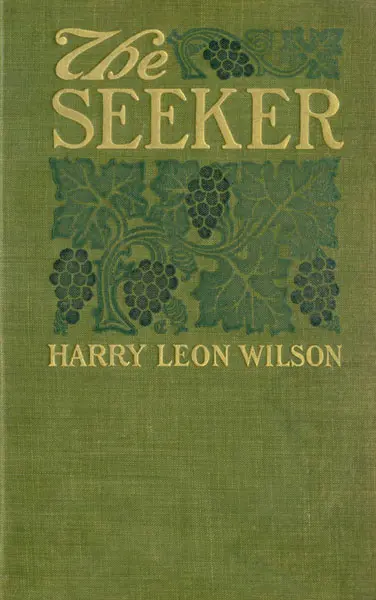
Harry Leon Wilson
Harry Leon Wilson
Harry Leon Wilson
BEHIND THE BOOK
This eBook is for the use of anyone anywhere in the United States and most other parts of the world at no cost and with almost no restrictions whatsoever. You may copy it, give it away or re-use it under the terms of the Project Gutenberg License included with this eBook or online at www.gutenberg.org. If you are not located in the United States, you will have to check the laws of the country where you are located before using this eBook. Read the source licence.
The original source file, including credits and licence, is retained by this library. Request an original-format copy at no charge. Please include the book title and Project Gutenberg identifier #10358.
KEEP YOUR CURIOSITY GOING
Coulson Kernahan

Maurice Baring
Frances Wright
Cécile Tormay

Frederic Jesup Stimson

W. H. P. (William Henry Pope) Jarvis