THE CLASSIC COLLECTION✦An outlaw’s diary: the CommuneCLASSIC FREE BOOKS
An outlaw’s diary: the Commune
Cécile Tormay
THE CLASSIC COLLECTION · 1907
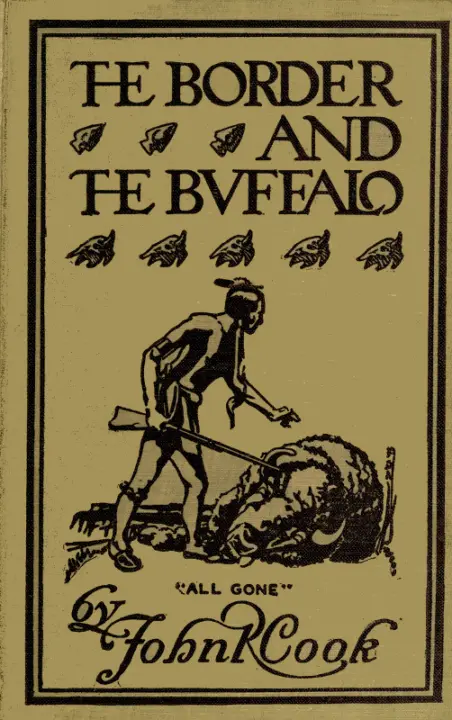
"The Border and the Buffalo: An Untold Story of the Southwest Plains" by John R. Cook is a historical account written in the early 20th century. The narrative explores the life and experiences of the author in the Southwest Plains, including his encounters with buffalo hunters, wild tribes, and the tumultuous history surrounding the region, particularly during the Indian Wars. Cook offers a personal perspective on frontier life, detailing both the challenges and adventures that defined this period. The opening of the work introduces Cook's early life, touching on significant events leading to the Civil War, particularly his family's move to Kansas amidst growing unrest. He reflects on the stark realities of life during this tumultuous time, sharing vivid anecdotes of guerrilla warfare and societal changes. As he recounts his experiences, he paints a picture of a young man's formative years against the backdrop of conflict that would shape the future of the Southwest. The reader is engaged with his recollections of notable figures and events, laying the groundwork for an exploration of the buffalo's tragic fate and the challenges faced by early settlers and warriors alike.
Introduction adapted from the source catalogue; source summaries may be automatically generated.
Free to read · English · 106,047 words · No account needed
MAKE TIME FOR A GOOD BOOK
On by default. Untick to stop anonymous reading totals. Each page counts after 10 seconds in view. How this works.
Anonymous counting is on unless you have switched it off.
The speaker said: "We air too, purty soon. Me and this feller was out thar four year ago," pointing to one of the party, and meaning the border troubles of 1856. "We're goin' after Jim Lane and a lot more of the Free-State Abolitionists. What place you goin' to?"
"Lawrence."
"Why, that's a Abolition hole. You a Abolition?"
"Abolition? What is that?" my brother asked.
"Why, do you believe in free niggers?"
"I don't know enough about the subject to talk about it."
"Whar did ye come frum?"
"Indiana."
One of the others said, "Thar is whar I come frum."
The first spokesman said: "I come frum Arkansaw ten year ago, to the
Sni hills."
Whereupon my brother asked, "What stream is this we are approaching?"
The first spokesman said, "This here crick is the Blue," and added, "you-uns'll never git to Kansis."
My brother shifted his position in the wagon-seat so as to face the speaker, and asked, "Why do you say that?"
"Oh, because the provost marshal will stop ye when ye git to town,"
meaning Independence.
My brother's name was Ralph Emerson, the family all calling him "Em" or
"Emerson."
I said, "Emerson, I want a drink of water."
Just as he crossed the stream he stopped the team, took a tin cup that we carried along, and got down and handed me up a cup of water; and the five horsemen rode on.
As they were leaving us, the first spokesman said, "We'll see ye up
town, boys."
As we were passing up the main street in Independence, we were aware that we were very much observed. This being the very earliest period of the war, there were no Confederate uniforms, but in order to distinguish an enlisted man from a civilian each soldier had a chevron of white muslin sewed diagonally across his left arm. The strip was about two inches wide and five or six inches long. These soldiers were to compose a portion of what was afterwards known as the famous flower of the Southwestern Army, C. S. A.
When we arrived about the central part of the town, we were halted. The man who halted us had on his left arm, in addition to the white chevron, one of red, just above the white one, on which were some letters, but I do not remember what they were. He had a cavalryman's saber and a Colt's revolver on his person. After halting us, he called to two other men, saying, "Come and search this wagon."
Just as the men were climbing into the wagon we were asked where we
were going.
"To Kansas," said my brother.
Your reading position is saved on this browser. Take it to another device with a library code. Reading pages adapt to text, rather than matching a printed edition.
BEHIND THE BOOK
This eBook is for the use of anyone anywhere in the United States and most other parts of the world at no cost and with almost no restrictions whatsoever. You may copy it, give it away or re-use it under the terms of the Project Gutenberg License included with this eBook or online at www.gutenberg.org. If you are not located in the United States, you will have to check the laws of the country where you are located before using this eBook. Read the source licence.
The original source file, including credits and licence, is retained by this library. Request an original-format copy at no charge. Please include the book title and Project Gutenberg identifier #51448.
KEEP YOUR CURIOSITY GOING
Cécile Tormay

Moritz Busch
John L. Ransom
Frances Wright
Cécile Tormay

Mabel Potter Daggett