
The Writing of News A Handbook with Chapters on Newspaper Correspondence and Copy Reading
Charles G. (Charles Griffith) Ross
THE CLASSIC COLLECTION · 1905
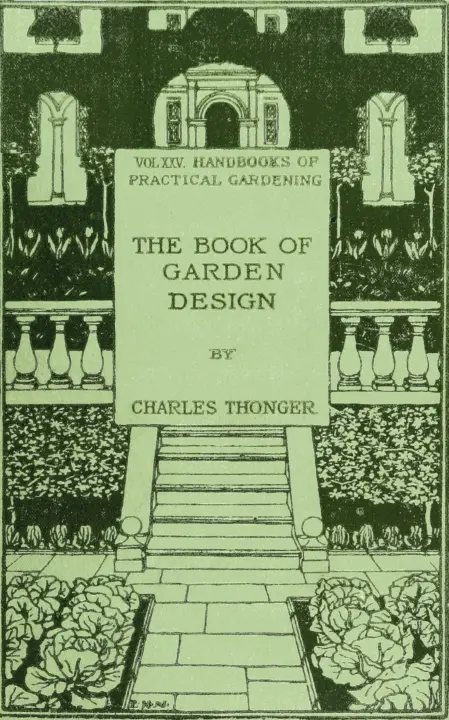
"The Book of Garden Design" by Charles Thonger is a practical guide on garden design written in the early 20th century. This work offers insights into various principles and styles of garden making, emphasizing a harmonious balance between natural beauty and human creativity. Thonger aims to instruct novice gardeners on how to cultivate their own ideas and tastes rather than merely replicating established patterns or using rigid designs. The opening of the book introduces the complexity of garden design as a discipline that blends both art and practicality. Thonger argues that to become a successful garden designer, one must engage with nature, understanding the diverse elements that shape natural landscapes. In the initial chapters, he critiques the rigid approaches of previous designers and advocates for a more organic and personalized style, urging readers to learn from nature instead of relying solely on formal plans. He emphasizes the importance of comfort, convenience, and aesthetic harmony, setting the stage for a comprehensive exploration of garden design practices.
Introduction adapted from the source catalogue; source summaries may be automatically generated.
Free to read · English · 28,173 words · No account needed
MAKE TIME FOR A GOOD BOOK
On by default. Untick to stop anonymous reading totals. Each page counts after 10 seconds in view. How this works.
Anonymous counting is on unless you have switched it off.
White flowers require to be used sparingly, as constant repetition wearies the eye. Though generally regarded as a positive colour, there are various shades, and it is best to include cream tinted flowers in the same section, using the hardest whites to give the effect of a high light.
Heleniums.—Few plants are better adapted for giving quantities of cut bloom. Either H. autumnale or the improved variety superbum, which is a noble flower, should be grown. August to October.
Helianthus.—A beautiful race of showy flowers. The rigidus variety Miss Mellish, and Soleil d’Or in the decapetalus section, are both worthy of a place; also giganteus with flowers of a paler colour.
Bocconia Cordata.—Plume Poppy. A good foliage plant.
Rudbeckia.—Coneflower. Late summer and autumn flowering plants. R. laciniata, Golden Glow is one of the best, the flowers being produced on slender stalks in great profusion.
Verbascum.—Mullein. Stately plants, attaining, when well grown, a height of 10 ft. V. Chaixi, syn. V. vernale, is a true perennial, which is not the case with several members of the same family.
All attain a height of 6 feet or over.
Oenothera.—Evening Primrose. Several varieties, in spite of their name, bloom during the day. The Sundrops (Oe. fruticosa) with richly coloured flowers, and strong, shrubby habit look charming in the mixed border.
Coreopsis Grandiflora.—The finest of all the Tickseeds, with beautiful flowers on long stems. Especially adapted for cutting. This should be grown in every garden.
Doronicum Plantagineum Excelsum.—Leopard’s Bane. During the early spring and summer months, this is one of the gayest plants in the garden. D. Harpur Crewe is the best.
Lilium Testaceum.—Nankeen Lily. This beautiful lily resembles the well-known Madonna in habit, but the delicate apricot blooms, which are fragrant, make it a welcome addition to the section embracing yellow flowers. A good lily for town gardens.
Anthemis Tinctoria.—Camomile. Generally called the Sulphur Marguerite. A dainty flower, unequalled for cutting. On good soil it grows very free and bushy.
Hemerocallis.—Day Lilies. These are delicately scented, and the foliage of a well grown clump affords a welcome break in the border. H. flava is the best known.
Any of the above would be suitable as intermediates between the tall growing plants at the back and the dwarf subjects in front, of which the following are desirable.
Alyssum.—A. saxatile, Gold Dust, as its name suggests, produces myriads of golden blossoms. It flowers in spring and succeeds best in an open, sunny position.
Cheiranthus Alpinus.—Alpine Wallflower. A dwarf plant, very suitable
for edging.
Linum Flavum.—Yellow Flax. A hardy little plant with gaily-coloured
blossoms.
Your reading position is saved on this browser. Take it to another device with a library code. Reading pages adapt to text, rather than matching a printed edition.
BEHIND THE BOOK
This eBook is for the use of anyone anywhere in the United States and most other parts of the world at no cost and with almost no restrictions whatsoever. You may copy it, give it away or re-use it under the terms of the Project Gutenberg License included with this eBook or online at www.gutenberg.org. If you are not located in the United States, you will have to check the laws of the country where you are located before using this eBook. Read the source licence.
The original source file, including credits and licence, is retained by this library. Request an original-format copy at no charge. Please include the book title and Project Gutenberg identifier #74972.
KEEP YOUR CURIOSITY GOING
Charles G. (Charles Griffith) Ross
Hannah Webster Foster

Emily Lawless
Edwin Hamlin Carr

Charles De Lano Hine
Andrew Ure