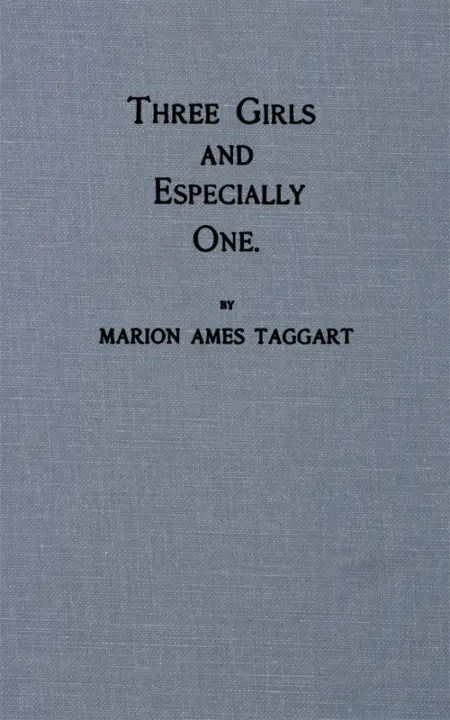
Three girls and especially one
Marion Ames Taggart
THE CLASSIC COLLECTION · 1897
"The Blissylvania Post-Office" by Marion Ames Taggart is a novel written in the late 19th century. The story revolves around a group of four spirited children—Jack, Margery, Trix, and Amy—as they form a club and establish a playful post-office in an old tree. This charming setting serves as the backdrop for their adventures, imaginative interactions, and the development of their friendships, all intertwined with the presence of a kind and gentle honorary member, Miss Isabel. The opening of the novel introduces readers to a rainy day that has left the characters feeling somewhat dreary. Jack engages in mischievous behavior, while the other children, particularly Margery, express the desire for a more meaningful activity. This leads to Margery’s brilliant idea of creating a club that would facilitate letter writing among friends, thus sparking excitement and enthusiasm among them. The beginning of the book sets a lighthearted tone and hints at themes of friendship, imagination, and the innocence of childhood adventures, promising a delightful read for those who enjoy nostalgic tales.
Introduction adapted from the source catalogue; source summaries may be automatically generated.
Free to read · English · 27,324 words · No account needed
MAKE TIME FOR A GOOD BOOK
On by default. Untick to stop anonymous reading totals. Each page counts after 10 seconds in view. How this works.
Anonymous counting is on unless you have switched it off.
"I would never have dared take such a lovely name," Miss Isabel said, "but if my dear little Margery will give me it, I shall be proud to have it."
"What does it mean?" asked Trix.
"I think Dearest Darling is about what it would be in English," said
Miss Isabel.
"That's you." "That's just the name." "Indeed, you are our dearest darling," said Jack and Trix and Amy. But Margery said nothing, feeling all warm and cosey inside, for she had named Miss Isabel, and her loving look had thanked her better than words.
"Now, how about a postmark?" asked Miss Isabel.
"We never thought of that," said the children.
"Well, it seems to me that since we have all taken names, it would be nice to play that our post-office was in some town with a pretty title, and not postmark our letters with the real name of the town like ordinary letters," said Miss Isabel.
"But how can we postmark at all?" asked Jack.
"If you don't mind, I will have a stamp made," said Miss Isabel, "and the postmaster or postmistress can have an ink pad, and stamp each envelope, like the real office."
"Oh, isn't that fine," "Oh, you blessed, little Miss Isabel!" "Didn't I say she ought to be called the good fairy?" "You always think of such things," chorused her visitors.
"Then that's settled," continued Miss Isabel. "Now, what shall we call our town? If this is the Happy Thought Club, wouldn't it be a good idea to call the place also something that meant happiness?"
"Joyberg," remarked Margery thoughtfully.
"That wouldn't do; sounds like June bug," said Jack decidedly.
"Happiness Centre," suggested Amy.
"That is good, but a trifle long, Amy," said Miss Isabel.
"How would Bliss-sylvania do?" asked Jack. "It's like Pennsylvania, you know, and would mean bliss and woods, and that would be saying that we had fun in the tree in the orchard."
"I don't know," began Miss Isabel doubtfully, but was overwhelmed by a chorus of applause from the three little girls, whom the name struck favorably.
"But how could we get on with so many s's in the middle?" asked Amy; "there are three right together."
"We could easily drop one, if that is the only drawback," said Miss Isabel, "and write it B-l-i-s-s-y-l-v-a-n-i-a. That is often done in spelling, and is called elision of a letter."
"It is lovely," cried all the little girls. "Jack, how did you come to
think of it?"
Jack tried to look modest.
"Oh, I don't know," he said. "It just popped into my head."
Your reading position is saved on this browser. Take it to another device with a library code. Reading pages adapt to text, rather than matching a printed edition.
Marion Ames Taggart
Marion Ames Taggart
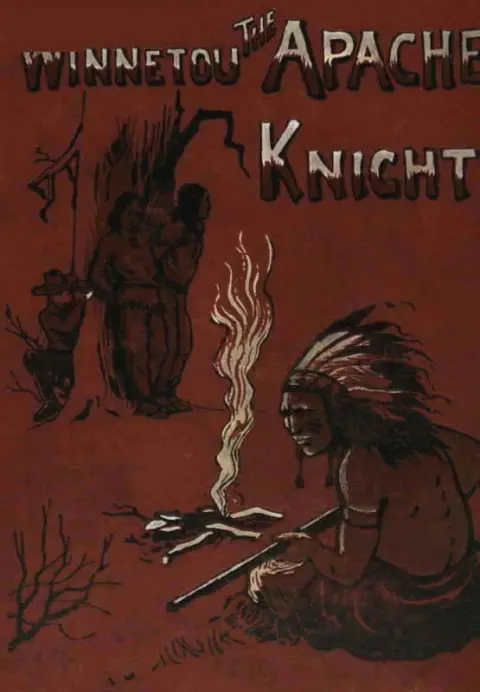
Marion Ames Taggart & Karl May
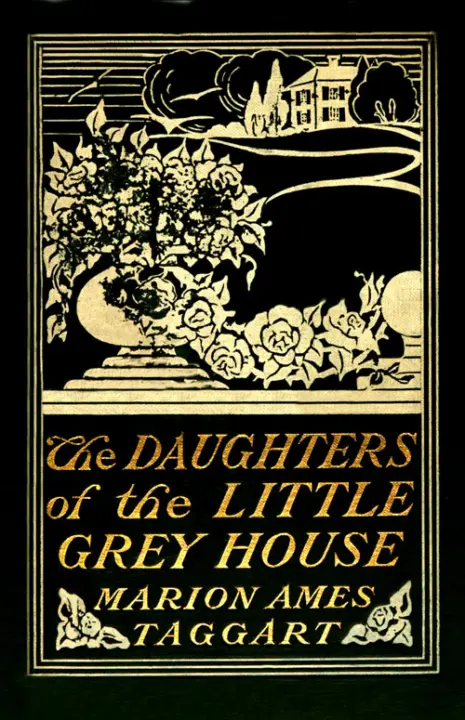
Marion Ames Taggart
BEHIND THE BOOK
This eBook is for the use of anyone anywhere in the United States and most other parts of the world at no cost and with almost no restrictions whatsoever. You may copy it, give it away or re-use it under the terms of the Project Gutenberg License included with this eBook or online at www.gutenberg.org. If you are not located in the United States, you will have to check the laws of the country where you are located before using this eBook. Read the source licence.
The original source file, including credits and licence, is retained by this library. Request an original-format copy at no charge. Please include the book title and Project Gutenberg identifier #48552.
KEEP YOUR CURIOSITY GOING
Coulson Kernahan

Maurice Baring
Frances Wright
Cécile Tormay

Frederic Jesup Stimson

W. H. P. (William Henry Pope) Jarvis