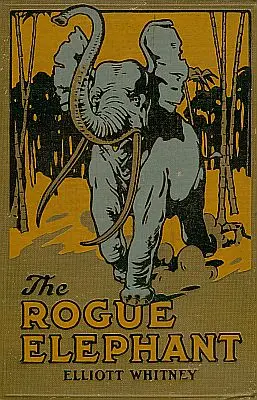
The rogue elephant
Elliott Whitney
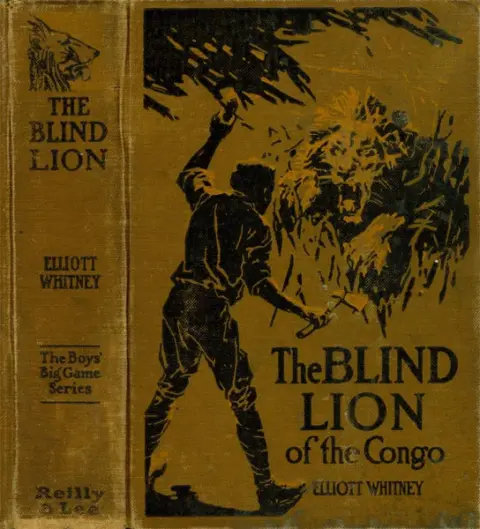
THE CLASSIC COLLECTION · 1912
"The Blind Lion of the Congo" by Elliott Whitney is a novel written in the early 20th century. The story follows young Burton St. John, who is excited to accompany his adventurous uncle, the famous explorer George William Wallace, on a trip to the Congo for ivory hunting. Along with his friend Howard Critchfield, Burt embarks on a journey that promises thrill but also danger as they encounter the challenges and wonders of Africa. The opening portion of the book introduces Burt, a diligent student eager for adventure, as he sits down to dinner with his family. Their conversation is interrupted by the arrival of Burt’s uncle, George, who brings vivid tales of his past explorations. During dinner, George proposes a trip to Africa, which sparks Burt's enthusiasm despite his parents' worries. As George and Burt's excitement builds, George eventually secures permission for both boys to come along on the expedition. This sets the stage for an adventurous journey in the unfamiliar but alluring wilderness of the Congo, where the boys will undoubtedly face trials alongside their curious encounters with wildlife and locals.
Introduction adapted from the source catalogue; source summaries may be automatically generated.
Free to read · English · 47,099 words · No account needed
MAKE TIME FOR A GOOD BOOK
On by default. Untick to stop anonymous reading totals. Each page counts after 10 seconds in view. How this works.
Anonymous counting is on unless you have switched it off.
The Liverpool customs did not delay them long as they had only a suit case each, and they took the night express for London. The boys were much surprised and not a little dismayed when they entered the English compartment cars, so different from the coaches they were used to. They soon found that it was much nicer to travel by themselves, however, as Mr. Wallace interviewed the guard and provided against intrusion. In the morning they awoke to find themselves in London.
Mr. Wallace took them to the famous Carleton House for breakfast, now entirely rebuilt after its fire of the year before. When they had finished, all three went to the writing room.
"Take out your pencils now," said the explorer, "and get busy. I know just about what I want to take and a list ready-made will save a lot of time in the shops. Ready?"
The two boys were not only ready but anxious. The lists that they wrote out were identical. Here is that of their personal effects and clothes as Burt made it out.
Four suits underwear, Indian gauze.
Two ditto, woolen.
Two heavy gabardine shooting suits.
Two flannel shirts, khaki cartridge pockets.
Two pair high boots. One pair of soft leather.
Extra thick leggings, two pairs.
Camelshair poncho blanket, convertible.
Kid-lined gloves, two pairs.
Sleeping bag, waterproof.
Wool socks and pajamas.
Two khaki helmets.
Mosquito net for head and body.
Cholera belt, flannel.
Zeiss field glasses.
Large colored silk handkerchiefs, six.
Compass. Toilet articles.
"There," exclaimed Mr. Wallace as he ran over Burt's list, "that looks pretty good to me. You won't need the wool underwear unless you get prickly heat. The leggings are the most important. If you get scratched up by spear-grass and thorns and then step into some swamp-pool it's all off. You'd get craw-craw sure."
"What's that?" asked Critch. "Sounds like crow!"
"It's a skin disease," replied Mr. Wallace. "Something frightful, too. The poncho will serve for blanket and raincoat, but this is the dry season. Must have the mosquito net, though. When we get up the Aruwimi we'll find little bees about as big as gnats but a whole lot worse, and it'll need thick nets to keep 'em out. New for the armament."
Burt's "armory" consisted of the following weapons:
Double-barreled Holland .450 cordite rifle, for close quarters.
Winchester .405 rifle for general use.
Twenty-gauge Parker shotgun.
Eight-inch skinning knife.
"Ain't we going to take revolvers?" asked Burt disappointedly as his
uncle finished.
Your reading position is saved on this browser. Take it to another device with a library code. Reading pages adapt to text, rather than matching a printed edition.
Elliott Whitney
Elliott Whitney
BEHIND THE BOOK
This eBook is for the use of anyone anywhere in the United States and most other parts of the world at no cost and with almost no restrictions whatsoever. You may copy it, give it away or re-use it under the terms of the Project Gutenberg License included with this eBook or online at www.gutenberg.org. If you are not located in the United States, you will have to check the laws of the country where you are located before using this eBook. Read the source licence.
The original source file, including credits and licence, is retained by this library. Request an original-format copy at no charge. Please include the book title and Project Gutenberg identifier #32508.
KEEP YOUR CURIOSITY GOING
Coulson Kernahan

Maurice Baring
Frances Wright
Cécile Tormay

Frederic Jesup Stimson

W. H. P. (William Henry Pope) Jarvis