
Last letters from the living dead man
David Patterson (Spirit) Hatch
THE CLASSIC COLLECTION · 1900
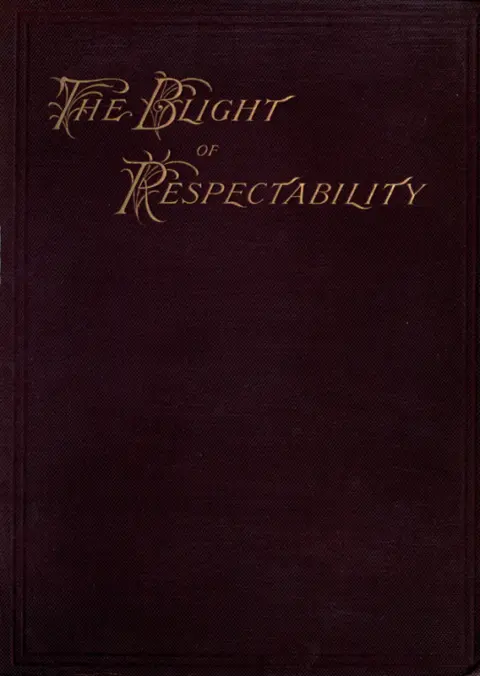
"The Blight of Respectability" by Geoffrey Mortimer is a critical examination of societal norms and conventions, written in the late 19th century. The work delves into the concept of respectability, particularly within the bourgeois class, chastising it as a superficial and often morally bankrupt standard that stifles individuality and progress. Mortimer articulates a disdain for those who adhere to these conventional norms, portraying them as obstacles to genuine moral and intellectual development. The opening of the book sets the stage for this argument, as Mortimer outlines his belief that the term "respectable" has been misappropriated and now signifies a lack of creativity and authenticity. He critiques the restrictive nature of respectability, suggesting that it leads individuals to conform to social expectations at the expense of their true selves. Mortimer uses historical and literary references to illustrate the detrimental effects of respectability on society and individuals alike, framing it as a disease that infects the mind and stifles cultural and moral evolution. His passionate tone critiques both men and women, especially focusing on how women, in particular, are shackled by these societal norms, which he argues destroy their true nature and freedom.
Introduction adapted from the source catalogue; source summaries may be automatically generated.
Free to read · English · 26,117 words · No account needed
MAKE TIME FOR A GOOD BOOK
On by default. Untick to stop anonymous reading totals. Each page counts after 10 seconds in view. How this works.
Anonymous counting is on unless you have switched it off.
Among the high-class magazines, the University Magazine and Free Review takes the first place in English advanced literature. Independence of thought, freedom from conventional fetters, and boldness where necessary, impart a freshness and vigour to the articles of this publication, which we miss even in the best and most earnest literature of the day.
It is the Magazine for such readers as care for progressive thought in all or any of the main fields of discussion--the religious, the political, the sociological, the ethical, the economic, the literary, the scientific, and the æsthetic.
It always takes the part of the weak and oppressed, and this Magazine has done much to call attention to indisputable evils.
Contents of the APRIL No., 1897, Vol. VIII., No. I--
The Case Of Dr. Romanes, by John M. Robertson.
Cardinal Manning, the Sceptic, by R. de Villiers.
The Inertia of English Universities, by F. R. Sarritor.
The Bible and the Child, by Chilperic.
Tourgenieff, by Ernest Newman.
Roden Noel, by Karl Blind.
The Whole Duty of Woman, by Geoffrey Mortimer.
The Blasphemy Laws, by Fred. Verinder.
Martin Turner, by H. J. Cressingham.
The Intellectual Movement in France, by A. Hamon.
Periodicals, by Walter Shaw Sparrow.
Contents of the MAY No., 1897, Vol. VIII., No. 2--
Bentley and Anthony Collins, by M. W. Wiseman.
Roden Noel, by Karl Blind.
Tourgenieff, by Ernest Newman.
The Downfall of Olive Schreiner, by X.
Marie Corelli and her Public, by A. W. Stanbury.
Moral Instruction without Theology, by F. J. Gould.
The Social Purity Hallucination, by J. P. Gilmour.
Current Pseudo-Philosophy, by John M. Robertson.
Slumland by Night, by G. M.
William Blake and Modern Problems, by Edward Willmore.
The Social Evil and the Moral Law, by A. Macevir.
Periodicals, by Walter Shaw Sparrow.
New Books.
Contents of the JUNE No., 1897, Vol. VIII., No. 3--
Nietzsche's Indictment of Christianity, by John M. Robertson.
An Ethical Excursion, by Hugh Mortimer Cecil.
The Teachings of Thomas Hardy, by Duane Williams.
The Tory Professor, by Robert Duncanson.
Mr. Gladstone's Latest Postcard, by Alan Stephens.
Usury and Thrift, by J. Greevz Fisher.
A Specimen of Religious Journalism, by Stanley Bruce.
In Extremis, by Allan Laidlaw.
The Legitimation League, by A. Goldwin.
Nancy, by Ernest Newman.
New Books.
Just published, 10s. nett,
By HUGH MORTIMER CECIL.
An Irrational Trio: Kidd, Drummond, Balfour.
A vigorous refutation of the well-known Pseudo-Philosophical Works, Social Evolution (Kidd), The Ascent of Man (Drummond), and The Foundations of Belief (Balfour), showing the absurdity of the methods adopted on the one hand, and the insincerity of these Pseudo-Philosophers on the other.
The Academy, APRIL 17, 1897:
Your reading position is saved on this browser. Take it to another device with a library code. Reading pages adapt to text, rather than matching a printed edition.
BEHIND THE BOOK
This eBook is for the use of anyone anywhere in the United States and most other parts of the world at no cost and with almost no restrictions whatsoever. You may copy it, give it away or re-use it under the terms of the Project Gutenberg License included with this eBook or online at www.gutenberg.org. If you are not located in the United States, you will have to check the laws of the country where you are located before using this eBook. Read the source licence.
The original source file, including credits and licence, is retained by this library. Request an original-format copy at no charge. Please include the book title and Project Gutenberg identifier #49263.
KEEP YOUR CURIOSITY GOING
David Patterson (Spirit) Hatch

David Patterson (Spirit) Hatch

David Patterson (Spirit) Hatch
Coulson Kernahan

Ralph Waldo Emerson

Maurice Baring