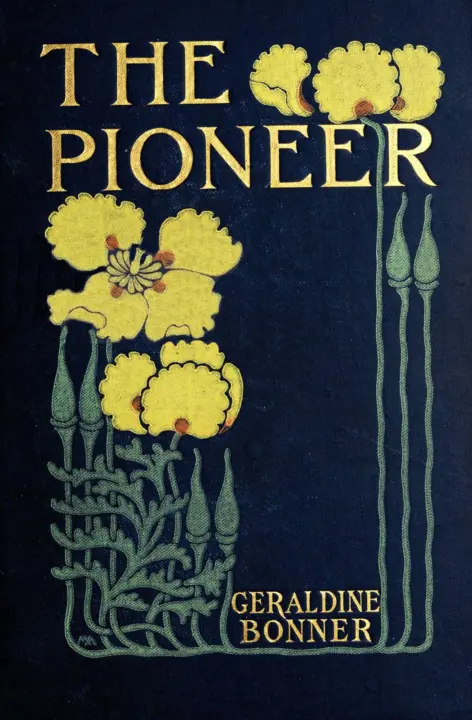
The pioneer
Geraldine Bonner
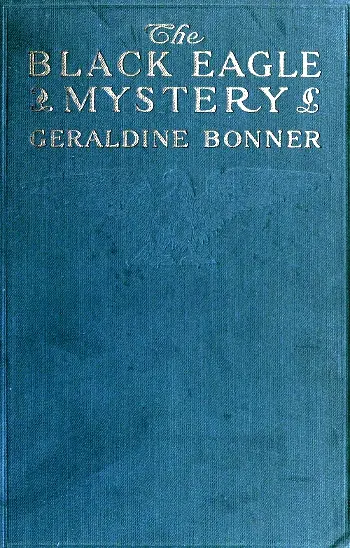
THE CLASSIC COLLECTION · 1916
"The Black Eagle Mystery" by Geraldine Bonner is a mystery novel written in the early 20th century. The story unfolds around the perplexing suicide of a prominent lawyer, Hollings Harland, which sends ripples through the world of finance and leads to a series of investigations delving into deception, love, and financial ruin. Central characters include Molly Morgenthau Babbitts, a former telephone girl turned detective, and her husband Babbitts, who works as a reporter trying to piece together the web of intrigue involving Harland, his associates, and a powerful financier, Johnston Barker. The opening of the novel introduces us to Molly and her husband as they discuss the shocking news of Harland’s suicide, which takes place after a heated confrontation with Barker—who subsequently disappears. As they delve into the mystery, they explore the ramifications of the suicide on various characters around Harland, including Iola Barry, who works in an office on a floor just below the scene of the tragedy, and Miss Whitehall, a businesswoman whose fate becomes intertwined with these events. The narrative captures the initial reactions to the calamity, setting a suspenseful tone as Molly becomes drawn to uncovering the truth behind Harland’s death and Barker’s connections to it. The chapter sets the stage for a gripping tale filled with twists and revelations that challenge the characters' perceptions and motivations.
Introduction adapted from the source catalogue; source summaries may be automatically generated.
Free to read · English · 71,664 words · No account needed
MAKE TIME FOR A GOOD BOOK
On by default. Untick to stop anonymous reading totals. Each page counts after 10 seconds in view. How this works.
Anonymous counting is on unless you have switched it off.
So there they sat, Babbitts still uneasy, but O’Mally, calm and patient, tilting back in his chair looking dreamy out of the window. He said afterward that he knew that hysterical fit for what it was—relief, and that was why he wouldn’t let Babbitts call a nurse.
Presently the sobs began to ease off and Ford, groping under the pillow for a handkerchief, said, all choked up:
"How did you come to connect him with me?"
"By papers found in his desk—records of a real-estate business you and he’d been in some years ago at Syracuse."
"That’s the man," said Ford, between his hiccuppy catches of breath,
"and he’s dead?"
"Dead as Julius Cæsar." O’Mally leaned forward, his voice dropping, "You knew he was the chap that attacked you?"
Ford, his head drooped, his shoulders hunched up like an old woman’s,
nodded:
"Yes, I lied when I said he was a stranger to me."
"Why did you do that?" asked Babbitts.
It was just what you might know he’d ask. One of the cutest things about Himself is that he never can understand why anyone, no matter what the provocation, has to lie.
Ford didn’t answer and O’Mally, giving his chair a hitch nearer to the bed, said kind and persuasive:
"Say, Ford, you’d better tell us all you know. We got the papers, and most of the information. The man’s dead. Clean it up and we’ll let it drop."
Without raising his head Ford said, low and sort of sullen:
"All right—if you agree to that. I was in business with him and I—I—didn’t play fair—lit out with some of the money." He turned a lowering look on Babbitts. "That’s the answer to your question," then back to O’Mally, "I didn’t run across him or hear of him in all this time and supposed the whole thing was buried and forgotten till he came into my room Tuesday night. He was blazing mad, said he’d been waiting for a chance to even up, and had at last found me. To keep him quiet I said I’d give him some money. I had some."
"Yes, yes," said O’Mally, nodding cheerfully, "the legacy your uncle
left you."
Ford shot a look at him, sharp and quick:
"Oh, you know about that?"
"Naturally. Inquiries have been made in all directions. Go on."
Your reading position is saved on this browser. Take it to another device with a library code. Reading pages adapt to text, rather than matching a printed edition.
Geraldine Bonner
Geraldine Bonner
Geraldine Bonner

Geraldine Bonner
BEHIND THE BOOK
This eBook is for the use of anyone anywhere in the United States and most other parts of the world at no cost and with almost no restrictions whatsoever. You may copy it, give it away or re-use it under the terms of the Project Gutenberg License included with this eBook or online at www.gutenberg.org. If you are not located in the United States, you will have to check the laws of the country where you are located before using this eBook. Read the source licence.
The original source file, including credits and licence, is retained by this library. Request an original-format copy at no charge. Please include the book title and Project Gutenberg identifier #35484.
KEEP YOUR CURIOSITY GOING
Coulson Kernahan

Maurice Baring
Frances Wright
Cécile Tormay

Frederic Jesup Stimson

W. H. P. (William Henry Pope) Jarvis