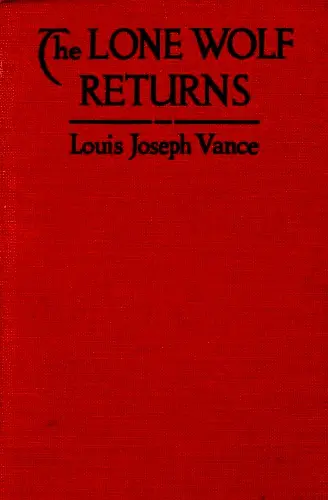
The Lone Wolf Returns
Louis Joseph Vance
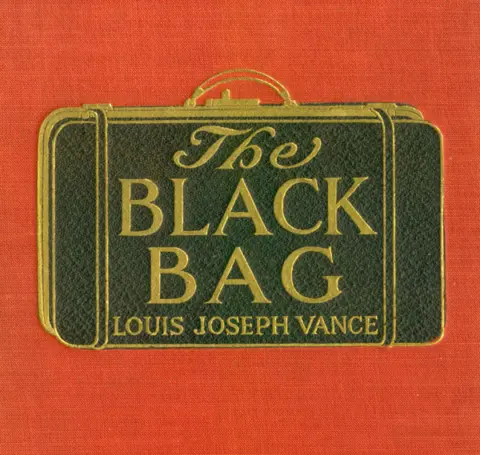
THE CLASSIC COLLECTION · 1908
"The Black Bag" by Louis Joseph Vance is a novel written in the early 20th century. The story follows Philip Kirkwood, a young American artist who finds himself in a challenging situation after a disaster in San Francisco leaves him stranded and nearly penniless in London. Struggling with feelings of isolation and despair, Kirkwood encounters a series of unusual characters that set the stage for a tale filled with adventure and intrigue. The opening of the book presents Philip Kirkwood in his bleak London hotel room, reflecting on his misfortunes and contemplating the future. He is soon visited by Mr. Brentwick, an elder friend who expresses concern over Kirkwood’s plans to return to America. After their conversation, Kirkwood meets Mr. Calendar, an enigmatic figure who offers a dubious proposition involving a passage to America in exchange for a "trifling service." Unfazed by Calendar's odd behavior, Kirkwood navigates a mysterious encounter with a young woman named Dorothy Calendar, leading to a series of fraught events where danger lurks in unexpected corners and sets the tone for the adventures to come.
Introduction adapted from the source catalogue; source summaries may be automatically generated.
Free to read · English · 95,038 words · No account needed
MAKE TIME FOR A GOOD BOOK
On by default. Untick to stop anonymous reading totals. Each page counts after 10 seconds in view. How this works.
Anonymous counting is on unless you have switched it off.
Mrs. Hallam showed less deference for the obstructionist. The assumed hauteur and impatience of her pose was artfully reflected in her voice as she rounded upon the bobby, with an indignant demand: “What is the meaning of this, officer?”
“Precisely what I wants to know, ma’am,” returned the man, unyielding beneath his respectful attitude. “I’m obliged to ask you to tell me what you were doing in that ’ouse.... And what’s the matter with this ’ere gentleman?” he added, with a dubious stare at young Hallam’s bandaged head and rumpled clothing.
“Perhaps you don’t understand,” admitted Mrs. Hallam sweetly. “Of course—I see—it’s perfectly natural. The house has been shut up for some time and—”
“Thank you, ma’am; that’s just it. There was something wrong going on early in the evening, and I was told to keep an eye on the premises. It’s duty, ma’am; I’ve got my report to make.”
“The house,” said Mrs. Hallam, with the long-suffering patience of one elucidating a perfectly plain proposition to a being of a lower order of intelligence, “is the property of my son, Arthur Frederick Burgoyne Hallam, of Cornwall. This is—”
“Beg pardon, ma’am, but I was told Colonel George Burgoyne, of
Cornwall—”
“Colonel Burgoyne died some time ago. My son is his heir. This is my son. He came to the house this evening to get some property he desired, and—it seems—tripped on the stairs and fell unconscious. I became worried about him and drove over, accompanied by my friend, Mr. Kirkwood.”
The policeman looked his troubled state of mind, and wagged a doubtful head over the case. There was his duty, and there was, opposed to it, the fact that all three were garbed in the livery of the well-to-do.
At length, turning to the driver, he demanded, received, and noted in his memorandum-book, the license number of the equipage.
“It’s a very unusual case, ma’am,” he apologized; “I hopes you won’t ’old it against me. I’m only trying to do my duty—”
“And safeguard our property. You are perfectly justified, officer.”
“Thank you, ma’am. And would you mind giving me your cards, please, all
of you?”
“Certainly not.” Without hesitation the woman took a little hand-bag from the seat of the carriage and produced a card; her son likewise found his case and handed the officer an oblong slip.
“I’ve no cards with me,” the American told the policeman; “my name, however, is Philip Kirkwood, and I’m staying at the Pless.”
Your reading position is saved on this browser. Take it to another device with a library code. Reading pages adapt to text, rather than matching a printed edition.
Louis Joseph Vance
Louis Joseph Vance
Louis Joseph Vance
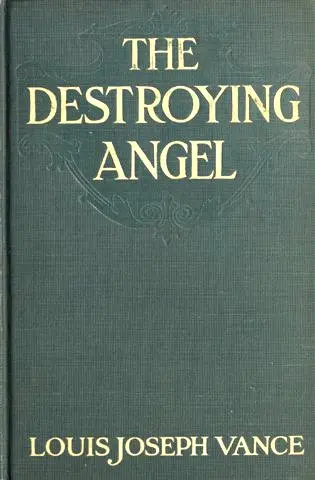
Louis Joseph Vance
BEHIND THE BOOK
This eBook is for the use of anyone anywhere in the United States and most other parts of the world at no cost and with almost no restrictions whatsoever. You may copy it, give it away or re-use it under the terms of the Project Gutenberg License included with this eBook or online at www.gutenberg.org. If you are not located in the United States, you will have to check the laws of the country where you are located before using this eBook. Read the source licence.
The original source file, including credits and licence, is retained by this library. Request an original-format copy at no charge. Please include the book title and Project Gutenberg identifier #9779.
KEEP YOUR CURIOSITY GOING
Coulson Kernahan

Maurice Baring
Frances Wright
Cécile Tormay

Frederic Jesup Stimson

W. H. P. (William Henry Pope) Jarvis