The Lone Wolf Returns
Louis Joseph Vance
THE CLASSIC COLLECTION · 1908
"The Black Bag" by Louis Joseph Vance is a novel written in the early 20th century. The story follows Philip Kirkwood, a young American artist who finds himself in a challenging situation after a disaster in San Francisco leaves him stranded and nearly penniless in London. Struggling with feelings of isolation and despair, Kirkwood encounters a series of unusual characters that set the stage for a tale filled with adventure and intrigue. The opening of the book presents Philip Kirkwood in his bleak London hotel room, reflecting on his misfortunes and contemplating the future. He is soon visited by Mr. Brentwick, an elder friend who expresses concern over Kirkwood’s plans to return to America. After their conversation, Kirkwood meets Mr. Calendar, an enigmatic figure who offers a dubious proposition involving a passage to America in exchange for a "trifling service." Unfazed by Calendar's odd behavior, Kirkwood navigates a mysterious encounter with a young woman named Dorothy Calendar, leading to a series of fraught events where danger lurks in unexpected corners and sets the tone for the adventures to come.
Introduction adapted from the source catalogue; source summaries may be automatically generated.
Free to read · English · 95,038 words · No account needed
MAKE TIME FOR A GOOD BOOK
On by default. Untick to stop anonymous reading totals. Each page counts after 10 seconds in view. How this works.
Anonymous counting is on unless you have switched it off.
“It is enough if I’ve been useful,” he rose in gallantry to the
emergency.
“That,” she commented, “was very prettily said. But then I have never known any one more kind and courteous and—and considerate, than you.” There was no savor of flattery in the simple and direct statement; indeed, she was looking away from him, out of the window, and her face was serious with thought; she seemed to be speaking of, rather than to, Kirkwood. “And I have been wondering,” she continued with unaffected candor, “what you must be thinking of me.”
“I? ... What should I think of you, Miss Calendar?”
With the air of a weary child she laid her head against the cushions again, face to him, and watched him through lowered lashes, unsmiling.
“You might be thinking that an explanation is due you. Even the way we were brought together was extraordinary, Mr. Kirkwood. You must be very generous, as generous as you have shown yourself brave, not to require some sort of an explanation of me.”
“I don’t see it that way.”
“I do ... You have made me like you very much, Mr. Kirkwood.”
He shot her a covert glance—causelessly, for her naiveté was flawless. With a feeling of some slight awe he understood this—a sensation of sincere reverence for the unspoiled, candid, child’s heart and mind that were hers. “I’m glad,” he said simply; “very glad, if that’s the case, and presupposing I deserve it. Personally,” he laughed, “I seem to myself to have been rather forward.”
“No; only kind and a gentleman.”
“But—please!” he protested.
“Oh, but I mean it, every word! Why shouldn’t I? In a little while, ten minutes, half an hour, we shall have seen the last of each other. Why should I not tell you how I appreciate all that you have unselfishly done for me?”
“If you put it that way,—I’m sure I don’t know; beyond that it embarrasses me horribly to have you overestimate me so. If any courage has been shown this night, it is yours ... But I’m forgetting again.” He thought to divert her. “Where shall I tell the cabby to go this time, Miss Calendar?”
“Craven Street, please,” said the girl, and added a house number. “I am to meet my father there, with this,”—indicating the gladstone bag.
Kirkwood thrust head and shoulders out the window and instructed the cabby accordingly; but his ruse had been ineffectual, as he found when he sat back again. Quite composedly the girl took up the thread of conversation where it had been broken off.
Your reading position is saved on this browser. Take it to another device with a library code. Reading pages adapt to text, rather than matching a printed edition.
Louis Joseph Vance
Louis Joseph Vance
Louis Joseph Vance
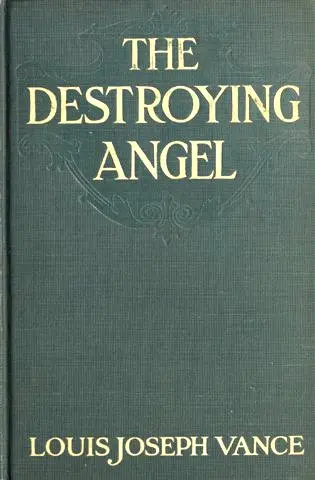
Louis Joseph Vance
BEHIND THE BOOK
This eBook is for the use of anyone anywhere in the United States and most other parts of the world at no cost and with almost no restrictions whatsoever. You may copy it, give it away or re-use it under the terms of the Project Gutenberg License included with this eBook or online at www.gutenberg.org. If you are not located in the United States, you will have to check the laws of the country where you are located before using this eBook. Read the source licence.
The original source file, including credits and licence, is retained by this library. Request an original-format copy at no charge. Please include the book title and Project Gutenberg identifier #9779.
KEEP YOUR CURIOSITY GOING
Coulson Kernahan

Maurice Baring
Frances Wright
Cécile Tormay

Frederic Jesup Stimson

W. H. P. (William Henry Pope) Jarvis