
The Lone Wolf Returns
Louis Joseph Vance
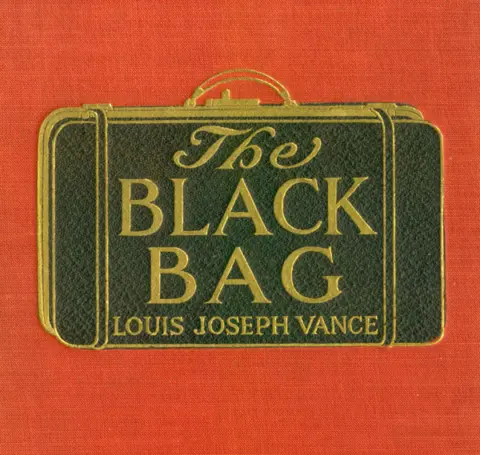
THE CLASSIC COLLECTION · 1908
"The Black Bag" by Louis Joseph Vance is a novel written in the early 20th century. The story follows Philip Kirkwood, a young American artist who finds himself in a challenging situation after a disaster in San Francisco leaves him stranded and nearly penniless in London. Struggling with feelings of isolation and despair, Kirkwood encounters a series of unusual characters that set the stage for a tale filled with adventure and intrigue. The opening of the book presents Philip Kirkwood in his bleak London hotel room, reflecting on his misfortunes and contemplating the future. He is soon visited by Mr. Brentwick, an elder friend who expresses concern over Kirkwood’s plans to return to America. After their conversation, Kirkwood meets Mr. Calendar, an enigmatic figure who offers a dubious proposition involving a passage to America in exchange for a "trifling service." Unfazed by Calendar's odd behavior, Kirkwood navigates a mysterious encounter with a young woman named Dorothy Calendar, leading to a series of fraught events where danger lurks in unexpected corners and sets the tone for the adventures to come.
Introduction adapted from the source catalogue; source summaries may be automatically generated.
Free to read · English · 95,038 words · No account needed
MAKE TIME FOR A GOOD BOOK
On by default. Untick to stop anonymous reading totals. Each page counts after 10 seconds in view. How this works.
Anonymous counting is on unless you have switched it off.
“Yes sir.” The butler swung automatically, on one heel.
“And Wotton!”
“Sir?”
“If any one should ask for me, I’m not at home.”
“Very good, sir.”
“And if you should see a pair of disreputable scoundrels skulking, in the neighborhood, one short and stout, the other tall and evidently a seafaring man, let me know.”
“Thank you, sir.” A moment later the front door was heard to close.
Brentwick turned with a little bow to the girl. “My dear Miss Calendar,” he said, rubbing his thin, fine hands,—“I am old enough, I trust, to call you such without offense,—please be seated.”
Complying, the girl rewarded him with a radiant smile. Whereupon, striding to the fireplace, their host turned his back to it, clasped his hands behind him, and glowered benignly upon the two. “Ah!” he observed in accents of extreme personal satisfaction. “Romance! Romance!”
“Would you mind telling us how you knew—” began Kirkwood anxiously.
“Not in the least, my dear Philip. It is simple enough: I possess an imagination. From my bedroom window, on the floor above, I happen to behold two cabs racing down the street, the one doggedly pursuing the other. The foremost stops, perforce of a fagged horse. There alights a young gentleman looking, if you’ll pardon me, uncommonly seedy; he is followed by a young lady, if she will pardon me,” with another little bow, “uncommonly pretty. With these two old eyes I observe that the gentleman does not pay his cabby. Ergo—I intelligently deduce—he is short of money. Eh?”
“You were right,” affirmed Kirkwood, with a rueful and crooked smile.
“But—”
“So! so!” pursued Brentwick, rising on his toes and dropping back again; “so this world of ours wags on to the old, old tune!... And I, who in my younger days pursued adventure without success, in dotage find myself dragged into a romance by my two ears, whether I will or no! Eh? And now you are going to tell me all about it, Philip. There is a chair.... Well, Wotton?”
The butler had again appeared noiselessly in the doorway.
“Beg pardon, sir; they’re waiting, sir.”
“The caitiffs, Wotton?”
“Yessir.”
“Where waiting?”
“One at each end of the street, sir.”
“Thank you. You may bring us sherry and biscuit, Wotton.”
“Thank you, sir.”
The servant vanished.
Brentwick removed his glasses, rubbed them, and blinked thoughtfully at the girl. “My dear,” he said suddenly, with a peculiar tremor in his voice, “you resemble your mother remarkably. Tut—I should know! Time was when I was one of her most ardent admirers.”
“You—y-you knew my mother?” cried Dorothy, profoundly moved.
Your reading position is saved on this browser. Take it to another device with a library code. Reading pages adapt to text, rather than matching a printed edition.
Louis Joseph Vance
Louis Joseph Vance
Louis Joseph Vance
Louis Joseph Vance
BEHIND THE BOOK
This eBook is for the use of anyone anywhere in the United States and most other parts of the world at no cost and with almost no restrictions whatsoever. You may copy it, give it away or re-use it under the terms of the Project Gutenberg License included with this eBook or online at www.gutenberg.org. If you are not located in the United States, you will have to check the laws of the country where you are located before using this eBook. Read the source licence.
The original source file, including credits and licence, is retained by this library. Request an original-format copy at no charge. Please include the book title and Project Gutenberg identifier #9779.
KEEP YOUR CURIOSITY GOING
Coulson Kernahan

Maurice Baring
Frances Wright
Cécile Tormay

Frederic Jesup Stimson

W. H. P. (William Henry Pope) Jarvis