THE CLASSIC COLLECTION✦The InsectCLASSIC FREE BOOKS
The Insect
Jules Michelet
THE CLASSIC COLLECTION · 1856
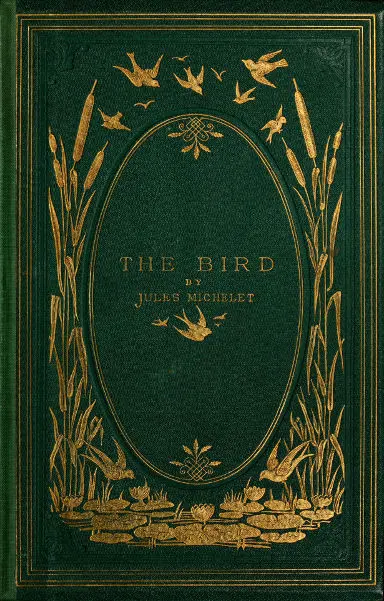
"The Bird" by Jules Michelet is a natural history work written in the mid-19th century. The book serves as an eloquent and poetic exploration of birds and their relationships with humans and nature, emphasizing the beauty and significance of avian life. Michelet discusses various aspects of bird life, their habits, and their importance in ecosystems, manifesting a profound admiration for their existence. At the start of the text, Michelet reflects on his motivation to study nature and the profound influence of personal experiences that shaped his perspective. He shares a tender narrative that outlines his beginnings, familial ties, and his connection with nature, specifically birds. The opening portion reveals his intimate conversations with loved ones and mesmerizing anecdotes about the vibrant birdlife around him, setting an emotional and philosophical tone for the exploration to come. Through these reflections, the reader gets a sense of Michelet's passionate advocacy for birds and his plea for a harmonious coexistence with all living beings.
Introduction adapted from the source catalogue; source summaries may be automatically generated.
Free to read · English · 70,339 words · No account needed
MAKE TIME FOR A GOOD BOOK
On by default. Untick to stop anonymous reading totals. Each page counts after 10 seconds in view. How this works.
Anonymous counting is on unless you have switched it off.
Man, bird, all nature, utter the same desire. We exist through change.
To these forcible alternations of heat, cold, fog, and sun, melancholy and joyaunce, we owe the tempered, the powerful personality of our West. Rain wearies us to-day; fine weather will come with the morrow. The splendours of the East, the marvels of the Tropics, taken together, are not worth the first violet of Easter, the first song of April, the blossom of the hawthorn, the glee of the young girl who resumes her robes of white.
In the morning a potent voice, of singular freshness and clearness, of keen metallic timbre, the voice of the mavis, rises aloft, and there is no heart so sick or so sour as to hear it without a smile.
One spring, on my way to Lyons, among the intertangled vines which the peasants laboured to raise up again, I heard a poor, old, miserable, and blind woman singing, with an accent of extraordinary gaiety, this ancient village lay:
"Nous quittons nos grands habits,
Pour en prendre de plus petits."
The "miserly agriculturist," is the accurate and forcible expression of Virgil. Miserly, and blind, in truth, for he proscribes the birds which destroy insects and protect his crops.
Not a grain will he spare to the bird which, during the winter rains, hunted up the future insect, sought out the nests of the larvæ, examined them, turned over every leaf, and daily destroyed myriads of future caterpillars; but sacks of corn to the adult insects, and whole fields to the grasshoppers which the bird would have combated!
With his eyes fixed on the furrow, on the present moment, without sight or foresight; deaf to the grand harmony which no one ever interrupts with impunity, he has everywhere solicited or approved the laws which suppressed the much-needed assistant of his labour, the insect-destroying bird. And the insects have avenged the bird. It has become necessary to recall in all haste the banished. In the island of Bourbon, for example, a price was set on each martin's head; they disappeared, and then the grasshoppers took possession of the island, devouring, extinguishing, burning up with harsh acridity all that they did not devour. The same thing has occurred in North America with the starling, the protector of the maize. The sparrow even, which attacks the grain, but also defends it--the thieving, pilfering sparrow, loaded with so many insults, and stricken with so many maledictions--it has been seen that without him Hungary would perish; that he alone could wage the mighty war against the cockchafers and the myriad winged foes which reign in the low-lying lands: his banishment has been revoked, and the courageous militia hastily recalled which, if not strictly disciplined, are not the less the salvation of the country.
Your reading position is saved on this browser. Take it to another device with a library code. Reading pages adapt to text, rather than matching a printed edition.
BEHIND THE BOOK
This eBook is for the use of anyone anywhere in the United States and most other parts of the world at no cost and with almost no restrictions whatsoever. You may copy it, give it away or re-use it under the terms of the Project Gutenberg License included with this eBook or online at www.gutenberg.org. If you are not located in the United States, you will have to check the laws of the country where you are located before using this eBook. Read the source licence.
The original source file, including credits and licence, is retained by this library. Request an original-format copy at no charge. Please include the book title and Project Gutenberg identifier #43341.
KEEP YOUR CURIOSITY GOING

Charles G. (Charles Griffith) Ross
Hannah Webster Foster

Emily Lawless
Edwin Hamlin Carr

Charles De Lano Hine
Andrew Ure