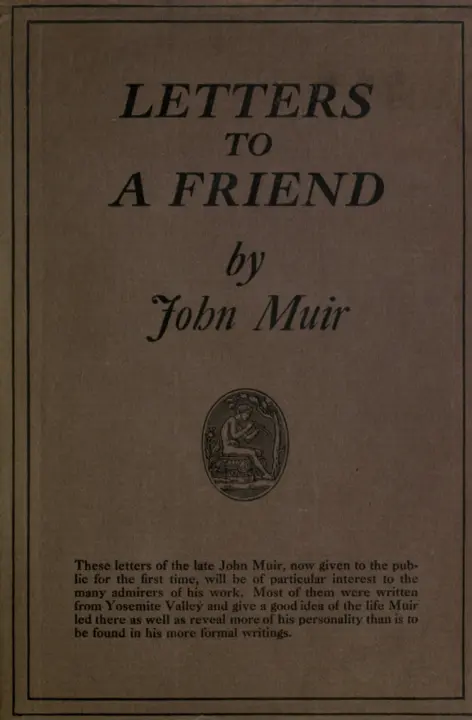
Letters to a Friend, Written to Mrs. Ezra S. Carr, 1866-1879
John Muir
THE CLASSIC COLLECTION · 1917
"The Bird Study Book" by T. Gilbert Pearson is a scientific guide on ornithology written in the early 20th century. This work serves as an introduction for beginners interested in studying the habits and activities of wild birds, while emphasizing the relationship between birds and their environment, particularly in the context of human impact. It aims to cultivate a greater understanding and appreciation for avian life through careful observation and natural study. The opening of the book lays the groundwork for bird study, highlighting the connection between spring and bird activity, which is particularly vibrant during mating and nesting periods. Pearson encourages readers to familiarize themselves with common birds in their regions and offers practical advice for observing these creatures without intruding on their natural behaviors. He emphasizes the importance of patience and caution when seeking out nests and details various methods to enhance the bird study experience, such as using field glasses and maintaining notes on observations. With his hope to inspire a love for the subject in budding ornithologists, Pearson outlines foundational concepts that will be expanded upon in subsequent chapters.
Introduction adapted from the source catalogue; source summaries may be automatically generated.
Free to read · English · 41,985 words · No account needed
MAKE TIME FOR A GOOD BOOK
On by default. Untick to stop anonymous reading totals. Each page counts after 10 seconds in view. How this works.
Anonymous counting is on unless you have switched it off.
Alabama, 275 (Oberholser, 1909).
Arizona, 371 (Cooke, 1914).
Arkansas, 255 (Howell, 1911).
California, 541 (Grinnell, 1916).
Colorado, 403 (Cooke, 1912).
{123}
Connecticut, 334 (Sage and Bishop, 1913).
Delaware, 229 (Rennock, 1908).
District of Columbia, 293 (Cooke, 1913).
Florida, 362 (Thurston, 1916).
Idaho, 210 (Merrill, 1898).
Illinois, 390 (Cory, 1909).
Indiana, 321 (Butler, 1898).
Iowa, 356 (Anderson, 1907).
Kansas, 379 (Bunker, 1913).
Kentucky, 228 (Garman, 1894).
Louisiana, 323 (Byer, Allison, Kopman, 1915).
Maine, 327 (Knight, 1908).
Maryland, 290 (Kirkwood, 1895).
Massachusetts, 369 (Howe and Allen, 1901).
Michigan, 326 (Barrows, 1912).
Minnesota, 304 (Hatch, 1892).
Missouri, 383 (Widmann, 1907).
Nebraska, 418 (Swenk, 1915).
Nevada, 250 (Hoffman, 1881).
New Hampshire, 283 (Allen, 1904).
New Jersey, 358 (Stone, 1916).
New Mexico, 314 (Ford, 1911).
New York, 412 (Eaton, 1914).
North Carolina, 342 (Pearson and Brimley, '16).
North Dakota, 338 (Schmidt, 1904).
Ohio, 330 (Jones, 1916).
Oregon, 328 (Woodcock, 1902).
Pennsylvania, 300 (Warren, 1890).
Rhode Island, 293 (Howe and Sturtevant, 1899).
South Carolina, 337 (Wayne, 1910).
Tennessee, 223 (Rhoads, 1896).
Texas, 546 (Strecker, 1912).
Utah, 214 (Henshaw, 1874).
Vermont, 255 (Howe, 1902).
Virginia, 302 (Rives, 1890).
Wellington, 372 (Dawson, 1909).
West Virginia, 246 (Brooks, 1913).
Wisconsin, 357 (Kumlien and Hollister, 1903).
Wyoming, 288 (Knight, 1902).
For the five remaining States no list of the birds has as yet been
issued.
Increase of Garden and Farm Birds.--The effect of civilization on the bird life of North America has been both pronounced and varied in character. Ask almost any one over fifty years of age if there are as many birds about the country as there were when he was a boy, and invariably he will answer "No!" This reply will be made, not because all birds have decreased in numbers, but because there has come a change in the man's ideas and viewpoint; in short, the change is chiefly a psychological one. The gentleman doubtless does not see the birds as much as he did when he was a boy on a farm, or if he does, they do not make the same impression on his mind. It is but another example of the human tendency to regard all things as better in the "good old times." Let us turn then from such well-meant but inaccurate testimony, and face the facts as they exist. I have no hesitation in saying that with many species of Finches, Warblers, Thrushes, and Wrens, their numbers in North America have greatly increased since the first coming of the white men to our shores.
Your reading position is saved on this browser. Take it to another device with a library code. Reading pages adapt to text, rather than matching a printed edition.
BEHIND THE BOOK
This eBook is for the use of anyone anywhere in the United States and most other parts of the world at no cost and with almost no restrictions whatsoever. You may copy it, give it away or re-use it under the terms of the Project Gutenberg License included with this eBook or online at www.gutenberg.org. If you are not located in the United States, you will have to check the laws of the country where you are located before using this eBook. Read the source licence.
The original source file, including credits and licence, is retained by this library. Request an original-format copy at no charge. Please include the book title and Project Gutenberg identifier #21007.
KEEP YOUR CURIOSITY GOING
John Muir
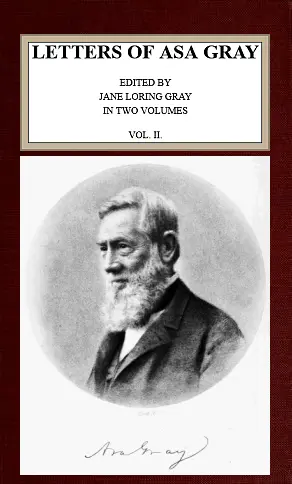
Asa Gray
Asa Gray
Florence Nightingale
Elizabeth Robins Pennell
Denison Olmsted