THE CLASSIC COLLECTION✦A dead man’s diaryCLASSIC FREE BOOKS
A dead man’s diary
Coulson Kernahan
THE CLASSIC COLLECTION · 1894
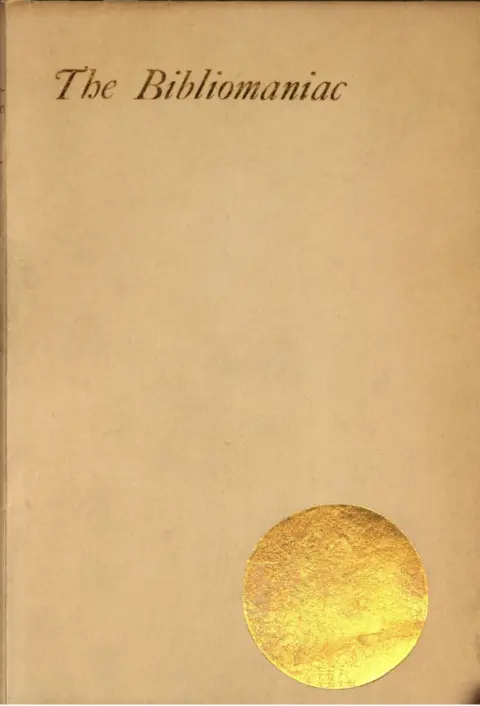
"The Bibliomaniac" by Charles Nodier is a novella written during the late 19th century, specifically in 1894. This whimsical literary work explores the obsessive passion for books, encapsulated in the character of Theodore, a bibliomaniac who prioritizes his love of books above all else. The book intricately balances humor and melancholy as it delves into the eccentricities and ultimate ironies within the lives of book collectors and bibliophiles. The story follows Theodore, a man entirely consumed by his obsession with books, to the point of neglecting all other aspects of life. As he isolates himself from society, his obsession spirals into a form of madness, culminating in "bibliomania." The narrative intertwines Theodore’s comical interactions with a cast of characters, including fellow bibliomaniacs and a physician who observes his condition, along with nostalgic reflections on the literary culture of the past. Ultimately, the narrative paints a poignant picture of a man's downfall, underlining the bittersweet relationship between bibliophiles and the books they cherish, concluding with Theodore's demise over a mere third of a line that has driven him into despair.
Introduction adapted from the source catalogue; source summaries may be automatically generated.
Free to read · English · 7,752 words · No account needed
MAKE TIME FOR A GOOD BOOK
On by default. Untick to stop anonymous reading totals. Each page counts after 10 seconds in view. How this works.
Anonymous counting is on unless you have switched it off.
“It was then, doubtless, the ‘Vintisettine’ itself.”
“Its very self. We had a jolly dinner that day: charming women, fresh oysters, intelligent people, and champagne. I reached the sale three minutes after the hammer fell.”
“Sir,” cried Theodore in a fury, “when the ‘Vintisettine’ is to be sold, one does not dine!”
His vitality, which had been sustained by the excitement of the conversation, as the bellows revives a dying spark, was exhausted by his last effort. His lips muttered once more, “A third of a line!” but they were his last words.
At the time that we gave up all hope of his recovery, we moved his bed near to his book-shelves, from which we took down, one by one, every book for which he seemed to ask with his eyes, letting him look the longest at those that we thought would please him the most.
He died at midnight, lying between a Du Seuil and a Padeloup, his hands lovingly clasping a Thouvenin.
The next day we followed his hearse, at the head of a great crowd of sorrowful morocco-finishers, and we sealed his tomb with a stone bearing the following inscription, which he had parodied for himself from Franklin’s epitaph:
[1] In the bibliography of Nodier’s writings, published with the catalogue of his library, Paris, 1844, the first edition of “Le Bibliomane” is registered 1832-1833, as in tome I of “Livre des Cent et un.”
[2] Fermier général. An association existed in France, from the reign of Philip the Fair until the Revolution of 1789, possessing the right, by purchase, to levy taxes on various articles of consumption. These “farmers” were mostly uneducated parvenus, and their extortions were so great that though they paid no less than one hundred and eighty millions of francs for the monopoly the last year of its existence, immense fortunes were made by all concerned. The Revolution caused the abolition of the privilege, and all the “farmers” were executed.
[3] “The Enemies of Books,” by William Blades.
[4] During the riots of February, 1831, a mob of self-elected “public censors” attacked the palace of the Archbishop of Paris at Notre Dame, destroyed many valuable paintings, ruined the furniture, and threw a large part of the library into the Seine.
[5] ANGULUS. A secret nook or corner, meaning, in this instance, the Sabine farm presented to Horace by Mæcenas, which the poet declared in his “Odes” to be all-sufficient for his needs.
[6] Galliot du Pré flourished in Paris during the middle of the sixteenth century. His publications, for the most part, bear the device of a galley propelled by sails and oars, with the legend “Vogue la Gualee.”
Your reading position is saved on this browser. Take it to another device with a library code. Reading pages adapt to text, rather than matching a printed edition.
BEHIND THE BOOK
This eBook is for the use of anyone anywhere in the United States and most other parts of the world at no cost and with almost no restrictions whatsoever. You may copy it, give it away or re-use it under the terms of the Project Gutenberg License included with this eBook or online at www.gutenberg.org. If you are not located in the United States, you will have to check the laws of the country where you are located before using this eBook. Read the source licence.
The original source file, including credits and licence, is retained by this library. Request an original-format copy at no charge. Please include the book title and Project Gutenberg identifier #66552.
KEEP YOUR CURIOSITY GOING
Coulson Kernahan

Maurice Baring
Frances Wright
Cécile Tormay

Frederic Jesup Stimson

W. H. P. (William Henry Pope) Jarvis