THE CLASSIC COLLECTION✦A dead man’s diaryCLASSIC FREE BOOKS
A dead man’s diary
Coulson Kernahan
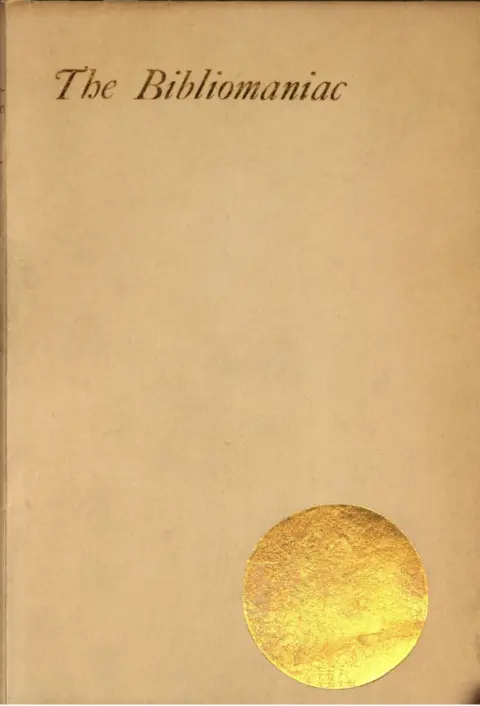
THE CLASSIC COLLECTION · 1894
"The Bibliomaniac" by Charles Nodier is a novella written during the late 19th century, specifically in 1894. This whimsical literary work explores the obsessive passion for books, encapsulated in the character of Theodore, a bibliomaniac who prioritizes his love of books above all else. The book intricately balances humor and melancholy as it delves into the eccentricities and ultimate ironies within the lives of book collectors and bibliophiles. The story follows Theodore, a man entirely consumed by his obsession with books, to the point of neglecting all other aspects of life. As he isolates himself from society, his obsession spirals into a form of madness, culminating in "bibliomania." The narrative intertwines Theodore’s comical interactions with a cast of characters, including fellow bibliomaniacs and a physician who observes his condition, along with nostalgic reflections on the literary culture of the past. Ultimately, the narrative paints a poignant picture of a man's downfall, underlining the bittersweet relationship between bibliophiles and the books they cherish, concluding with Theodore's demise over a mere third of a line that has driven him into despair.
Introduction adapted from the source catalogue; source summaries may be automatically generated.
Free to read · English · 7,752 words · No account needed
MAKE TIME FOR A GOOD BOOK
On by default. Untick to stop anonymous reading totals. Each page counts after 10 seconds in view. How this works.
Anonymous counting is on unless you have switched it off.
“You see in me,” he said, “the most unhappy of men. That book is the 1676 Virgil, on large paper, of which I thought that I had the best example known, and yet this is taller than mine, by the third of a line.[9] Prejudiced or spiteful minds might even call it half a line. A third of a line, good God!”
I was confounded. I saw that the delirium was increasing.
“A third of a line,” he repeated, shaking his fist furiously in the air like Ajax or Capaneus. All my limbs trembled.
He gradually fell into a state of deep depression.
The poor man lived only to suffer. He repeated from time to time, “The third of a line!” and wrung his hands, while I kept saying, in an undertone, “Confusion to books and typhus fever!”
“Calm yourself, my friend,” I whispered gently in his ear, each time the paroxysm was renewed. “A third of a line is not much, even in the most particular things of life.”
“Not much?” he cried; “a third of a line in the 1676 Virgil! It was the third of a line that raised the price of the Nerli Homer at M. de Cotte’s[10] a hundred louis. A third of a line! Ah! would you count the third of a line nothing in the length of a dagger that pierced your heart?”
His expression again wholly changed, his arms became rigid, his legs were seized with cramps as in a vise. The typhus was visibly reaching the extremities. I did not desire to lengthen by even the third of a line the short distance that separated us from the house.
At last we arrived there.
“A third of a line,” he said to the concierge.
“A third of a line,” he said to the cook, who opened the door.
“A third of a line,” he said to his wife, with a flood of tears.
“My parrot has flown away!” cried his little girl, likewise weeping.
“Why did you leave the cage open?” replied Theodore. “A third of a
line!”
“There is an uprising in the South and in the Rue du Cadran,” said the old aunt, who was reading the evening paper.
“What the devil are the people meddling with?” answered Theodore. “A
third of a line!”
“Your farm at la Beauce has been burned,” said his servant in putting
him to bed.
“It must be rebuilt,” said Theodore, “if it is worth the trouble. A
third of a line!”
“Do you think that this is serious?” the nurse asked me.
Your reading position is saved on this browser. Take it to another device with a library code. Reading pages adapt to text, rather than matching a printed edition.
BEHIND THE BOOK
This eBook is for the use of anyone anywhere in the United States and most other parts of the world at no cost and with almost no restrictions whatsoever. You may copy it, give it away or re-use it under the terms of the Project Gutenberg License included with this eBook or online at www.gutenberg.org. If you are not located in the United States, you will have to check the laws of the country where you are located before using this eBook. Read the source licence.
The original source file, including credits and licence, is retained by this library. Request an original-format copy at no charge. Please include the book title and Project Gutenberg identifier #66552.
KEEP YOUR CURIOSITY GOING
Coulson Kernahan

Maurice Baring
Frances Wright
Cécile Tormay

Frederic Jesup Stimson

W. H. P. (William Henry Pope) Jarvis