THE CLASSIC COLLECTION✦The sprightly romance of MarsacCLASSIC FREE BOOKS
The sprightly romance of Marsac
Molly Elliot Seawell
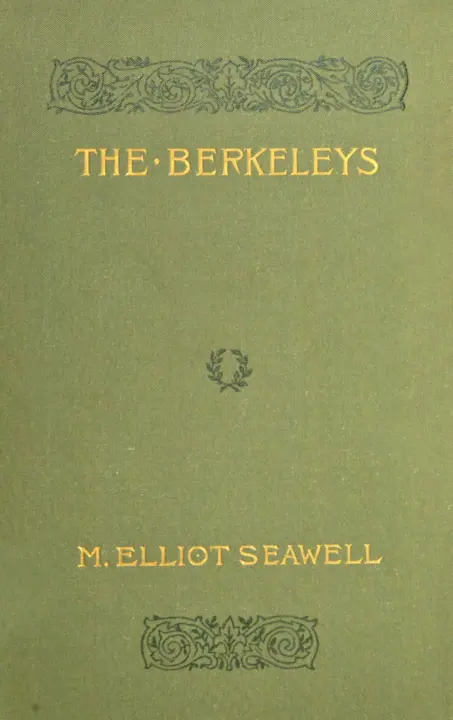
THE CLASSIC COLLECTION · 1888
"The Berkeleys and Their Neighbors" by Molly Elliot Seawell is a novel written in the late 19th century. The story is set in post-Civil War Virginia, focusing on the socially distinctive and pleasure-loving communities as they navigate the remnants of their pre-war life. The narrative follows Colonel Berkeley and his daughter, Olivia, who are returning to their old social life amidst the changes the war has brought. At the start of the novel, a provincial Virginia race-course serves as the backdrop where Colonel Berkeley and Olivia attend the Campdown fall meeting, revealing the social dynamics of their world. Colonel Berkeley, characterized by his old-fashioned manners and deep-seated pride, navigates his interactions with locals, including the Hibbs family, while Olivia grapples with her return after a period abroad. The opening portion introduces key characters, including the disfigured Miles Pembroke, and lays the groundwork for exploring themes of social status, the consequences of war, and the complex relationships between these characters in their shifting world.
Introduction adapted from the source catalogue; source summaries may be automatically generated.
Free to read · English · 57,415 words · No account needed
MAKE TIME FOR A GOOD BOOK
On by default. Untick to stop anonymous reading totals. Each page counts after 10 seconds in view. How this works.
Anonymous counting is on unless you have switched it off.
“Couldn’t you give us a song, Mr. Cole?” continued Ahlberg, laughing, “English and American fashion, you know. Something about wine and mirth.”
Mr. Cole smiled coquettishly, and cleared his throat.
“Perhaps I might try ‘The Heart Bowed Down With Weight of Woe,’” said
he.
“Yes--yes--”
“Or, ‘Then You’ll Remember Me.’ That’s more sentimental--more suited for the occasion.”
“‘Then You’ll Remember Me,’ by all means. Gentlemen, a chorus.”
Mr. Cole, placing his hand upon his heart, after having drained another glass of champagne, began in a weak and rather shaky voice,
“‘When other lips and other hearts
Their tales of love shall tell.’
“Gentlemen, I’m not in good voice to-night.
“‘In language whose excess imparts
The power they feel so well;
When hollow hearts shall wear a mask,’
“Here, Hans, old boy, I’ll take another glass of Chablis--
“‘’Twill break your own to see,
In such a moment I but a--a--a--sk
That you’ll remember me.’”
Here a tremendous chorus, led by Mr. Ahlberg, broke in, accompanied with much pounding on the table, and a rhythmic jingling of glasses:
“Then you’ll remember me, boys,
Then you’ll remember me.”
Mr. Cole, very much annoyed and preposterously dignified, began to
protest.
“Gentlemen--er--beloved brethren, I mean gentlemen, this song is a sentimental one--a sentimental song, d’ye hear--and does not admit of a convivial chorus. Now, I’ll give you the last verse over.”
Mr. Cole, looking lackadaisically at the ceiling, began again. When he reached the last line, again an uproarious chorus took the words out of his mouth. He rose, and steadying himself on his feet, implored silence in pantomime. In vain. Ahlberg and Hibbs with shouts and yells of laughter carried the chorus through. Pembroke could not but laugh, but he said to the little clergyman, in a tone subdued but authoritative:
“Sit down, Cole.”
Mr. Cole glanced fiercely at him. “Were it not for my cloth, sir, you--you’d--receive personal chastisement for that remark,” he responded angrily; but comparing his own slender figure with Pembroke’s length and strength, he plaintively continued:
“But I’m afraid you could lick me, Pembroke. You always did at school,
you know.”
Pembroke made no reply. He was no anchorite. He had sometimes found amusement in low company in low places--but low company in better places disgusted him. Besides, Cole was an honest little fellow, and not half such a fool as he appeared--and he had a conscience, and Pembroke began to feel sorry already for the pain poor Cole would have to endure.
Your reading position is saved on this browser. Take it to another device with a library code. Reading pages adapt to text, rather than matching a printed edition.
Molly Elliot Seawell
Molly Elliot Seawell
Molly Elliot Seawell
Molly Elliot Seawell
BEHIND THE BOOK
This eBook is for the use of anyone anywhere in the United States and most other parts of the world at no cost and with almost no restrictions whatsoever. You may copy it, give it away or re-use it under the terms of the Project Gutenberg License included with this eBook or online at www.gutenberg.org. If you are not located in the United States, you will have to check the laws of the country where you are located before using this eBook. Read the source licence.
The original source file, including credits and licence, is retained by this library. Request an original-format copy at no charge. Please include the book title and Project Gutenberg identifier #68290.
KEEP YOUR CURIOSITY GOING
Coulson Kernahan

Maurice Baring
Frances Wright
Cécile Tormay

Frederic Jesup Stimson

W. H. P. (William Henry Pope) Jarvis