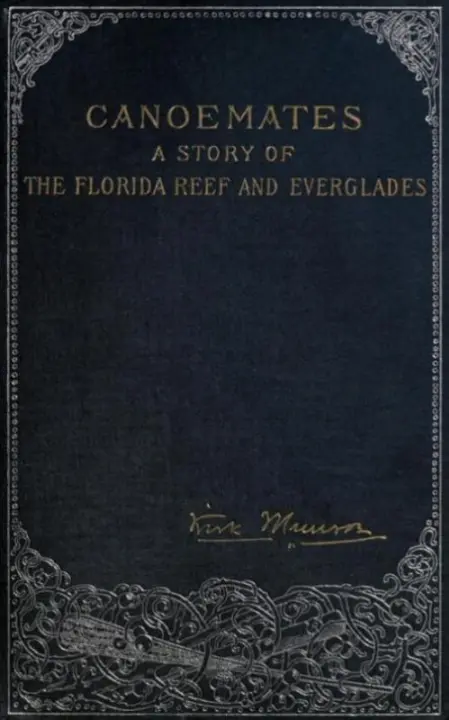
Canoemates: A Story of the Florida Reef and Everglades
Kirk Munroe
THE CLASSIC COLLECTION · 1901
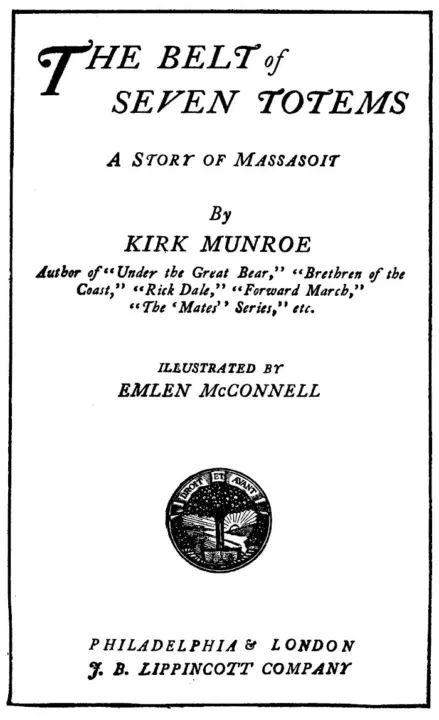
"The Belt of Seven Totems: A Story of Massasoit" by Kirk Munroe is a historical novel written in the early 20th century. The narrative unfolds during the era of the early American Indian tribes, primarily focusing on the Wampanoag chief Massasoit and his son, Nahma. The story explores themes of peace, conflict, and the complex relations between indigenous tribes and European settlers, particularly as it delves into Massasoit's strategic alliances and personal journey. The opening of the book introduces the village of Peace, ruled by Longfeather, the wise Peacemaker and father of Nahma. As Longfeather strives to unify tribes in a federation for mutual protection against potential threats, including the arrival of white settlers, Nahma is depicted as a promising youth being groomed for leadership. The narrative hints at intrigue and conflict, particularly with rival tribes like the Narragansetts, setting the stage for Nahma's adventures and the trials he will face as tensions escalate during a time of impending change. The groundwork for a rich exploration of identity, duty, and the impact of external forces on Native American communities is skillfully laid in these initial chapters.
Introduction adapted from the source catalogue; source summaries may be automatically generated.
Free to read · English · 58,282 words · No account needed
MAKE TIME FOR A GOOD BOOK
On by default. Untick to stop anonymous reading totals. Each page counts after 10 seconds in view. How this works.
Anonymous counting is on unless you have switched it off.
Not understanding what was said, Nahma made no answer. Only, recalling the teaching of his own people, he stared his questioner full in the face with a mien that, in spite of his sorry plight, was quite as haughty as that of the knight himself.
"A contumacious varlet and insolent," remarked Sir Amory, "but it is possible that we may find means to lower his pride. Let the ranger named Jem stand forth and relate his tale of the occurrence concerning which this investigation is made."
So Jem told his story, and it was corroborated by the other forester. Also were the dead hounds introduced as evidence, together with the dirk that Nahma had used so effectively.
"What hast thou to say in thy own behalf, scoundrel?" asked the knight, turning again to the prisoner after all this testimony against him had been submitted.
Still there was no answer, but only an unflinching gaze and a proudly
uplifted head.
"Think you the creature is dumb?" inquired the puzzled magistrate.
"No, Sir Amory," replied one of the foresters, "of a surety he is not, for we heard him call loudly to the bear, and at sound of his voice the beast made violent effort to break his chain that he might get to him."
"Chain?" quoth the knight. "This is the first mention I have heard of any chain. What mean you? Was the bear indeed chained?"
"Chained and muzzled was he," admitted the ranger, "else it had gone more hardly with the dogs than happened."
"Chained and muzzled," repeated the knight, reflectively, and casting a searching gaze upon the prisoner. "Still, it may be only a coincidence." With this he gave an order in a low tone to a page who stood at hand, and the boy darted away.
"Saw you trace of other gypsies at or near that place?" asked the knight, continuing his examination of the forester.
"No, Sir Amory. That is, we saw no humans, but there was a booth partly
built close at hand."
"What is the material of the prisoner's dress?"
"Deer-skin, Sir Amory, nothing less."
At this moment a tapestry was drawn aside, and a lady, appearing on the dais, stood beside her husband with a look of inquiry. She was followed by one bearing in her arms a child, at sight of which the prisoner was surprised into a momentary start as of recognition.
"My dear," said Sir Amory, "will you favor us by glancing at yonder gypsy and telling if ever you have set eyes on him before?"
Your reading position is saved on this browser. Take it to another device with a library code. Reading pages adapt to text, rather than matching a printed edition.
BEHIND THE BOOK
This eBook is for the use of anyone anywhere in the United States and most other parts of the world at no cost and with almost no restrictions whatsoever. You may copy it, give it away or re-use it under the terms of the Project Gutenberg License included with this eBook or online at www.gutenberg.org. If you are not located in the United States, you will have to check the laws of the country where you are located before using this eBook. Read the source licence.
The original source file, including credits and licence, is retained by this library. Request an original-format copy at no charge. Please include the book title and Project Gutenberg identifier #62684.
KEEP YOUR CURIOSITY GOING
Wilfrid Scawen Blunt
Wilfrid Scawen Blunt

E. W. (Edgar Watson) Howe
Cécile Tormay

Moritz Busch
Coulson Kernahan