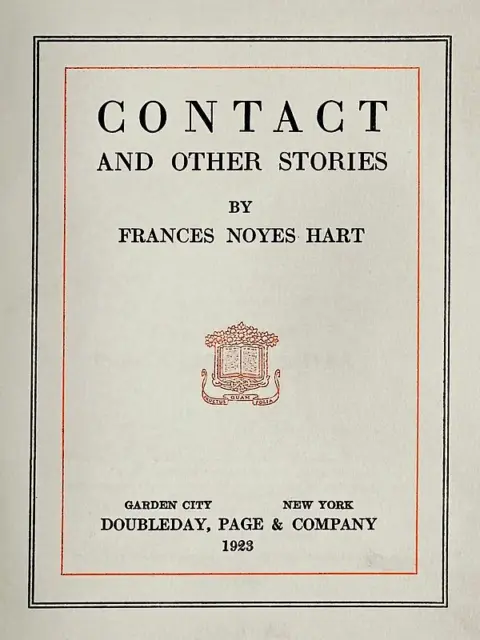
Contact, and Other Stories
Frances Noyes Hart
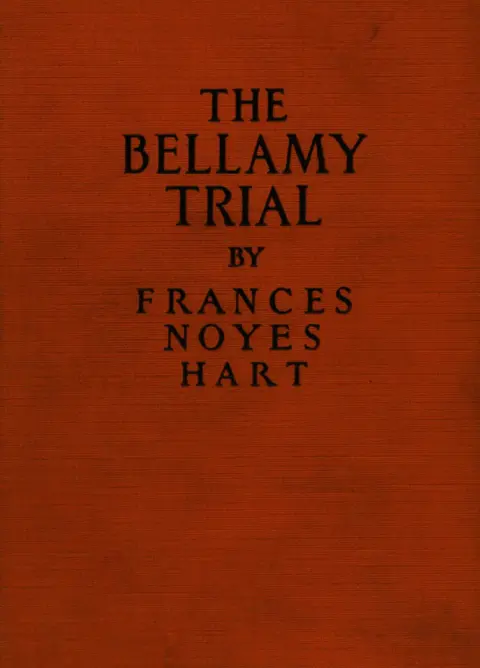
THE CLASSIC COLLECTION · 1927
"The Bellamy Trial" by Frances Noyes Hart is a novel written in the late 1920s. The narrative centers on a high-profile murder trial, specifically the case against Susan Ives and Stephen Bellamy for the murder of Madeleine Bellamy. Through the lens of the courtroom drama, the story delves into themes of jealousy, betrayal, and societal scrutiny. At the start of the book, the scene is set in a bustling courtroom where a red-headed girl, a novice reporter for the Philadelphia "Planet", is excitedly taking in the atmosphere and preparing to cover the sensational trial. She encounters a seasoned reporter who shares his cynical insights about the nature of the press and the trials, hinting at the darker elements of human nature surrounding the case. As the trial begins, the prosecution outlines the grim details of the murder, creating a vivid picture of the events that led to the tragic death of Madeleine Bellamy. This exposition immediately establishes the tension and intrigue that will unfold in the courtroom throughout the proceedings.
Introduction adapted from the source catalogue; source summaries may be automatically generated.
Free to read · English · 111,969 words · No account needed
MAKE TIME FOR A GOOD BOOK
On by default. Untick to stop anonymous reading totals. Each page counts after 10 seconds in view. How this works.
Anonymous counting is on unless you have switched it off.
“The fact that Mrs. Ives had told her that her services were no longer required, and that she had better make her preparations to leave on Monday. Miss Page wished me to intervene in her behalf, as I had already done on two occasions.”
“Did you acquiesce?”
“On the contrary,” said Pat Ives—and at the tone of chilled steel in his voice the red-headed girl felt a flash of something like pity for her pet detestation, the flower-faced Miss Page—“I told her that in my opinion Sunday was a better day than Monday, and that I’d send Roberts to help with the packing.”
“Why was Miss Page so anxious to stay, Mr. Ives?”
“How should I know?” inquired Mr. Ives. “She probably realized that it was a very excellent job that she was losing.”
“That is the only explanation that occurs to you?”
“It is the only explanation that it occurs to me to give you,” said Mr. Ives gently, a small, dangerous smile playing about the corner of his mouth.
Mr. Lambert eyed him indecisively for a moment, and prudently decided on another tack. “Did that conclude your conversation?”
“Oh, no,” replied Mr. Ives, the smile deepening. “That started it.”
“Will you give us the rest of it, please?”
“I’m afraid I can’t. As I told you, I have a bad memory. If it doesn’t betray me, however, I believe that it was largely an elaboration of the two original themes.”
“What themes?”
“The themes of her departure and my intervention.”
“Miss Page said nothing about a note?”
“A note?” There was a look of genuine surprise in the lifted brows.
“She did not mention having intercepted a note from Mrs. Stephen Bellamy—having abstracted it from a book in the library?”
“I see,” said Mr. Ives, the brows relaxing, the smile returning, a little deeper and more dangerous. “No, I don’t believe that she mentioned that. It would probably have made an impression on me if she had.”
“Had you any reason to believe that Miss Page was jealous of Mrs.
Bellamy, Mr. Ives?”
“Jealous of Mrs. Bellamy? Why should Miss Page have been jealous of
Mrs. Bellamy?”
“I thought that possibly you might be able to tell us.”
“You were in error,” said Mr. Ives, leaning a little forward in his chair. “I am totally unable to tell you.”
He did not lift his voice, but Mr. Lambert moved back a step somewhat
precipitately.
“Yes—exactly. Now, Mr. Ives, Melanie Cordier has testified that you told her that you had not found the note she claims to have placed there. Was that correct?”
“That is what I told her, certainly.”
Your reading position is saved on this browser. Take it to another device with a library code. Reading pages adapt to text, rather than matching a printed edition.
Frances Noyes Hart
BEHIND THE BOOK
This eBook is for the use of anyone anywhere in the United States and most other parts of the world at no cost and with almost no restrictions whatsoever. You may copy it, give it away or re-use it under the terms of the Project Gutenberg License included with this eBook or online at www.gutenberg.org. If you are not located in the United States, you will have to check the laws of the country where you are located before using this eBook. Read the source licence.
The original source file, including credits and licence, is retained by this library. Request an original-format copy at no charge. Please include the book title and Project Gutenberg identifier #75325.
KEEP YOUR CURIOSITY GOING
Coulson Kernahan

Maurice Baring
Frances Wright
Cécile Tormay

Frederic Jesup Stimson

W. H. P. (William Henry Pope) Jarvis