THE CLASSIC COLLECTION✦A Prince of SwindlersCLASSIC FREE BOOKS
A Prince of Swindlers
Guy Boothby

THE CLASSIC COLLECTION · 1896
"The Beautiful White Devil" by Guy Boothby is a novel written in the late 19th century. The story follows George De Normanville, a medical doctor, who embarks on an unexpected adventure after becoming entangled with the enigmatic and notorious figure known as the Beautiful White Devil. Set against the backdrop of Hong Kong and the surrounding seas, this tale brims with elements of mystery, danger, and romance as De Normanville encounters various characters and scenarios that challenge his perceptions and skills. At the start of the book, the reader is introduced to the sweltering scene in Hong Kong, where De Normanville finds himself amidst a group of officers discussing the exploits of the Beautiful White Devil, a woman suspected of masterminding heists and abductions. As the conversation unfolds, a mysterious man named Horace Venderbrun approaches De Normanville with an urgent and lucrative proposition to attend to a smallpox outbreak on a remote island. Following a brief but intense discussion, the doctor agrees, only to be whisked away into a tumultuous adventure that involves piracy, a deadly encounter on a junk, and ultimately leads him to the luxurious yacht of the Beautiful White Devil herself, whose true character and intentions remain shrouded in intrigue as he contemplates the nature of good and evil.
Introduction adapted from the source catalogue; source summaries may be automatically generated.
Free to read · English · 84,403 words · No account needed
MAKE TIME FOR A GOOD BOOK
On by default. Untick to stop anonymous reading totals. Each page counts after 10 seconds in view. How this works.
Anonymous counting is on unless you have switched it off.
"Of course I am not," I answered quickly, only too glad of the opportunity of hearing a story that others would have given anything to have had related to them. "But if it means recalling unhappy memories, why tell it me? I shall serve you just as faithfully without knowing it."
"I do not doubt that for an instant," she said. "But you must surely see, Dr. De Normanville, that being brought into contact with you as much as I am, I want to set myself right with you. I want you to know all about me. Hitherto you have only thought of me, remember, as--well, as a beautiful woman, whose pleasure in life it is to rob and blackmail innocent and unsuspecting folk in this distant portion of the globe. Having seen your kindness and gentleness to my unfortunate people to-day, and honouring you for it as I do, is it to be wondered at that I want you to understand my work in life properly? May I tell you my story?"
"Please do! It will interest me deeply."
She moved over from the gate to the broad wooden rail that ran along the path side, and which had evidently been placed there to protect foot passengers from the abyss. Leaning on it, she scanned the moonlit valley for some moments without speaking. Then turning her face toward me, she began:
"My father, you must know, Dr. De Normanville, was a typical Englishman; he came of a good old Yorkshire family, and was an officer in Her Majesty's navy; he was also remarkable for his great height, strength, and wonderful personal beauty. He was very popular with his fellow-officers and men, and in the early part of his career saw a good deal of active service in various parts of the globe. It was during the time that he was stationed in the West Indies, and soon after he was made commander of his ship, that he met my mother, a beautiful Creole, and married her. From the moment of his marriage the good luck which had hitherto attended his career seemed to desert him; he lost his ship on an uncharted rock, and, when he was appointed to another, was ordered to a bad station, where he nearly lost his wife and his own life of fever. With his recovery came the most unfortunate part of his career. For just as he was about to be relieved, a charge was preferred against him by the admiral of the station, of so base and wicked a description that all those who heard it refused at first to entertain the notion. He was court-martialled and expelled the service. Since then the charge has been proved to have been entirely without foundation, but by the time that was known my poor father had died in exile. He appealed, but what was the use of that? To a proud, headstrong man, conscious of his innocence, such disgrace was unbearable, and he at length fled from England, resolved to shake its dust for ever off his feet. He went to India, but the result of the trial was known there, and every post was barred to him. He passed on to Singapore, and finally to Hong Kong, but always with the same result. By this time everything that was obstinate and worst in him was roused; and when the admiral, the same who had brought the charge against him, was transferred to the China station, my father sought him out in Shanghai, decoyed him outside the city, requested him to publicly admit that the charges he had brought against him were false, and on his refusing, produced pistols, invited him to a duel, and shot him dead. Then, while the police were hunting for him, he fitted out a boat, with a large sum of money that had some time before been left him, collected a dozen other men as desperate as himself, tested them thoroughly before he trusted them, and, having bound them to secrecy, set off to find an island where they could lead their own lives unhindered by the outside world. This was the place they came to, and those old houses near the harbour were their first dwellings. Once in every six months my father went off to Hong Kong for supplies, and it was during one of these excursions that he met the man whose destiny it was to recognise him, and so hasten the trouble that lay before him. High words passed between them, and the result was a betrayal, and a fight with the police, in which two men were left dead upon the beach. That was the beginning of the end. The same night a boatload of marines put off to arrest my father, who was in the act of getting his schooner under weigh. When they came within hailing distance they were challenged and asked their business. The officer in charge replied that he held a warrant for my father's arrest. But the latter had no desire to fall into the authorities' hands again, so he bade them stand off. The officer, however, ordered his men to board. Again they were warned not to approach, but they paid no heed; the result may be imagined: a volley was fired from the schooner, and four men out of the six constituting the boat's crew, including the officer in charge, fell dead. Without more ado my father got under weigh, and raced for his life out of the harbour, pursued by three shots from the cruiser in the bay. From that day forward he was a proscribed man. Rewards were offered for his capture in all the principal ports of the East, not only by the English Government, but by the rich residents of Singapore, Hong Kong, and the treaty ports. Considering that it was not their affair, this action on the part of his former friends so enraged my father, that he swore that if ever one of the signatories fell into his hands, he would make him pay dearly for his action. It may interest you to know that Mr. Vesey, the man whom you perhaps remember I abducted, was the chairman of the meeting that offered the first reward for my father, and years afterwards for me.
Your reading position is saved on this browser. Take it to another device with a library code. Reading pages adapt to text, rather than matching a printed edition.
Guy Boothby
Guy Boothby
Guy Boothby
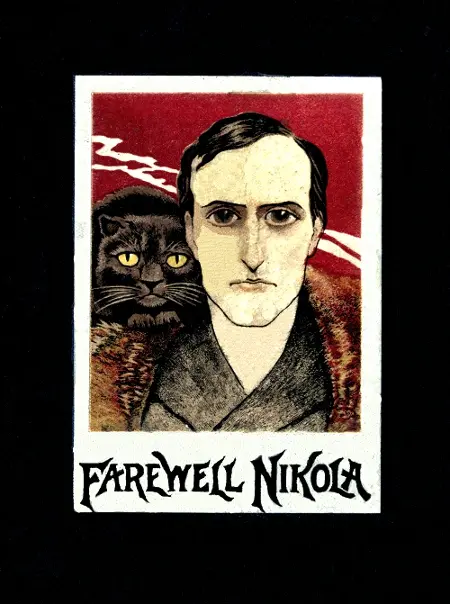
Guy Boothby
BEHIND THE BOOK
This eBook is for the use of anyone anywhere in the United States and most other parts of the world at no cost and with almost no restrictions whatsoever. You may copy it, give it away or re-use it under the terms of the Project Gutenberg License included with this eBook or online at www.gutenberg.org. If you are not located in the United States, you will have to check the laws of the country where you are located before using this eBook. Read the source licence.
The original source file, including credits and licence, is retained by this library. Request an original-format copy at no charge. Please include the book title and Project Gutenberg identifier #37948.
KEEP YOUR CURIOSITY GOING
Coulson Kernahan

Maurice Baring
Frances Wright
Cécile Tormay

Frederic Jesup Stimson

W. H. P. (William Henry Pope) Jarvis