THE CLASSIC COLLECTION✦The claims of decorative artCLASSIC FREE BOOKS
The claims of decorative art
Walter Crane
THE CLASSIC COLLECTION · 1898
"The Bases of Design" by Walter Crane is a comprehensive guide on the principles of design written in the late 19th century. This work is not merely a technical manual but a philosophical exploration of how various arts of design intertwine, stressing the importance of understanding design within the context of architecture and utility. Crane emphasizes the need for unity in design, particularly as the divisions among art forms become more pronounced due to commercial competition. The opening portion of the book sets the stage for a deeper investigation into the nature of design, rooted in architecture as "the queen and mother of all the arts." Crane outlines the complexity and variety encompassed in the study of design, which he intends to approach by exploring the origins, influences, and characteristics of diverse artistic forms. He begins with foundational questions regarding the nature of designs, how they develop in relation to practical needs, and their connections to architectural forms, setting a groundwork that suggests future discussions will delve into various aspects of design history, culture, and practice.
Introduction adapted from the source catalogue; source summaries may be automatically generated.
Free to read · English · 59,852 words · No account needed
MAKE TIME FOR A GOOD BOOK
On by default. Untick to stop anonymous reading totals. Each page counts after 10 seconds in view. How this works.
Anonymous counting is on unless you have switched it off.
If we realize the close and necessary links that unite all workers, that are essential to the production of things useful or beautiful, or both, should not we do well to strive to make the association closer and more complete than it is, and thus hand on the lamp of good tradition in design and workmanship, however far we must look forward to the enlargement of our horizon and the harmonizing of human life, and its freedom from the sinister powers and false ideals that now oppress and deceive it? And if we accept the truth that art is unity, and that what the unit is the mass may become, should we not strive, each in his sphere, whatever our main work may be, to do it worthily and well? remembering that it is better to do a small thing well than a big thing badly, and that it is the spirit in which our work is done, not the place it may accidentally occupy, or the class to which it may belong, or the reward it may receive in the ordinary estimation, that makes it great or little.
Ahmedabad, carved stone lattice window at, 182, 183.
Alciati's "Emblems," 253-256.
Alhambra, the, 186, 187.
Amiens, sculpture at, 270, 273.
Amman, Jost, 367.
Amphora, Greek, 80, 81.
Angels, Christian, 244.
Andreæ, Hieronymus, 284.
Andreani, Andrea, 330, 331.
Anthemion ornament, Greek, 49, 52.
Apelles, 303, 304.
Arabian invasion of Persia, 175, 179;
casement, 180;
carved pulpit, 212, 213, 215.
Arch, round, 5, 16;
pointed, 5, 26.
Arches, typical forms of, 30.
Architecture, the original basis of design, 3;
typical constructive forms in, 5;
Greek, 6-16;
Roman, 16-20;
Byzantine, 20-25;
Norman, 26-28;
Gothic, 28-46;
relationship between, and the art of design generally, 46, 47.
Ardebil, Holy Carpet of the mosque at, 175-177.
Assyrian border, 49, 50;
enamelled tile, 49, 51;
sculpture, 192, 203, 204;
treatment of natural forms, 198-202.
Auxerre, sculpture at, 270, 272.
Axmouth Church, tower of, 64.
Bacchus, visit of, to Icarius, 18, 201.
Barge-board, use of the, 61.
Bates, Harry, 100.
Bellini, Jacopo, 328.
Beni Hasan, tomb of, 195, 265.
Benson, W. A. S., 70.
Bewick, Thomas, revival of the woodcut under, 119, 294.
Birds, Egyptian treatment of, 264;
Japanese treatment of, 264, 266, 267;
Bewick's treatment of, 294.
Blake, William, 119, 120, 294.
Bohemia, old towns of, 188, 189.
Book-binding, 370-372.
Books, decoration of, 117-121, 133-141.
Botticelli, Sandro, 323-326.
Bouchardon, statue of Louis XV. by, 99, 101.
Brasses, heraldry in, 252;
characteristics of design in, 290-293.
Bronze casting, 98-101.
Brown, Ford Madox, cartoons for glass by, 152, 153;
drawings by, 300.
Bruges, the Belfry of, 62;
grate back from, 67, 68;
iron-work at, 103;
brass at, 291, 292.
"Buch von den Sieben Todsünden," 117.
Burgmair, Hans, 284.
Burne-Jones, Sir Edward, studies by, 126.
Byzantine art, 20-25, 141, 239.
Cairo, casement from, 181;
pulpit from, 212, 213, 215;
carved and inlaid panel from, 217.
Calvert, Edward, 294.
Cambridge, King's College Chapel, 32.
Candelabra, brass, 73-75.
Candlesticks, 69, 71, 73, 76, 77.
Canopied tombs, 38, 39;
seat and sideboard, 41.
Canterbury, Anselm's Tower, 26, 27;
transitional arcade, 29;
south side of choir, 43, 45;
fire-dog from St. Nicholas's Hospital, 67.
Cave men, art of the, 259, 260, 261.
Ceiling decoration, 124, 125, 126, 131.
Cellini, Benvenuto, 100.
Celtic cross, 209.
Cera perduta, 98, 99.
Chequer pattern, the, 48, 49.
Your reading position is saved on this browser. Take it to another device with a library code. Reading pages adapt to text, rather than matching a printed edition.
Walter Crane
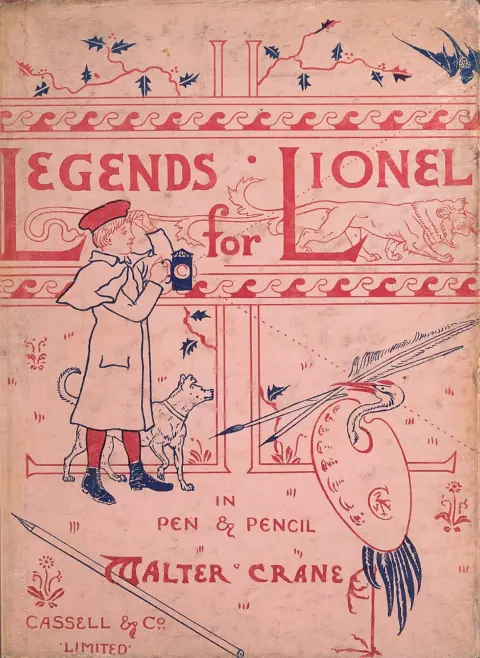
Walter Crane
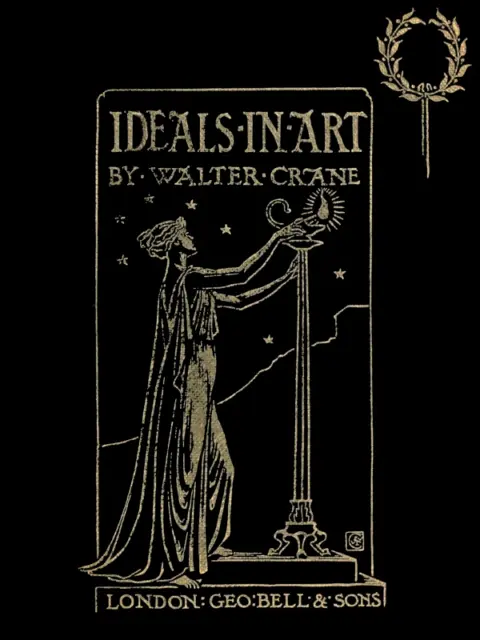
Walter Crane

Walter Crane
BEHIND THE BOOK
This eBook is for the use of anyone anywhere in the United States and most other parts of the world at no cost and with almost no restrictions whatsoever. You may copy it, give it away or re-use it under the terms of the Project Gutenberg License included with this eBook or online at www.gutenberg.org. If you are not located in the United States, you will have to check the laws of the country where you are located before using this eBook. Read the source licence.
The original source file, including credits and licence, is retained by this library. Request an original-format copy at no charge. Please include the book title and Project Gutenberg identifier #47967.
KEEP YOUR CURIOSITY GOING

Charles G. (Charles Griffith) Ross
Hannah Webster Foster

Emily Lawless
Edwin Hamlin Carr

Charles De Lano Hine
Andrew Ure