THE CLASSIC COLLECTION✦Scrambles Amongst the Alps in the Years 1860-69CLASSIC FREE BOOKS
Scrambles Amongst the Alps in the Years 1860-69
Edward Whymper
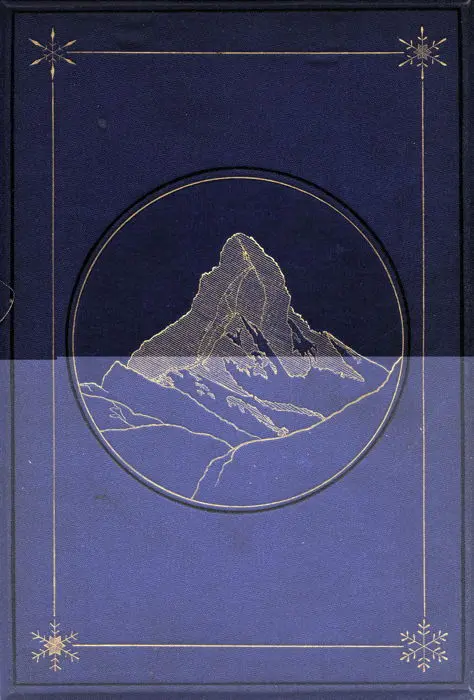
THE CLASSIC COLLECTION · 1880
"The Ascent of the Matterhorn" by Edward Whymper is a historical account written in the late 19th century. The book primarily focuses on the author's ambitious attempts to conquer the Matterhorn, one of the most formidable mountains in the Alps, as well as other peaks in the region. Whymper shares his journeys and encounters with fellow climbers, guides, and the treacherous landscapes, providing insight into the trials and tribulations of early mountaineering. The opening portion of the book sets the stage for Whymper's passion for mountaineering, detailing his initial ignorance and subsequent experiences as he travels through the Alps in 1860. He describes a series of scrambles, encounters with various mountains, and the challenges posed by each ascent, all while painting vivid imagery of the stunning landscapes around him. There is an emphasis on his first experiences, mistakes, and the drive that propels him toward the Matterhorn, culminating in an eagerness to prove its accessibility or to confirm its reputed inaccessibility. The narrative establishes his thirst for adventure and foreshadows the dramatic and historic events that will follow throughout his climbing endeavors.
Introduction adapted from the source catalogue; source summaries may be automatically generated.
Free to read · English · 117,773 words · No account needed
MAKE TIME FOR A GOOD BOOK
On by default. Untick to stop anonymous reading totals. Each page counts after 10 seconds in view. How this works.
Anonymous counting is on unless you have switched it off.
56 Those which I collected were as follow:—Myosotis alpestris, Gm.; Veronica alpina, L.; Linaria alpina, M.; Gentiana Bavarica, L.; Thlaspi rotundifolium, Gaud.; Silene acaulis, L. (?); Potentilla sp.; Saxifraga sp.; Saxifraga muscoides, Wulf. I am indebted for these names to Mr. William Carruthers of the British Museum. These plants ranged from about 10,500 to a little below 13,000 feet, and are the highest which I have seen anywhere in the Alps. Several times this number of species might be collected, I have no doubt, within these limits. I was not endeavouring to make a flora of the Matterhorn, but to obtain those plants which attained the greatest height. Very few lichens are seen on the higher parts of this mountain; their rarity is due, doubtless, to the constant disintegration of the rocks, and the consequent exposure of fresh surfaces. Silene acaulis was the highest plant found by De Saussure on his travels in the Alps. He mentions (§ 2018) that he found a tuft “near the place where I slept on my return (from the ascent of Mont Blanc), about 1780 toises (11,388 feet) above the level of the sea.”
Mr. William Mathews and Mr. Charles Packe, who have botanised respectively for many years in the Alps and Pyrenees, have favoured me with the names of the highest plants that they have obtained upon their excursions. Their lists, although not extensive, are interesting as showing the extreme limits attained by some of the hardiest of Alpine plants. Those mentioned by Mr. Mathews are—Campanula renisia (on the Grivola, 12,047 feet); Saxifraga bryoides and Androsace glacialis (on the summits of Mont Emilius, 11,677, and the Ruitor, 11,480); Ranunculus glacialis, Armeria alpina, and Pyrethrum alpinum (on Monte Viso, from 10,000 to 10,500 feet); Thlaspi rotundifolium and Saxifraga biflora (Monte Viso, about 9500 feet); and Campanula rotundifolia (?), Artemisia spicata (Wulf.), Aronicum Doronicum, and Petrocallis Pyrenaica (Col de Seylières, 9247).
Mr. Packe obtained, on or close to the summit of the Pic de Mulhahacen, Sierra Nevada, of Granada (11,600 to 11,700 feet), Papaver alpinum (var. Pyrenaicum), Artemisia Nevadensis (used for giving the flavour to the Manzanilla sherry), Viola Nevadensis, Galium Pyrenaicum, Trisetum glaciale, Festuca Clementei, Saxifraga Grœnlandica (var. Mista), Erigeron alpinum (var. glaciale), and Arenaria tetraquetra. On the Picacho de Veleta (11,440 feet), and on the Alcazaba (11,350), the same plants were obtained, with the exception of the first named. At a height of 11,150 feet on these mountains he also collected Ptilotrichum purpureum, Lepidium stylatum, and Biscutella saxatilis; and, at 10,000 feet, Alyssum spicatum and Sideritis scordiodes. Mr. Packe mentions the following plants as occurring at 9000 to 10,000 feet in the Pyrenees:—Cerastium latifolium, Draba Wahlenbergii, Hutchinsia alpina, Linaria alpina, Oxyria reniformis, Ranunculus glacialis, Saxifraga nervosa, S. oppositifolia, S. Grœnlandica, Statice Armeria, Veronica alpina.
Your reading position is saved on this browser. Take it to another device with a library code. Reading pages adapt to text, rather than matching a printed edition.
BEHIND THE BOOK
This eBook is for the use of anyone anywhere in the United States and most other parts of the world at no cost and with almost no restrictions whatsoever. You may copy it, give it away or re-use it under the terms of the Project Gutenberg License included with this eBook or online at www.gutenberg.org. If you are not located in the United States, you will have to check the laws of the country where you are located before using this eBook. Read the source licence.
The original source file, including credits and licence, is retained by this library. Request an original-format copy at no charge. Please include the book title and Project Gutenberg identifier #38044.
KEEP YOUR CURIOSITY GOING
Wilfrid Scawen Blunt
Wilfrid Scawen Blunt

E. W. (Edgar Watson) Howe
Cécile Tormay

Moritz Busch
John L. Ransom