THE CLASSIC COLLECTION✦Military and religious life in the Middle Ages and at the period of the RenaissanceCLASSIC FREE BOOKS
Military and religious life in the Middle Ages and at the period of the Renaissance
P. L. Jacob
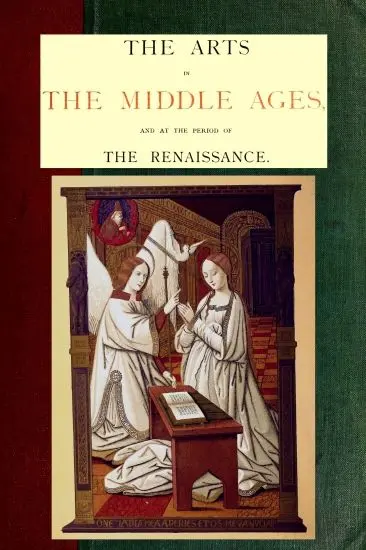
THE CLASSIC COLLECTION · 1870
"The Arts in the Middle Ages and at the Period of the Renaissance" by Paul Lacroix is a historical account written in the mid-19th century. The work explores the evolution and significance of various art forms during the Middle Ages and Renaissance periods, detailing their cultural impacts and the craftsmanship involved. The book aims to present a comprehensive overview of artistic traditions, ranging from architecture to decorative arts. At the start of this book, the author outlines his ambitious project, focusing on the transition of art from the Middle Ages—characterized by a spiritual and often rugged aesthetic—to the flourishing creativity of the Renaissance, which embraced classical ideals of beauty and form. Lacroix delves into the origins of furniture used in this era, discussing the transformation from simple materials to ornate craftsmanship as society evolved from a state of barbarism to one of prosperity and cultural richness. He introduces themes of ornamentation, the influence of various cultures, and the societal changes that prompted new artistic expressions, making it clear that the arts serve as a reflection of historical developments.
Introduction adapted from the source catalogue; source summaries may be automatically generated.
Free to read · English · 138,786 words · No account needed
MAKE TIME FOR A GOOD BOOK
On by default. Untick to stop anonymous reading totals. Each page counts after 10 seconds in view. How this works.
Anonymous counting is on unless you have switched it off.
[42] We presume this plate to be that commonly known among collectors of prints as “Death’s Horse;” it represents a knight on horseback followed by Death. The best impressions of this plate are prior to the date 1513. It is also called “The Christian Knight,” and “The Knight, Death, and the Devil.”--[ED.]
[43] That Marc Antonio studied painting under Raphael, as is here implied, is more than doubtful, though he engraved a very large number of his various compositions, and was highly esteemed by the great master.--[ED.]
[44] Giovanni B. B. Ghisi; Giorgio and Adams, his two sons; and Diana,
his daughter.--[ED.]
[45] This engraver, generally known by the single name of
George, usually signed his plates with the surname Peins or
Pentz.--[ED.]
[46] He was born at Prague, although most of his works were executed in
England.--[TR.]
[47] Ambons--a kind of pulpit in the early Christian
churches.--[ED.]
[48] Strasbourg spire is 468 feet in height, the highest in the world. Amiens, the next, a mere flèche, is 422 feet.--[TR.]
[49] M. Lacroix uses the word Romane throughout, with reference to this style of architecture: we have adopted Norman as that most commonly associated with it, and because it is a generic term comprehending Romanesque, Lombardic, and even Byzantine.--[ED.]
[50] Oculus (eye).--This word is not known in the vocabulary of English architects; but it is evidently intended to signify a circular window.--[ED.]
[51] Officers who had jurisdiction over, and were inspectors of, works
of masonry and carpentry.
[52] The word is derived from vellus, which merely signifies the skin of any beast, not of a calf only.--[ED.]
[53] The word is derived from the Latin uncialis, and is applied to letters of a round or hook-shaped form: such were used by the ancients as numerals, or for words in abbreviated inscriptions.--[ED.]
[54] Minuscule.--Less or little. The term is evidently here intended to distinguish small letters from capitals.--[ED.]
[55] Palimpsest--a kind of parchment from which anything written could easily be erased.--[ED.]
[56] Librarian probably; though libraire means only a bookseller, bibliothécaire being the French for a librarian.--[TR.]
[57] Translation: “This is Monseigneur St. Louis’ Psalter, which belonged to his mother.”
[58] Antiphonaries--books containing the responses, &c., used in Catholic church-services.--[ED.]
[59] “Garni de deux fermaulx d’argent, dorez, armoiez d’azur à une aigle d’or à deux testes, onglé de gueulles, auquel a ung tuyau d’argent doré pour tourner les feuilles, à trois escussons desdites armes, couvert d’une chemise de veluyau vermeil.”
Your reading position is saved on this browser. Take it to another device with a library code. Reading pages adapt to text, rather than matching a printed edition.
P. L. Jacob
P. L. Jacob
BEHIND THE BOOK
This eBook is for the use of anyone anywhere in the United States and most other parts of the world at no cost and with almost no restrictions whatsoever. You may copy it, give it away or re-use it under the terms of the Project Gutenberg License included with this eBook or online at www.gutenberg.org. If you are not located in the United States, you will have to check the laws of the country where you are located before using this eBook. Read the source licence.
The original source file, including credits and licence, is retained by this library. Request an original-format copy at no charge. Please include the book title and Project Gutenberg identifier #59924.
KEEP YOUR CURIOSITY GOING
Cécile Tormay

Moritz Busch
John L. Ransom
Frances Wright
Cécile Tormay

Mabel Potter Daggett