THE CLASSIC COLLECTION✦The story of CairoCLASSIC FREE BOOKS
The story of Cairo
Stanley Lane-Poole
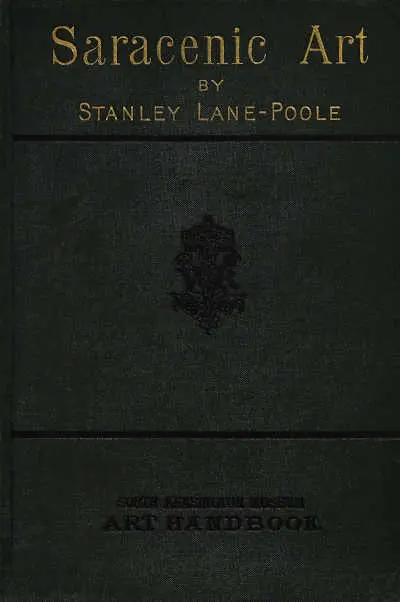
THE CLASSIC COLLECTION · 1888
The art of the Saracens in Egypt by Stanley Lane-Poole. Explore this classic work in a free online edition. Subjects include Art -- Egypt; Islamic civilization; Egypt -- Kings and rulers; Islamic art -- Egypt. Read the locally hosted text below, adjust the reading display, and continue where you left off.
Introduction adapted from the source catalogue; source summaries may be automatically generated.
Free to read · English · 82,515 words · No account needed
MAKE TIME FOR A GOOD BOOK
On by default. Untick to stop anonymous reading totals. Each page counts after 10 seconds in view. How this works.
Anonymous counting is on unless you have switched it off.
What society was like at the time of the first Mamlūks may be gathered very clearly from the poems[11] of Behā-ed-dīn Zuheyr, the secretary of Es-Sālih Ayyūb, who survived his master and died in 1258. The Egyptians of his acquaintance, as reflected in his graceful verse, seem to have resembled our own latter-day friends in their pleasures and passions. Love is the great theme of Zuheyr as well as Swinburne; the poet waxes eloquent over a long succession of mistresses, blonde and brown, constant and fickle, kind and coy,—
“Like the line of beauty her waving curl,
Her stature like the lance.”
We read of stolen interviews, in despite of parents and guardians, maidens “waiting at the tryst alone,” and various other breaches of Mohammadan morals. If Zuheyr fairly represented his time, life at Cairo in the thirteenth century was not without its savour:—
Well! the night of youth is over, and grey-headed morn is near;
Fare ye well, ye tender meetings with the friends I held so dear!
O’er my life these silvery locks are shedding an unwonted light,
And revealing many follies youth had hidden out of sight.
Yet though age is stealing o’er me, still I love the festive throng,
Still I love a pleasant fellow, and a pleasant merry song;
Still I love the ancient tryst, though the trysting time is o’er,
And the tender maid that ne’er may yield to my caresses more;
Still I love the sparkling wine-cup, which the saucy maidens fill, &c.
The wine-cup plays a prominent part in Zuheyr’s catalogue of the joys of life, and he is full of contempt for the prudent mentor who reproved him:—
Let us, friends, carouse and revel,
And send the mentor to the devil!
The great indoor amusement of the mediaeval Muslim was feasting. The Arabs indeed never understood scientific gastronomy; they coarsely drank to get drunk, and ate to get full. We read of a public banquet (under the Fātimīs, but probably equalled many a time in the Mamlūk period), where the table was covered with 21 enormous dishes, each containing 21 baked sheep, three years old and fat, and 350 pigeons and fowls, all piled up together to the height of a man, and covered in with dried sweetmeats. Between these dishes were 500 smaller ones, each holding seven fowls and the usual complement of confectionery. The table was strewn with flowers and cakes of bread, and two grand edifices of sweetmeats each weighing 17 cwt., were brought in on shoulder-poles. On such occasions a man might eat a sheep or two without being remarkable. But if he ate somewhat heartily, he did not omit to wash it down afterwards with plenty of wine, despite all the ordinances of the Prophet. If the bowls that have descended to us were drinking-cups, the Mamlūk thought very little of a pint stoup. Like our own Norse and Saxon ancestors, he loved his wassail, and took it right jovially, until he found himself under the table, or would have done so had there been any tables of the right sort. Zuheyr sings:—
Your reading position is saved on this browser. Take it to another device with a library code. Reading pages adapt to text, rather than matching a printed edition.
Stanley Lane-Poole
Stanley Lane-Poole
Stanley Lane-Poole & J. D. Jerrold (James Douglas Jerrold) Kelley
BEHIND THE BOOK
This eBook is for the use of anyone anywhere in the United States and most other parts of the world at no cost and with almost no restrictions whatsoever. You may copy it, give it away or re-use it under the terms of the Project Gutenberg License included with this eBook or online at www.gutenberg.org. If you are not located in the United States, you will have to check the laws of the country where you are located before using this eBook. Read the source licence.
The original source file, including credits and licence, is retained by this library. Request an original-format copy at no charge. Please include the book title and Project Gutenberg identifier #78943.
KEEP YOUR CURIOSITY GOING

Charles G. (Charles Griffith) Ross
Hannah Webster Foster

Emily Lawless
Edwin Hamlin Carr

Charles De Lano Hine
Andrew Ure