
The Writing of News A Handbook with Chapters on Newspaper Correspondence and Copy Reading
Charles G. (Charles Griffith) Ross
THE CLASSIC COLLECTION · 1925
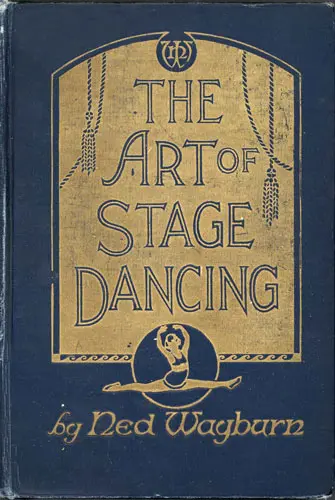
"The Art of Stage Dancing" by Ned Wayburn is a manual of stage craft written in the early 20th century. This work explores the art and profession of stage dancing, offering insights from Wayburn's extensive experience in theater, both as a dancer and a director. The book is likely aimed at aspiring dancers and includes a blend of historical context, practical methods, and inspirational anecdotes to engage readers who are passionate about dance and performance. The opening of the book begins with Wayburn addressing the reader with an enthusiastic greeting, emphasizing his intent to share insights into the world of stage dancing. He expresses gratitude towards students, teachers, and the audience alike, highlighting the significance of dance in bringing joy and beauty to life. Wayburn then humbly admits his inexperience as an author but reassures readers of the genuine passion and knowledge he shares about the art form. He outlines the various topics that will be covered, beginning with a historical overview of dance, emphasizing the evolution from primitive movements to modern stage performances, and setting the stage for a deeper exploration of techniques and training methods in the chapters to come.
Introduction adapted from the source catalogue; source summaries may be automatically generated.
Free to read · English · 109,891 words · No account needed
MAKE TIME FOR A GOOD BOOK
On by default. Untick to stop anonymous reading totals. Each page counts after 10 seconds in view. How this works.
Anonymous counting is on unless you have switched it off.
Perhaps the most popular music for the Charleston dance is the Charleston number from "Runnin' Wild."
[Music: Song and Dance Rhythm
"Narcissus"
Nevin]
[Music: FOX TROT. I LOVE YOU
by HARRY ARCHER
Copyright by Leo Feist, Inc., Used by Special Permission]
[Music: "Charleston" Cecil Mack & Jimmy Johnson
Copyright MCMXXIII by Harms, Inc., N.Y.]
There are a great many varieties of national dances, all having a peculiar rhythm of their own, portraying the character of their people. Among these are the "American" characteristic dances, as "The Rube Dance" and the peculiar rhythm of the Stop Buck, the "Essence" played in moderate 6-8 tempo, as in "Comin' Through the Rye."
[Music: Essence, Coming Thru' the Rye.]
Among the Irish Dances, the most popular are the Jig, a fast 2-4; and the Reel, a fast 6-8. The Scotch have their "Highland Fling," a fast 4-4, and there is the Hornpipe.
[Music: Irish Jig]
[Music: Irish Reel (Rory O'More)]
[Music: Highland Fling.]
[Music: Scotch Hornpipe]
The Spanish dancers are particularly fond of the Waltz, played lively, and when still more increased in tempo it becomes the "Fandango," a wild and merry dance. The Tango is in 2-4, played in moderately slow tempo; its rhythm is also adapted for the Habanera.
[Music: Valse Espana
(Fandango) Waldteufel]
[Music: Tango (Habanera)--Paul Dupont
Copyright Sam Fox Cleveland O.
("Rosita" Tango Fox Trot)]
The Italians have their "Tarantella." It is played very fast. It is supposed to cure the bite of the tarantula, hence the furious tempo. The Egyptian (Oriental) Dance is of a more sensuous type, either moderately fast in 2-4 or slow (in 6-8).
The Soft Shoe Dance is played 4 in a bar in Schottisch tempo.
[Music: TARANTELLA--BURCHENAL]
[Music: Egyptian Ballet
(fast movement)
Most any 2-4 March movement is suitable for "buck" dances, but they must be in syncopated rhythm with characteristic melodies and accompaniments and not what is called straight marches, but must have the right atmosphere musically in order to inspire the dancer.
[Music: Egyptian Ballet (slow movement)--A. LUIGINI]
There are a number of very good dance albums published annually with popular dance melodies and piano arrangements. Among the best are those published by Leo Feist, Inc., Jerome H. Remick & Company, Shapiro, Bernstein & Company, Harms, Inc., and M. Witmark & Sons, all of New York.
There are three kinds of people who should use care in all that they put into their bodies in the way of food and drink: The thin, the just right, and the stouts. That seems to cover about everybody on earth, doesn't it?
Your reading position is saved on this browser. Take it to another device with a library code. Reading pages adapt to text, rather than matching a printed edition.
BEHIND THE BOOK
This eBook is for the use of anyone anywhere in the United States and most other parts of the world at no cost and with almost no restrictions whatsoever. You may copy it, give it away or re-use it under the terms of the Project Gutenberg License included with this eBook or online at www.gutenberg.org. If you are not located in the United States, you will have to check the laws of the country where you are located before using this eBook. Read the source licence.
The original source file, including credits and licence, is retained by this library. Request an original-format copy at no charge. Please include the book title and Project Gutenberg identifier #27367.
KEEP YOUR CURIOSITY GOING
Charles G. (Charles Griffith) Ross
Hannah Webster Foster

Emily Lawless
Edwin Hamlin Carr

Charles De Lano Hine
Andrew Ure