
The Writing of News A Handbook with Chapters on Newspaper Correspondence and Copy Reading
Charles G. (Charles Griffith) Ross
THE CLASSIC COLLECTION · 1925
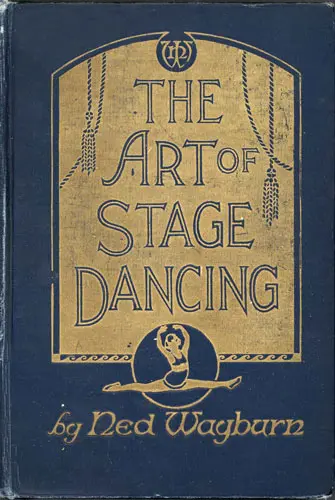
"The Art of Stage Dancing" by Ned Wayburn is a manual of stage craft written in the early 20th century. This work explores the art and profession of stage dancing, offering insights from Wayburn's extensive experience in theater, both as a dancer and a director. The book is likely aimed at aspiring dancers and includes a blend of historical context, practical methods, and inspirational anecdotes to engage readers who are passionate about dance and performance. The opening of the book begins with Wayburn addressing the reader with an enthusiastic greeting, emphasizing his intent to share insights into the world of stage dancing. He expresses gratitude towards students, teachers, and the audience alike, highlighting the significance of dance in bringing joy and beauty to life. Wayburn then humbly admits his inexperience as an author but reassures readers of the genuine passion and knowledge he shares about the art form. He outlines the various topics that will be covered, beginning with a historical overview of dance, emphasizing the evolution from primitive movements to modern stage performances, and setting the stage for a deeper exploration of techniques and training methods in the chapters to come.
Introduction adapted from the source catalogue; source summaries may be automatically generated.
Free to read · English · 109,891 words · No account needed
MAKE TIME FOR A GOOD BOOK
On by default. Untick to stop anonymous reading totals. Each page counts after 10 seconds in view. How this works.
Anonymous counting is on unless you have switched it off.
Now, without turning your head, using your eyes only, look left oblique, look front, look right oblique, front, look left oblique down, look front, look left oblique up, look front, look right oblique down, look right oblique up, look front.
Most of my instruction is based on the eight different directions which you have been told about, and on the four different parts of the foot, which you must also understand thoroughly. This makes it easy to analyze any dancing steps that we teach.
These four different parts of the foot are:
1, the toe, or end of the shoe.
2, the ball of the foot (the half sole).
3, the heel.
4, the flat of the foot.
Tapping the toe of the left foot to the floor makes the first count; stamping the ball of the left foot, the second count; the heel of the left, the third count; and the flat of the entire foot the fourth count. These four different parts of the foot become an exercise by counting 1, 2, 3, 4, with the left foot, and 5, 6, 7, 8, with the right foot, beginning with the right toe on the count of 5. This exercise if practiced faithfully will give flexibility to the muscles and ligaments that control the entire foot, all of which are used in musical comedy dancing, for the American tap, step and specialty work (clogging), for social or ballroom dancing, for exhibition dancing, as well as in the acrobatic dancing work, and for my Americanized ballet training, including toe dancing.
Do this exercise first with the left foot, then with the right foot, to the count of 1, 2, 3, 4, 5, 6, 7, 8, and practice it often, till it becomes a perfectly natural action. It is the basis of the best "bread and butter" dancing steps, as you will discover in later lessons.
In doing this exercise, remember that in dropping the toe to the floor it must be placed straight back, and not left or right oblique back; straight back from the "place" where you stand. The knees should be kept together. When you stamp the ball of your foot, the feet are directly opposite each other.
I want you to note that each of the four movements of this exercise has a distinct sound. The dropping of the toe, the stamping of the ball of the foot, of the heel, and of the flat foot, each creates a separate and distinct sound. I have named these sounds "taps," and it is the various combinations of these sounds that are used so effectively in musical comedy dances, in tap, step, and American specialty dancing (sometimes called clogging), as well as in some of our choicest acrobatic dancing.
Your reading position is saved on this browser. Take it to another device with a library code. Reading pages adapt to text, rather than matching a printed edition.
BEHIND THE BOOK
This eBook is for the use of anyone anywhere in the United States and most other parts of the world at no cost and with almost no restrictions whatsoever. You may copy it, give it away or re-use it under the terms of the Project Gutenberg License included with this eBook or online at www.gutenberg.org. If you are not located in the United States, you will have to check the laws of the country where you are located before using this eBook. Read the source licence.
The original source file, including credits and licence, is retained by this library. Request an original-format copy at no charge. Please include the book title and Project Gutenberg identifier #27367.
KEEP YOUR CURIOSITY GOING
Charles G. (Charles Griffith) Ross
Hannah Webster Foster

Emily Lawless
Edwin Hamlin Carr

Charles De Lano Hine
Andrew Ure