
The Writing of News A Handbook with Chapters on Newspaper Correspondence and Copy Reading
Charles G. (Charles Griffith) Ross
THE CLASSIC COLLECTION · 1925
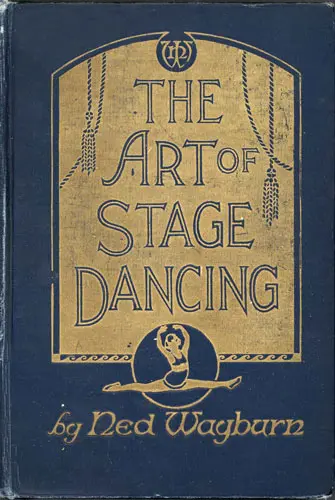
"The Art of Stage Dancing" by Ned Wayburn is a manual of stage craft written in the early 20th century. This work explores the art and profession of stage dancing, offering insights from Wayburn's extensive experience in theater, both as a dancer and a director. The book is likely aimed at aspiring dancers and includes a blend of historical context, practical methods, and inspirational anecdotes to engage readers who are passionate about dance and performance. The opening of the book begins with Wayburn addressing the reader with an enthusiastic greeting, emphasizing his intent to share insights into the world of stage dancing. He expresses gratitude towards students, teachers, and the audience alike, highlighting the significance of dance in bringing joy and beauty to life. Wayburn then humbly admits his inexperience as an author but reassures readers of the genuine passion and knowledge he shares about the art form. He outlines the various topics that will be covered, beginning with a historical overview of dance, emphasizing the evolution from primitive movements to modern stage performances, and setting the stage for a deeper exploration of techniques and training methods in the chapters to come.
Introduction adapted from the source catalogue; source summaries may be automatically generated.
Free to read · English · 109,891 words · No account needed
MAKE TIME FOR A GOOD BOOK
On by default. Untick to stop anonymous reading totals. Each page counts after 10 seconds in view. How this works.
Anonymous counting is on unless you have switched it off.
For the Messrs. Shubert at the Casino Theatre, N.Y., the following musical comedies: "The Girl and the Wizard," starring Sam Bernard; "Havana," with James T. Powers (made the American version of this libretto); "The Prince of Bohemia," with Andrew Mack, and "Mlle. Mischief," starring Lulu Glaser.
Staged and appeared in "The Producer," written by William Lebaron, a headline vaudeville production (fifty people) which opened at Hammerstein's Victoria Theatre, New York City, and played for months in vaudeville, headlining in all principal eastern cities.
Staged "The Military Girl," starring Cecil Lean and Cleo Mayfield, at the Ziegfeld Theatre in Chicago. Engaged by Lee and J.J. Shubert as producer for New York Winter Garden, created a policy for that theatre and a formula for musical productions still used there; staged "The Passing Show of 1912," "The Honeymoon Express," with Al Jolson and Gaby Deslys, "Broadway to Paris," "The Passing Show of 1913," etc.
For the English manager, Albert de Courville, at the Hippodrome, London, England, at the highest terms ever paid a stage director, he directed George Robey, Ethel Levey, Harry Tate, Billy Merson, Shirley Kellogg, and other famous continental stars.
He staged "Hullo Tango" (ran over one year), "Zig-Zag" (ran one and one-half years), "Box of Tricks," "Joybells," etc.
Opened offices in London, producing "The Honeymoon Express," which ran five years in London and the provinces; produced "Dora's Doze," at Palladium Music Hall, and leased Middlesex Music Hall, London, to stage his own musical productions with American, French and English stars, in association with Oswald Stoll, but was obliged to stop productions there when war was declared.
Next he staged and presented his own production of a farce, "She's In Again," at Gaiety Theatre, New York City; also put on his own $150,000 production of "Town Topics," with Will Rogers, at the Century Theatre, New York, for which playhouse he created a Continental Music Hall policy.
It was soon after this that he accepted an engagement as producer and general stage director for Florenz Ziegfeld and staged the "Follies of 1916," "Follies of 1917," "Follies of 1918," and "Follies of 1919."
In addition to the above, Mr. Wayburn devised and staged for Mr. Ziegfeld nine successful Midnight Frolics and two Nine O'Clock Revues atop the New Amsterdam Theatre, New York, during this time.
For Mesmore Kendall, devised and staged the opening presentation for the Capitol Theatre, New York City, September, 1919, including an elaborate and very successful revue.
For Dillingham and Ziegfeld, at Century Theatre, New York, he devised and staged the sensationally successful second act finale to "The Century Girl" (1916), where the 50-foot circular revolving stage was employed so ingeniously in the "Uncle Sam" finale.
Your reading position is saved on this browser. Take it to another device with a library code. Reading pages adapt to text, rather than matching a printed edition.
BEHIND THE BOOK
This eBook is for the use of anyone anywhere in the United States and most other parts of the world at no cost and with almost no restrictions whatsoever. You may copy it, give it away or re-use it under the terms of the Project Gutenberg License included with this eBook or online at www.gutenberg.org. If you are not located in the United States, you will have to check the laws of the country where you are located before using this eBook. Read the source licence.
The original source file, including credits and licence, is retained by this library. Request an original-format copy at no charge. Please include the book title and Project Gutenberg identifier #27367.
KEEP YOUR CURIOSITY GOING
Charles G. (Charles Griffith) Ross
Hannah Webster Foster

Emily Lawless
Edwin Hamlin Carr

Charles De Lano Hine
Andrew Ure