THE CLASSIC COLLECTION✦Search-Light LettersCLASSIC FREE BOOKS
Search-Light Letters
Robert Grant
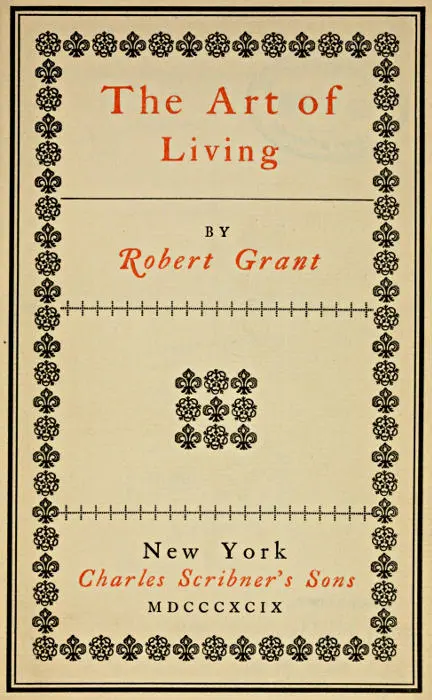
THE CLASSIC COLLECTION · 1895
"The Art of Living" by Robert Grant is a reflective work addressing personal finance and lifestyle choices, likely written in the late 19th century. The author explores themes of consumption, social norms, and the pressures of maintaining a certain standard of living, particularly in an era of growing wealth and social expectations. Throughout the text, Grant contrasts characters like Mr. Rogers, who lives modestly despite his financial limitations, with others who grapple with societal pressures to display wealth. At the start of the book, we meet the narrator, who learns from a friend’s bookkeeper, Mr. Rogers, about the art of budgeting and living well on a limited income. This encounter prompts a deep reflection within the narrator about financial choices, societal pressures, and personal happiness. His conversation with his wife, Barbara, reveals their shared struggle with monthly bills and the morality of living within their means, especially in comparison to Mr. Rogers's seemingly successful family life on a much lower income. Through these initial discussions, the groundwork is laid for an exploration of what it truly means to live wisely and the complex choices individuals face in managing their income amidst societal expectations.
Introduction adapted from the source catalogue; source summaries may be automatically generated.
Free to read · English · 65,813 words · No account needed
MAKE TIME FOR A GOOD BOOK
On by default. Untick to stop anonymous reading totals. Each page counts after 10 seconds in view. How this works.
Anonymous counting is on unless you have switched it off.
“After making due allowance for the national point of view, I don’t see very much difference in principle between the means adopted to finish the young lady of society here and elsewhere. There are thousands of daughters of well-to-do mothers in this country who are brought up on the old aristocratic theory that a woman should study moderately hard until she is eighteen, then look as pretty as she can, and devote herself until she is married to having what is called on this side of the Atlantic a good time. To be sure, in France the good time does not come until after marriage, and there are other differences, but the well-bred lady of social graces is the well-bred lady, whether it be in London, Paris, Vienna, or New York, and a ball-room in one capital is essentially the same as in all the others, unless it be that over here the very young people are allowed to crowd out everybody else. There are thousands of mothers who are content that this should be the limit of their daughter’s experience, a reasonably good education and perfect manners, four years of whirl, and then a husband, or no husband and a conservative afternoon tea-drinking spinsterhood--and they are thankful on the whole when their girls put their necks meekly beneath the yoke of convention and do as past generations of women all over the civilized world have done. For the reign of the unconventional society young woman is over. She shocks now her own countrywoman even more than foreigners; and though, like the buffalo, she is still extant, she is disappearing even more rapidly than that illustrious quadruped.”
“Are you not wandering slightly from the topic?” I ventured to inquire.
“Not at all,” said Barbara. “I was stating merely that the Old-World, New-World young lady, with all her originality and piquancy, however charming, and however delightfully inevitable she may be, is not interesting from the educational point of view. Or rather I will put it in this way: the thoughtful, well-to-do American mother is wondering hard whether she has a right to be content with the ancient programme for her daughters, and is watching with eager interest the experiments which some of her neighbors are trying with theirs. We cannot claim as an exclusive national invention collegiate education for women, and there’s no doubt that my sex in England is no less completely on the war-path than the female world here; but is there a question that the peculiar qualities of American womanhood are largely responsible for the awakening wherever it has taken place? My dear, you asked me just now what a man like Mr. Perkins should do with his four daughters. Probably Mrs. Perkins is trying to make up her mind whether she ought to send them to college. Very likely she is arguing with Mr. Perkins as to whether, all things considered, it wouldn’t be advisable to have one or two of them study a profession, or learn to do something bread-winning, so that in case he, poor man--for he does look overworked--should not succeed in leaving them the five thousand dollars a year he hopes, they need not swell the category of the decayed gentlewoman of the day. I dare say they discuss the subject assiduously, in spite of the views Mr. Perkins has expressed to you regarding the sacredness of unemployed feminine gentility; for it costs so much to live that he can’t lay up a great deal, and there are certainly strong arguments in favor of giving such girls the opportunity to make the most of themselves, or at least to look at life from the self-supporting point of view. At first, of course, the students at the colleges for women were chiefly girls who hoped to utilize, as workers in various lines, the higher knowledge they acquired there; but every year sees more and more girls, who expect to be married sooner or later--the daughters of lawyers, physicians, merchants--apply for admission, on the theory that what is requisite for a man is none too good for them; and it is the example of these girls which is agitating the serenity of so many mothers, and suggesting to so many daughters the idea of doing likewise. Even the ranks of the most fashionable are being invaded, though undeniably it is still the fashion to stay at home, and I am inclined to think that it is only the lack of the seal of fashion that restrains many conservative people, like the Perkinses, from educating their daughters as though they probably would not be married, instead of as though they were almost certain to be.”
Your reading position is saved on this browser. Take it to another device with a library code. Reading pages adapt to text, rather than matching a printed edition.
Robert Grant
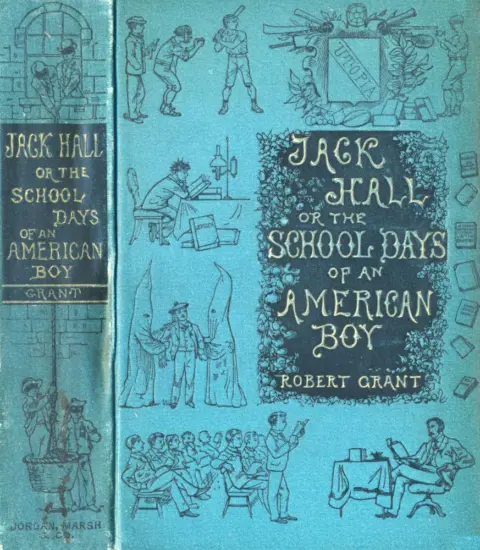
Robert Grant

Robert Grant
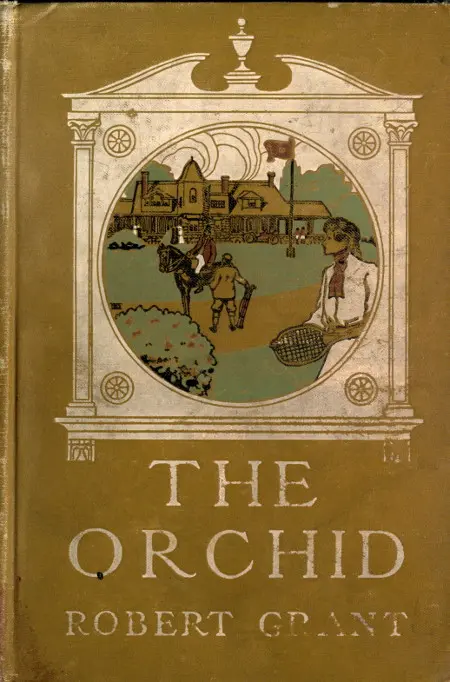
Robert Grant
BEHIND THE BOOK
This eBook is for the use of anyone anywhere in the United States and most other parts of the world at no cost and with almost no restrictions whatsoever. You may copy it, give it away or re-use it under the terms of the Project Gutenberg License included with this eBook or online at www.gutenberg.org. If you are not located in the United States, you will have to check the laws of the country where you are located before using this eBook. Read the source licence.
The original source file, including credits and licence, is retained by this library. Request an original-format copy at no charge. Please include the book title and Project Gutenberg identifier #53040.
KEEP YOUR CURIOSITY GOING
Coulson Kernahan

Maurice Baring
Frances Wright
Cécile Tormay

Frederic Jesup Stimson

W. H. P. (William Henry Pope) Jarvis