THE CLASSIC COLLECTION✦Search-Light LettersCLASSIC FREE BOOKS
Search-Light Letters
Robert Grant
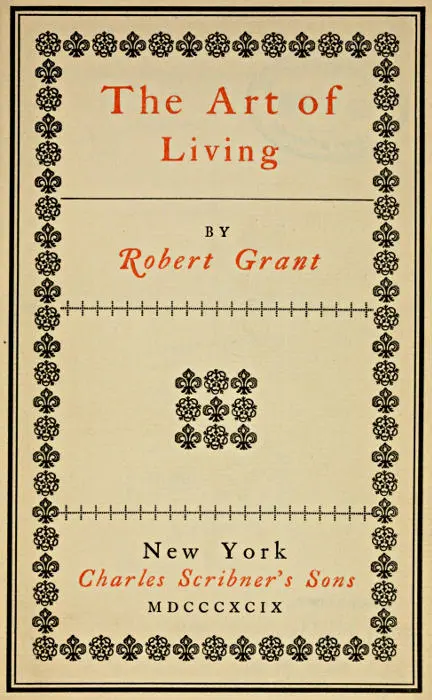
THE CLASSIC COLLECTION · 1895
"The Art of Living" by Robert Grant is a reflective work addressing personal finance and lifestyle choices, likely written in the late 19th century. The author explores themes of consumption, social norms, and the pressures of maintaining a certain standard of living, particularly in an era of growing wealth and social expectations. Throughout the text, Grant contrasts characters like Mr. Rogers, who lives modestly despite his financial limitations, with others who grapple with societal pressures to display wealth. At the start of the book, we meet the narrator, who learns from a friend’s bookkeeper, Mr. Rogers, about the art of budgeting and living well on a limited income. This encounter prompts a deep reflection within the narrator about financial choices, societal pressures, and personal happiness. His conversation with his wife, Barbara, reveals their shared struggle with monthly bills and the morality of living within their means, especially in comparison to Mr. Rogers's seemingly successful family life on a much lower income. Through these initial discussions, the groundwork is laid for an exploration of what it truly means to live wisely and the complex choices individuals face in managing their income amidst societal expectations.
Introduction adapted from the source catalogue; source summaries may be automatically generated.
Free to read · English · 65,813 words · No account needed
MAKE TIME FOR A GOOD BOOK
On by default. Untick to stop anonymous reading totals. Each page counts after 10 seconds in view. How this works.
Anonymous counting is on unless you have switched it off.
Although it was obvious that Barbara was trying to tease me, I realized from her expression that she intended to deal my sex a crucial stab by the word compromise. I must confess that I felt just a little uncomfortable under the white light of scorn which radiated from her eyes, while her general air reminded me for the first time disagreeably of the type of modern woman to whom I had referred.
“The world progresses by compromise,” I replied, sententiously.
“Yes, like a snail.”
“Otherwise it would stand still. A man thinks so and so; another man thinks precisely opposite; they meet each other half-way and so much is gained.”
“Oh, I know how they do. A man who stands for a principle meets another man; they argue and bluster for a few minutes, and presently they sit down and have something to eat or drink, and by the time they separate the man who stands for a principle has sacrificed all there is of it, except a tiny scrap or shred, in order not to incommode the man who has no principles at all; and what is almost worse, they part seemingly bosom friends and are apt to exchange rhetorical protestations of mutual esteem. The modern woman has no patience with such a way of doing things.”
“I suppose,” said I, “that two modern women under similar circumstances would tear each other all to pieces; there would be nothing to eat or drink, except possibly tea and wafers, and the floor would be covered with fragments of skin, hair, and clothing. When they separated one would be dead and the other maimed for life, and the principle for which the victor stood would be set back about a century and a half.”
Barbara winced a little, but she said, “What have you men accomplished all these years by your everlasting compromises? If you were really in earnest to solve the liquor problem, and the social evil, as you call it, and all the other abuses which exist in civilized and uncivilized society, you would certainly have been able to do more than you have. You have had free scope; we haven’t been consulted; we have stood aside and let you have your innings; now we merely wish to see what we can do. We shall make mistakes I dare say; even one or two of us may be torn to pieces or maimed for life; but the modern woman feels that she has the courage of her convictions and that she does not intend to let herself be thwarted or cajoled by masculine theories. That accounts largely for our apparent sniffiness. I say ‘apparent,’ because we are not really at bottom so contemptuous as we seem--even the worst of us. I suppose you are right in declaring that the proud, superior, and beautiful young person of the present day is a little disdainful. But even she is less severe than she looks. She is simply a nineteenth-century Joan of Arc protesting against the man of the world and his works, asking to be allowed to lead her life without molestation from him in a shrine of her own tasteful yet simple construction--rooms or a room where she can practise her calling, follow her tastes, ambitions, or hobbies, pursue her charities, and amuse herself without being accountable to him. She wishes him to understand that, though she is attractive, she does not mean to be seduced or to be worried into matrimony against her will, and that she intends to use her earnings and her property to pay her own bills and provide for her own gratification, instead of to defray the debts of her vicious or easy-going male relations or admirers. There is really a long back account to settle, so it is not surprising that the pendulum should swing a little too far the other way. Of course she is wrong; woman can no more live wholly independent of man than he of her--and you know what a helpless being he would be without her--and the modern woman is bound to recognize, sooner or later, that the sympathetic companionship of women with men is the only basis of true social progress. Sexual affinity is stronger than the constitutions of all the women’s clubs combined, as eight out of ten young modern women discover to their cost, or rather to their happiness, sooner or later. Some brute of a man breaks into the shrine, and before she knows it she is wheeling a baby carriage. Even the novelist, with his or her fertile invention, has failed to discover any really satisfactory ending for the independent, disdainful heroine but marriage or the grave. Spinsterhood, even when illumined by a career, is a worthy and respectable lot, but not alluring.”
Your reading position is saved on this browser. Take it to another device with a library code. Reading pages adapt to text, rather than matching a printed edition.
Robert Grant
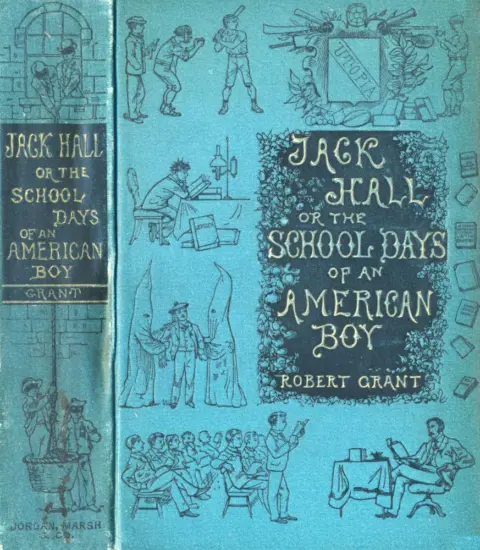
Robert Grant

Robert Grant
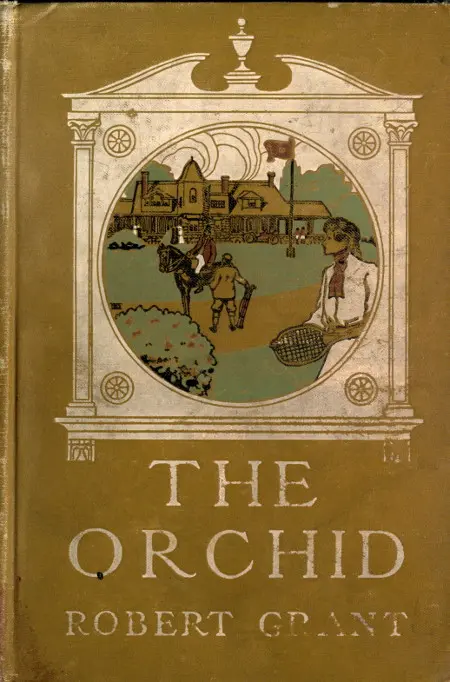
Robert Grant
BEHIND THE BOOK
This eBook is for the use of anyone anywhere in the United States and most other parts of the world at no cost and with almost no restrictions whatsoever. You may copy it, give it away or re-use it under the terms of the Project Gutenberg License included with this eBook or online at www.gutenberg.org. If you are not located in the United States, you will have to check the laws of the country where you are located before using this eBook. Read the source licence.
The original source file, including credits and licence, is retained by this library. Request an original-format copy at no charge. Please include the book title and Project Gutenberg identifier #53040.
KEEP YOUR CURIOSITY GOING
Coulson Kernahan

Maurice Baring
Frances Wright
Cécile Tormay

Frederic Jesup Stimson

W. H. P. (William Henry Pope) Jarvis