
The Writing of News A Handbook with Chapters on Newspaper Correspondence and Copy Reading
Charles G. (Charles Griffith) Ross
THE CLASSIC COLLECTION · 1898
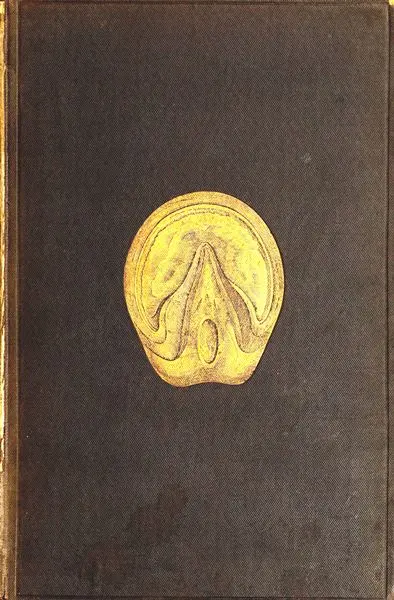
"The Art of Horse-Shoeing: A Manual for Farriers" by William Hunting is a comprehensive guidebook on the specialized craft of horse-shoeing written in the late 19th century. The work serves as an essential resource for horse owners, farriers, and veterinary students, detailing the principles and practices crucial to the proper shoeing of horses. The manual emphasizes the significance of understanding the structure and function of a horse's hoof in order to execute effective shoeing techniques. The opening of the book introduces the field of farriery, which is portrayed not merely as an art but a specialized practice requiring extensive knowledge of horse anatomy and mechanics. It underlines that a farrier’s role goes beyond simply applying a shoe; it involves careful preparation of the hoof to ensure it retains its natural form and function. Dangerous consequences can arise from improper shoeing, leading to severe injuries over time, highlighting the necessity of proper training and awareness in the craft. This chapter establishes a foundation for the detailed lessons that follow, which delve into the nuances of hoof structure, preparation techniques, and the intricate relationship between hoof anatomy and shoeing outcomes.
Introduction adapted from the source catalogue; source summaries may be automatically generated.
Free to read · English · 34,874 words · No account needed
MAKE TIME FOR A GOOD BOOK
On by default. Untick to stop anonymous reading totals. Each page counts after 10 seconds in view. How this works.
Anonymous counting is on unless you have switched it off.
=The Charlier System= is a method of shoeing which a few years ago took a very prominent hold on the fancy of horse-owners. Like every other system it has advantages and disadvantages--it has prejudiced enemies and indiscreet friends. The principle or theory upon which it is based may be thus stated. The lower border of the wall is, it is said, the chief sustaining structure of the hoof, and as all that is required of a shoe is to prevent undue wear, therefore, remove a small strip of the lower border of the wall and substitute for it a similar sized strip of iron, and we shall protect from wear at the same time that we leave entirely to nature every other part of the hoof--sole, frog, and bars. This seems eminently simple and logical, but it is easy to show that it is more plausible than true. First, I would point out that the wall only is not the natural sustaining structure of the hoof. The wall and the sole at its connection with the wall is. Next I deny that the Charlier system does "leave entirely to nature every other part of the hoof." In cutting away the wall from the sole to affix the shoe, the natural function of the sole is seriously interfered with, and the bearing on the wall which ought to be partially distributed over the arch of the sole is limited to the wall. It is claimed that when the foot has had time to grow the sole will be found on a level with the shoe, and thus directly sharing in the weight-sustaining function. I have examined many feet shod by Charlier specialists, and have never yet seen the sole of a hind foot level with the shoe three days after the shoeing. Only once have I seen the sole of the fore foot level with the shoe after a week's wear. I am often apologetically told, "Well, it is not quite in wear, but it is not an eight of an inch below the surface of the shoe." Quite so, it is nearly in wear, but if not actually in wear what becomes of the principle? The sole is not directly in wear and bearing is confined to the wall. As to the frog, the Charlier affords no greater use to it than any other shoe of a similar thickness, unless instead of being placed on sound firm horn it be dangerously let down into the hoof so that its edge approaches very closely to the sensitive foot. It is sometimes difficult to arrive at the truth as to the significance of the phrase "embedding or letting down" the shoe of the Charlier system. At one time we are assured that "the shoe is not sunk, the sole is permitted to grow up." When this is so, very little positive objection to the system can be taken, because the shoe then rests at the same level on firm horn as does any other narrow shoe; but then the frog takes no better bearing than in other systems and the superfluous growth of horn on the sole is of no value. When the shoe is really "let down" of course the frog does receive increased pressure--it is forced to share with the wall the primary function of sustaining weight instead of, as in nature, taking only a secondary share of such action. It does this at the expense of a shoe placed so close to the "quick" that if the upper and inner border of iron be not bevelled off, immediate lameness results. When the Charlier shoe was first introduced it was applied the full length of the foot, but it was found that when thinned by wear the heels spread and led to injury of the opposite leg or to its being trodden off. Now the Charlier is only applied like a tip round the front portion of the surface of the foot, and it therefore partakes of some of the advantages I have credited to tips. It is a very light shoe and only requires small nails to fix it securely, but as the shoe is only the width of the wall the nails have to be driven solely in the wall, and their position is open to the objection applying to all too fine nailing. The disadvantages of the Charlier are its being "let down" too near the quick, its limited bearing, and its fine nail holes; the advantages are the lightness and the freedom given to the back of the foot, both of which are attainable with a narrow tip not let down. One very apparent effect resulting from the use of the Charlier system is the alteration in the action of the horse. All knee action is lost, and some horses go decidedly tender whilst others acquire a low shooting stride, which is certainly not in accordance with our notions of good free locomotion.
Your reading position is saved on this browser. Take it to another device with a library code. Reading pages adapt to text, rather than matching a printed edition.
BEHIND THE BOOK
This eBook is for the use of anyone anywhere in the United States and most other parts of the world at no cost and with almost no restrictions whatsoever. You may copy it, give it away or re-use it under the terms of the Project Gutenberg License included with this eBook or online at www.gutenberg.org. If you are not located in the United States, you will have to check the laws of the country where you are located before using this eBook. Read the source licence.
The original source file, including credits and licence, is retained by this library. Request an original-format copy at no charge. Please include the book title and Project Gutenberg identifier #49077.
KEEP YOUR CURIOSITY GOING
Charles G. (Charles Griffith) Ross
Hannah Webster Foster

Emily Lawless
Edwin Hamlin Carr

Charles De Lano Hine
Andrew Ure