THE CLASSIC COLLECTION✦Lost DiariesCLASSIC FREE BOOKS
Lost Diaries
Maurice Baring
THE CLASSIC COLLECTION · 1920
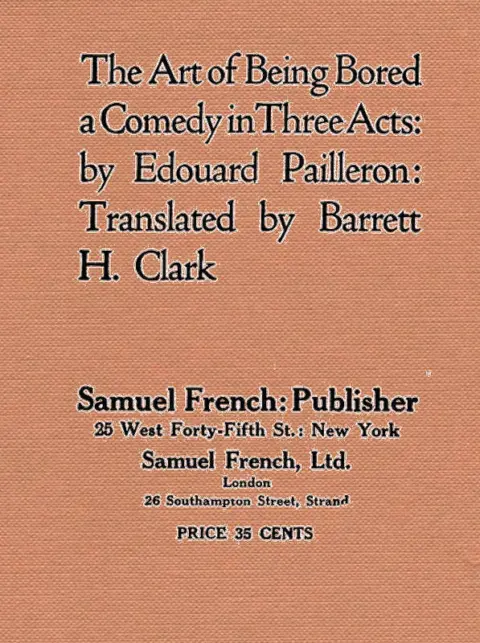
"The Art of Being Bored: A Comedy in Three Acts" by Edouard Pailleron is a play written in the late 19th century. The story is set within the social circles of Parisian life, highlighting the interactions among characters who embody various societal roles and aspirations. The central characters include Paul and Jeanne, a newlywed couple navigating the complexities of social expectations and the artifice of high society. The beginning of the play introduces the audience to a drawing-room at Madame de Céran's château, where the dynamics of social interactions unfold. Paul, a sub-prefect, advises his wife Jeanne on how to comport herself in this influential circle, emphasizing the need for decorum and subtlety. As various guests arrive, including their host and a collection of socialites, themes of political ambition, societal expectations, and the struggle against ennui begin to emerge. The opening sets a humorous yet critical tone toward the superficiality of their interactions, suggesting that the art of being bored is a central concern of the characters' lives.
Introduction adapted from the source catalogue; source summaries may be automatically generated.
Free to read · English · 27,398 words · No account needed
MAKE TIME FOR A GOOD BOOK
On by default. Untick to stop anonymous reading totals. Each page counts after 10 seconds in view. How this works.
Anonymous counting is on unless you have switched it off.
DUCHESS. You have brought him up to be a mere chess-pawn, haven’t you?
MME. DE CÉRAN. I have made of him a serious-minded man, Aunt.
DUCHESS. Yes, I should think so! A man of twenty-eight, who has
never—done a foolish thing in his life, I’ll wager! It’s a perfect
shame!
MME. DE CÉRAN. At thirty he will enter the Institute, and at thirty-five the Chamber of Deputies.
DUCHESS. So you want to begin again with your son, and do with him as
you did with his father?
MME. DE CÉRAN. Did I make so miserable a failure of him?
DUCHESS. I say nothing about your husband: a dryasdust creature, with a
mediocre intellect—!
MME. DE CÉRAN. Aunt!
DUCHESS. Of course, your husband was a fool!
MME. DE CÉRAN. Duchess!
DUCHESS. A fool who happened to know how to behave himself! You forced him into politics, you’ll admit that. And then, all you could make of him was Minister of Agriculture and Commerce. That isn’t much to boast about. But enough of him; Roger’s another matter: he has brains and spirit enough—or will have, God willing—or he’s no nephew of mine. That never occurred to you, did it?
MME. DE CÉRAN. I am thinking of his career.
DUCHESS. And his happiness?
MME. DE CÉRAN. I have thought of that, too.
DUCHESS. Ah, yes! Lucy, eh? They correspond, I know that. That’s fine! A young girl who wears glasses and has a neck like a——! And you call that thinking of his happiness!
MME. DE CÉRAN. Duchess, you are quite incorrigible!
DUCHESS. A sort of meteorite, who fell among us, intending to stop two weeks, and remained two years: a blue-stocking who writes letters to scholars and translates Schopenhauer!
MME. DE CÉRAN. A rich, intellectual, highly-educated and well-born orphan, niece of the Lord-Chancellor, who recommended her: she would be a splendid wife for Roger, and——
DUCHESS. That English iceberg? Brrrr! Just to kiss her would freeze the nose off his face! But you’re on a false scent. In the first place Bellac has his eye on her—yes, the Professor! He’s asked me too many questions about her to leave any doubt in my mind. And what is more, she seems fond of him.
MME. DE CÉRAN. Lucy?
DUCHESS. Yes, Lucy,—like all the rest of you! You’re all mad over him. I know more about this than you do.—No, no! Lucy is not the woman for your son!
MME. DE CÉRAN. I know your schemes: Suzanne is the woman!
Your reading position is saved on this browser. Take it to another device with a library code. Reading pages adapt to text, rather than matching a printed edition.
BEHIND THE BOOK
This eBook is for the use of anyone anywhere in the United States and most other parts of the world at no cost and with almost no restrictions whatsoever. You may copy it, give it away or re-use it under the terms of the Project Gutenberg License included with this eBook or online at www.gutenberg.org. If you are not located in the United States, you will have to check the laws of the country where you are located before using this eBook. Read the source licence.
The original source file, including credits and licence, is retained by this library. Request an original-format copy at no charge. Please include the book title and Project Gutenberg identifier #53334.
KEEP YOUR CURIOSITY GOING
Maurice Baring
W. B. (William Butler) Yeats
Edward Martyn

John Brougham & Charlotte Brontë
Marguerite Merington
Leonid Andreyev