
The lost dirigible
Ralph Henry Barbour
THE CLASSIC COLLECTION · 1904
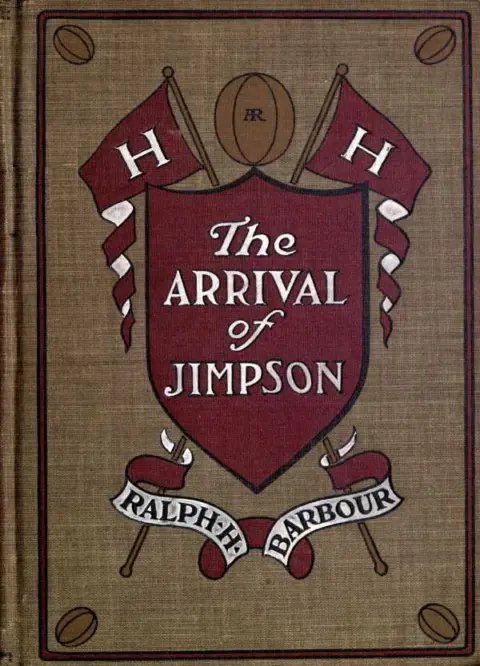
"The Arrival of Jimpson, and Other Stories for Boys about Boys" by Ralph Henry Barbour is a collection of short stories written in the early 20th century. The book addresses themes relevant to young boys, particularly focusing on school life, sports, and the challenges of adolescence. The opening story features the character Jimpson, who is a freshman football player trying to make his mark amid the excitement and pressures of a college football game. The opening of the book sets the stage for the story of Jimpson and his battle for recognition in a team dominated by more experienced players. Amid a fervent atmosphere filled with cheers and anticipation, the narrative explores Jimpson's feelings of exclusion as he prepares for a pivotal game against Yale. Despite being overlooked by his peers, Jimpson's determination and potential are highlighted, foreshadowing his chance to prove himself. The story captures the spirit of youthful camaraderie, the thrill of competition, and the internal struggles of a young boy seeking acceptance.
Introduction adapted from the source catalogue; source summaries may be automatically generated.
Free to read · English · 47,166 words · No account needed
MAKE TIME FOR A GOOD BOOK
On by default. Untick to stop anonymous reading totals. Each page counts after 10 seconds in view. How this works.
Anonymous counting is on unless you have switched it off.
Sanford, lithe and fleet, held a straight course for the right-hand goal-post. Ahead, with staring eyes and desperate faces, the St. Eustace quarter and right half advanced menacingly. Behind, pounding footsteps told of stern pursuit.
Then the quarter-back was upon them, face pale and set, arms outstretched, and Lane swung to the right. Sanford’s shoulder met the foe, and the two went to earth together, Sanford on top. He was up again in the instant, and, unharmed, once more running fleetly. But Lane was ahead now, and before him, near the ten-yard line, the blue-clad half-back was waiting. The man ahead stood for defeat, for Lane doubted his ability to get round him. Even running was agony, and dodging seemed out of the question. But just as hope deserted him Sanford came into sight beside him.
“Faster!” he panted. “To the right.”
Lane had no time to make his lagging limbs obey ere Sanford and the foe were piled together at his feet. He plunged blindly over the writhing heap, stumbled, fell on one knee, staggered up again, saw the yellowish turf rising and sinking before him, felt his knees doubling up beneath him, fell, rolled over twice, crawled and wriggled on knees and elbows from force of habit, and then closed his eyes, laid his head on his arm and was supremely content.
Syddington sped down the field with the roar of three thousand voices in his ears, and a great, almost sickening happiness at his heart.
Hillton had won!
For the moment thought refused to go beyond that wonderful fact. His team, the boys whom he had threatened, coaxed, driven, struggled with for months, had beaten St. Eustace!
He thrust his way through the little group and dropped to his knees. Lane opened his eyes and for an instant stared blankly into his face. Then recollection returned and he raised his head. Above him rose the goal-posts. He grinned happily.
“Over, eh, Syddington?” he asked, weakly.
“Yes, Lane, over. Are you all right?”
“Yes; a bit tuckered, that’s all. Let me up, please.”
They helped him to his feet, and he stretched his aching muscles cautiously. Beck handed him his head harness, and he turned and limped off. The cheering, which had almost subsided for want of breath, took on new vigor, and he went up the field to the wild refrain of “Lane! Lane! Lane!”
Hale kicked goal and the teams lined up for the kick-off once more. But when the ball had fallen into the arms of the Hillton left end the whistle shrilled and the battle was at an end. The score-board said:
Hillton 12. Opponents 8.
Your reading position is saved on this browser. Take it to another device with a library code. Reading pages adapt to text, rather than matching a printed edition.
Ralph Henry Barbour
Ralph Henry Barbour

Ralph Henry Barbour

Ralph Henry Barbour
BEHIND THE BOOK
This eBook is for the use of anyone anywhere in the United States and most other parts of the world at no cost and with almost no restrictions whatsoever. You may copy it, give it away or re-use it under the terms of the Project Gutenberg License included with this eBook or online at www.gutenberg.org. If you are not located in the United States, you will have to check the laws of the country where you are located before using this eBook. Read the source licence.
The original source file, including credits and licence, is retained by this library. Request an original-format copy at no charge. Please include the book title and Project Gutenberg identifier #45689.
KEEP YOUR CURIOSITY GOING
Coulson Kernahan

Maurice Baring
Frances Wright
Cécile Tormay

Frederic Jesup Stimson

W. H. P. (William Henry Pope) Jarvis