
The lost dirigible
Ralph Henry Barbour
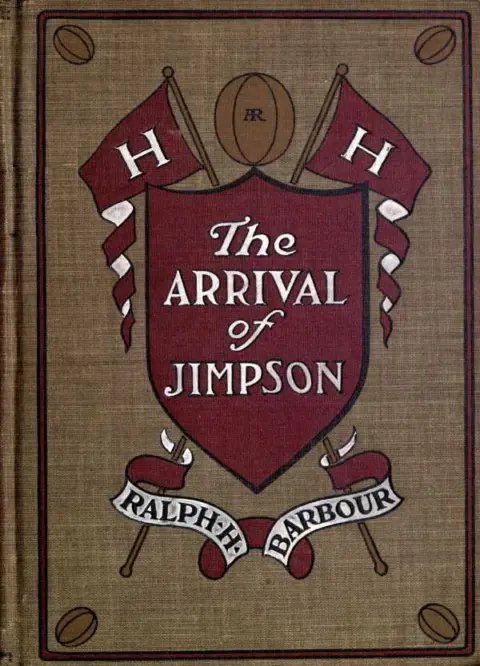
THE CLASSIC COLLECTION · 1904
"The Arrival of Jimpson, and Other Stories for Boys about Boys" by Ralph Henry Barbour is a collection of short stories written in the early 20th century. The book addresses themes relevant to young boys, particularly focusing on school life, sports, and the challenges of adolescence. The opening story features the character Jimpson, who is a freshman football player trying to make his mark amid the excitement and pressures of a college football game. The opening of the book sets the stage for the story of Jimpson and his battle for recognition in a team dominated by more experienced players. Amid a fervent atmosphere filled with cheers and anticipation, the narrative explores Jimpson's feelings of exclusion as he prepares for a pivotal game against Yale. Despite being overlooked by his peers, Jimpson's determination and potential are highlighted, foreshadowing his chance to prove himself. The story captures the spirit of youthful camaraderie, the thrill of competition, and the internal struggles of a young boy seeking acceptance.
Introduction adapted from the source catalogue; source summaries may be automatically generated.
Free to read · English · 47,166 words · No account needed
MAKE TIME FOR A GOOD BOOK
On by default. Untick to stop anonymous reading totals. Each page counts after 10 seconds in view. How this works.
Anonymous counting is on unless you have switched it off.
“Jimpson? He’s a freshie. Trying for right half-back all fall. I suppose Brattle took him along, now that Ward’s given up, to substitute Sills. They say he’s an A 1 runner, and plucky. He’s played some on the second eleven. Taunton told me, the other day, that he played great ball at Exeter, last year.”
The strident strains of the Washington Post burst out on the air, urging the cheerers to even greater efforts. They were cheering indiscriminately now. Trainer, rubbers, and coaches had received their shares of the ovation. But Benham, ’95, with his coat soaked through, was still unsatisfied, and sought for further tests. Two professors, half hidden under umbrellas, had emerged from the yard, and were standing at a little distance, watching the scene.
“Three times three for Professor Dablee!” The cheers that followed were mixed with laughter, and the two professors moved off, but not until the identity of the second had been revealed, and the air had filled with the refrain of “’Rah, ’rah, ’rah! Pollock!”
“They look as though they ought to win; don’t you think so?” asked one
of them.
The other professor frowned.
“Yes, they look like that; every eleven does. You’d think, to see them before a game, that nothing short of a pile-driver or dynamite could drive them an inch. And a few days later they return, heartbroken and defeated.”
Across the square floated a husky bellow:
“Now, then, fellows! Once more! All together! Three times three for
Harvard!”
The band played wildly, frenziedly, out of time and tune; the crowd strained its tired throats for one last farewell slogan; the men in the barge waved their hands; the horses jumped forward; a belated riser in Holyoke threw open a front window, and drowsily yelled, “Shut up”; and the Harvard eleven sped on its way up the avenue, and soon became a blur in the gray vista.
“Say, Bob, you forgot to cheer Jimpson.”
The wearied youth faced his accuser, struck an attitude indicative of intense despair, and then joyfully seized the opportunity.
“Fellows! Fellows! Hold on! Three times three for Jim--Jim--who’d you
say?”
“Jimpson,” prompted the friend.
“Three times three for Jimpson! Now, then, all together!”
“Say--who is Jimpson?” shouted a dozen voices at once.
“Don’t know. Don’t care. Three times three for Jimpson!”
And so that youth, had he but known it, received a cheer, after all. But he didn’t know it--at least, not until long afterward, when cheers meant so much less to him.
Your reading position is saved on this browser. Take it to another device with a library code. Reading pages adapt to text, rather than matching a printed edition.
Ralph Henry Barbour
Ralph Henry Barbour

Ralph Henry Barbour

Ralph Henry Barbour
BEHIND THE BOOK
This eBook is for the use of anyone anywhere in the United States and most other parts of the world at no cost and with almost no restrictions whatsoever. You may copy it, give it away or re-use it under the terms of the Project Gutenberg License included with this eBook or online at www.gutenberg.org. If you are not located in the United States, you will have to check the laws of the country where you are located before using this eBook. Read the source licence.
The original source file, including credits and licence, is retained by this library. Request an original-format copy at no charge. Please include the book title and Project Gutenberg identifier #45689.
KEEP YOUR CURIOSITY GOING
Coulson Kernahan

Maurice Baring
Frances Wright
Cécile Tormay

Frederic Jesup Stimson

W. H. P. (William Henry Pope) Jarvis