THE CLASSIC COLLECTION✦An outlaw’s diary: the CommuneCLASSIC FREE BOOKS
An outlaw’s diary: the Commune
Cécile Tormay
THE CLASSIC COLLECTION · 1897
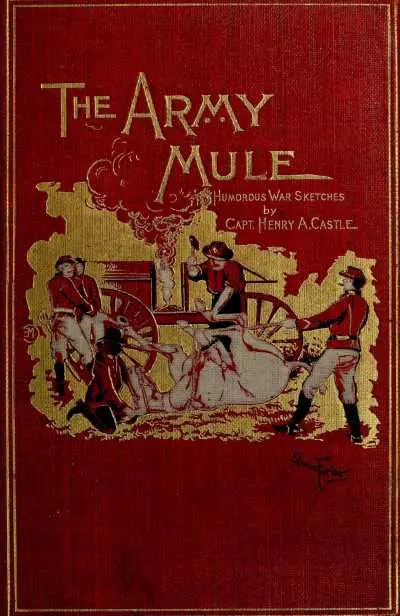
"The Army Mule, and Other War Sketches" by Henry A. Castle is a collection of humorous war sketches written in the late 19th century. The work offers a satirical take on the role of the Army Mule during the Civil War, presenting the mule as an undervalued participant in the military, while mocking the self-aggrandizing attitudes of some soldiers. Through vivid imagery and playful language, Castle explores themes of loyalty, endurance, and the often-overlooked contributions of animals in wartime. The opening of the book introduces the Army Mule as a central figure, emphasizing its longevity and resilience, while juxtaposing it against the boastful nature of certain soldiers who, though once mere recruits, now revel in inflated tales of heroism. Castle employs a comedic tone to highlight how the mule, often regarded as a mere beast of burden, deserves recognition for its crucial support during the war. He creatively argues for the mule's significance, portraying it as an underappreciated hero in the conflict, contrasting sharply with the self-importance of human soldiers.
Introduction adapted from the source catalogue; source summaries may be automatically generated.
Free to read · English · 46,493 words · No account needed
MAKE TIME FOR A GOOD BOOK
On by default. Untick to stop anonymous reading totals. Each page counts after 10 seconds in view. How this works.
Anonymous counting is on unless you have switched it off.
Smoking ditto, premonitory of asbestos; infinite in capacity for provocation; imitating in incombustibility the sullen defiance of a dead, cold epigram.
Epsom salts.
Smoked herring, also salt.
Gingerbread, composted chiefly of sawdust, coal slack, tar, syrup and
chopped feed.
Joke books, solemn as the summersault of the trick elephant in his
dotage.
Cookies, tough enough to be handed down as heirlooms to the Weary
Waggleses of futurity.
Rancid sardines, to be swallowed fin and scale, head and tail.
Pistol cartridges, watch keys, jack-knives, pills, and lead pencils conspicuous chiefly for brittleness.
Bologna sausages of the conglomerate era, petrified; like our glorious Union, invincible and indivisible.
Engine-turned pickles, submerged in carbolic acid and frosted with vitriol crystals; positively antiscorbutic.
Incohesive tooth-brushes cut loose from their base of supplies.
Long clay pipes after the form aesthetically affected by the honest Hollander, bibulous, amphibious and narcotic.
Dry figs and wormy raisins, savory as the juice of hard tack or
tent-pin syrup.
Anonymous liquid perdition in sneaking disguises, which, judged by its taste, was a cheap grade of spiritus strychniti, but judged by its price was molten pearl diluted with dissolved diamond.
Sundries, etc., etc.
Supposed necessaries of luxurious military existence some of these, more or less urgent even when subsisting on the enemy. In that case the conversion by assimilation of Confederate provender into Yankee bone and sinew was a delicious, romantic, patriotic, praiseworthy function. The patriots rather enjoyed this process, but they welcomed assistance from the foregoing catalogue.
Many articles were purchasable only in those post-pay-day periods when the center of financial gravity had been shifted by the exigencies of chuck-a-luck and old sledge from many pockets to one. It is an eminently usable list, resources permitting. Few of the impracticable inutilities of dollar stores or charity bazaars lift here their suspected forms, requiring us to exhaust all statutory and common-law remedies against conspiracy to do great bodily harm. Few of the frabbles are seen which adorn and dignify the dress-suit breakfast given by smirking domestic snobs to a titled foreign fraud, unintelligible as a Blavatsky theosophist. Yet even these, to the insatiate askers of the bivouc, would never quite suffice. Do what he could, the Sutler was ever fated to get himself disliked. A boy is a series of accidents at best. Some of the recruits in their haste to enlist forgot to provide themselves with a girl to leave behind. Those persons, unnerved by the bewildering entanglements of Hardee's tactics, and with no restorative compensations, were never satisfied. They were iron-jawed steam-talkers of calamity, perpetually assailing the walls of rebellion with huge explosions of wrath, and the flaps of the Sutler's tent with the roar of their grumbling. Deafening was their clamor for some absent staple to which distance lent the deceptive enchantment of a dining-car menu; deep their dismay that it was not held perennially on tap. Providence, assisted by timely hints from the wagon master, sometimes brought the supply trains within speaking distance by flag signal. But no discoverable influence ever succeeded in keeping a Sutler's stock up to high-water mark of gustatory demand. And all was in the ultimate cooked down to dire alternative of buy (or steal) and have, or do without and gnaw a file and swear.
Your reading position is saved on this browser. Take it to another device with a library code. Reading pages adapt to text, rather than matching a printed edition.
BEHIND THE BOOK
This eBook is for the use of anyone anywhere in the United States and most other parts of the world at no cost and with almost no restrictions whatsoever. You may copy it, give it away or re-use it under the terms of the Project Gutenberg License included with this eBook or online at www.gutenberg.org. If you are not located in the United States, you will have to check the laws of the country where you are located before using this eBook. Read the source licence.
The original source file, including credits and licence, is retained by this library. Request an original-format copy at no charge. Please include the book title and Project Gutenberg identifier #39911.
KEEP YOUR CURIOSITY GOING
Cécile Tormay

Moritz Busch
John L. Ransom
Frances Wright
Cécile Tormay

Mabel Potter Daggett