THE CLASSIC COLLECTION✦My diaries, being a personal narrative of events 1888-1914, Part 2 (1900-1914)CLASSIC FREE BOOKS
My diaries, being a personal narrative of events 1888-1914, Part 2 (1900-1914)
Wilfrid Scawen Blunt
THE CLASSIC COLLECTION · 1890
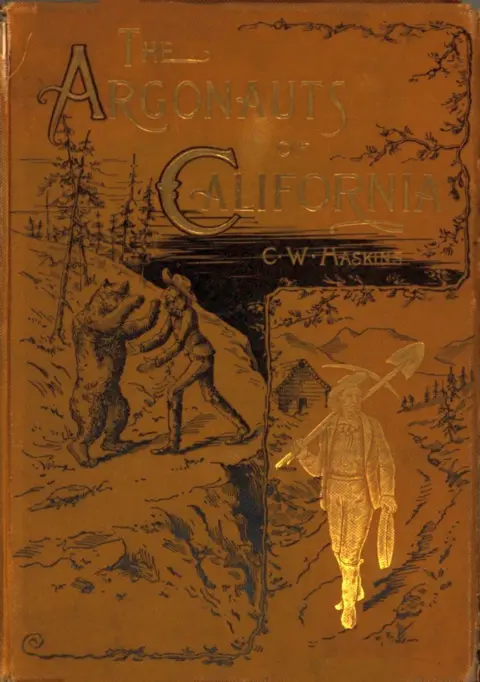
"The Argonauts of California: being the reminiscences of scenes and incidents that occurred in California in early mining days" by C. W. Haskins is a historical account written in the late 19th century. The book vividly chronicles the experiences and adventures of the early gold seekers, known as the Argonauts, who ventured westward in search of fortune during the California Gold Rush era. Haskins shares a wealth of anecdotes and perspectives that highlight not only the gold rush but also the vibrant characters and events that shaped the era. At the start of the narrative, the characters Jo and Bill converse about the recent discovery of gold in California, sparking a wave of excitement and a mass exodus of eager miners heading to seek their fortunes. Haskins recalls his own journey from New Bedford, Massachusetts, illustrating the fervor and optimism among the gold seekers as they prepared to sail around Cape Horn to California. Their conversations reveal a mix of skepticism and enthusiasm surrounding the gold rush, setting the stage for the ensuing adventures. As they embark on their journey, the opening passage establishes not just the quest for wealth but also the camaraderie and trials that the Argonauts would face in their pursuit of the American Dream.
Introduction adapted from the source catalogue; source summaries may be automatically generated.
Free to read · English · 181,790 words · No account needed
MAKE TIME FOR A GOOD BOOK
On by default. Untick to stop anonymous reading totals. Each page counts after 10 seconds in view. How this works.
Anonymous counting is on unless you have switched it off.
“When we come for to ’vestigate, an’ take a view ob de situation, we foun’ out jes’ de way ob de whole truff, fo’ jes’ as suah as you lib, gemmen, dar was our line stretchin’ way out ahead ob de boat, sah, all kivered ober wid dem immense insects; dem Forty-nine skeeters. You mus’ understand, gemmen, dat dat line ob ourn was a tarred rope, an’ de hot wedder jes’ made it awful sticky. Well, you see dat dem skeeters went an’ used dat ar tarred rope for der roos’ in de night, an’ when dey feet was once on dat line dey was dar fo’ good. In de night, when de boss skeeter ordered all hands up to tend to their duties, dey jes’ took de line an’ all along wid ’em right op de riber, an’ fo’ de Lord, gemmen, dat was de way we done sailed up de Sacramento Riber.”
Some one asked Julius about the size of them mosquitoes. He replied, “Well, now, about de size ob dem animals, you is axin me too much, kase we didn’t hab any rule or chalk line on de boat to measure dem wid; but I tells yer for a fac’, gemmen, dat we kotched de whole lot ob ’em, chopped of dare bills, sah; an’ sold ’em to de hotels in de city.”
When asked what use they made of them at the hotels, he said that they used ’em fo’ toothpicks.
After bidding all hands good bye, and with an earnest wish that they might all live to enjoy many such pleasant meetings and to talk about old times, Julius departed.
“That story about the loaf of bread,” said Jeff, “reminds me of a specimen of my cooking, once upon a time. It was up in Shasta County along in the winter of ’50. There were four of us in company, and we took regular turns to display our science in the cooking art. Well, I concluded once, when it come my week to git up the grub, to give the boys something new in the grub line, a regular old-fashioned plum pudding, or plum-duff as they called it on board the ship on our voyage around the Horn. I never had made one, but I had seen the ship’s cook get them up, and I was confident that I could fix one up in the same style, and I thought ’twas no trick at all. Just take some flour, put it into a sack, slap in some water, you know; throw in some salt, a little spice, a hunk of butter, and then some dried apples, if there ain’t any raisins around, then some eggs, and that ends the programme. Then shake ’em all together a spell, put the sack in the kettle and let her bile till ’tis done, and you have got something fit to eat, or anyway you oughter have if ’tis mixed all right; but, boys, in making that duff I made a mistake somewhere; for after I had biled it for about six hours, and come to put it on the table jest to see how astonished the boys would look, I tell you what we were all of us astonished to find that the derned thing was so tough that we couldn’t cut it with a knife. So one of the boys, after chopping off a slice of it with the axe to tap his boots with, threw it out of the door and it rolled into a prospect hole, and ’twas good-bye duff for a time, but not forever. A day of resurrection came for my duff. ’Twas about fifteen years afterwards that some miners at work there ground-sluicing away the bank, found it. It was a great curiosity, for no such spotted stone had ever been found around them diggings before, and many opinions were given by those who claimed to be well posted in geological science, and ’twas real interesting to hear them explain what kind of mineral it was, and the different elements ’twas composed of; how old it was, what era or period it belonged to, etc. Well, boys, I could have told ’em very quick all about its age, eras, periods, and its dufferdom elements, for I knew what it was the minute I see it, but I didn’t want to let the cat out of the bag, for I was always sorry that I let the duff out, so I kept shady. There was a little hollow on one side, where one of the boys chopped the slice off to tap his boots with, so the boys who found it used it for a number of years as a mortar to prospect quartz with. Well, one day there was a scientific man, a professor from some part of Europe, around viewing the country, and hearing about the curious stone, he went to see it.
Your reading position is saved on this browser. Take it to another device with a library code. Reading pages adapt to text, rather than matching a printed edition.
BEHIND THE BOOK
This eBook is for the use of anyone anywhere in the United States and most other parts of the world at no cost and with almost no restrictions whatsoever. You may copy it, give it away or re-use it under the terms of the Project Gutenberg License included with this eBook or online at www.gutenberg.org. If you are not located in the United States, you will have to check the laws of the country where you are located before using this eBook. Read the source licence.
The original source file, including credits and licence, is retained by this library. Request an original-format copy at no charge. Please include the book title and Project Gutenberg identifier #75021.
KEEP YOUR CURIOSITY GOING
Wilfrid Scawen Blunt
Wilfrid Scawen Blunt

E. W. (Edgar Watson) Howe
Cécile Tormay

Moritz Busch
John L. Ransom