THE CLASSIC COLLECTION✦My diaries, being a personal narrative of events 1888-1914, Part 2 (1900-1914)CLASSIC FREE BOOKS
My diaries, being a personal narrative of events 1888-1914, Part 2 (1900-1914)
Wilfrid Scawen Blunt
THE CLASSIC COLLECTION · 1890
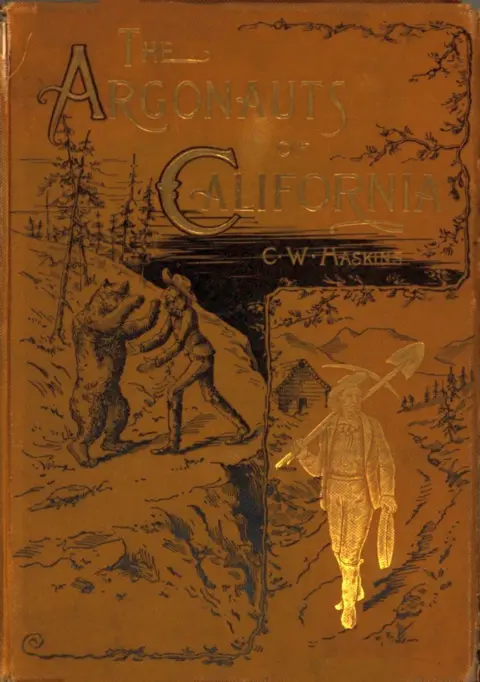
"The Argonauts of California: being the reminiscences of scenes and incidents that occurred in California in early mining days" by C. W. Haskins is a historical account written in the late 19th century. The book vividly chronicles the experiences and adventures of the early gold seekers, known as the Argonauts, who ventured westward in search of fortune during the California Gold Rush era. Haskins shares a wealth of anecdotes and perspectives that highlight not only the gold rush but also the vibrant characters and events that shaped the era. At the start of the narrative, the characters Jo and Bill converse about the recent discovery of gold in California, sparking a wave of excitement and a mass exodus of eager miners heading to seek their fortunes. Haskins recalls his own journey from New Bedford, Massachusetts, illustrating the fervor and optimism among the gold seekers as they prepared to sail around Cape Horn to California. Their conversations reveal a mix of skepticism and enthusiasm surrounding the gold rush, setting the stage for the ensuing adventures. As they embark on their journey, the opening passage establishes not just the quest for wealth but also the camaraderie and trials that the Argonauts would face in their pursuit of the American Dream.
Introduction adapted from the source catalogue; source summaries may be automatically generated.
Free to read · English · 181,790 words · No account needed
MAKE TIME FOR A GOOD BOOK
On by default. Untick to stop anonymous reading totals. Each page counts after 10 seconds in view. How this works.
Anonymous counting is on unless you have switched it off.
“Ach mine Gott! mine Gott! How vas dot den? Oh! mine grashus, vere ve go next! I vas most drowned out mit dose vaters in Sagramento, vas shaked all to bieces by dem earthquakes at San Francisco, und den I vas gone up here, vare dem earthquakes or dem waters do not come at all, vid mine family, und, but up here, mine grashus, dem mountains shust come right through mine house und smash dem all to bieces. Mine Gott, vare ve goes now to py oursellufs?”
His wife suggested that they had better go to San Francisco.
“Oh, mine grashus, no no. Dem earthquakes down dere vill shust shakes mine head off righd avay, und gife mine families the shakes all ofer. No I tink ve vill go pack to Shairmany, for we can find no blace to life here in dot strange country. By von blace you vas shake all to bieces by dem earthquake; den you go to anudder blace, und der vater come und vash you all avay; den you vas find anudder blace, vare you don’t see dem shakes or dem vaters, und den, py shiminy, dem hills is all loose, und dey shust dumble down right ofer on to mine house. I goes to Shairmany, mine frent, pooty quick; now don’t it?”
An event was now about to take place which was to change to a great extent the future condition of our new home upon the Pacific Coast. For although all were apparently content and well satisfied with our relative position, yet there was a certain feeling of disconnection, an impassable barrier between us and our old homesteads with the pleasing associations connected with them; there were between us high and lofty ranges of rugged mountains and barren plains that to many were absolutely impassable, while yet by water the voyage to visit friends and our Eastern friends was a long and tedious one; under such circumstances it was evident that something yet was wanting which would enable us to enjoy to the fullest extent the favorable conditions afforded by a residence here in California, and this something which all felt the necessity of was a rapid means of communication with our former Eastern homes. The great event, therefore, to which I alluded was the commencement, by a few energetic old-timers, of a railroad across the mountains. In early days the possibility of a railroad across the continent was often talked of among the miners, and those who had traveled and prospected among the deep cañons and rugged cliffs of the mountains were very strongly impressed with the conviction that the building of a railroad across and over them would be a physical impossibility; consequently, when all preparations were made for the purpose, it was the general opinion among them that it was the wild fancy of a few lunatics who were ignorant of railroads in general, or what natural barriers and obstacles were to be encountered in the building of this railroad in particular. Notwithstanding the protest and prophetic warnings of the old mountaineers, the work was formally commenced in Sacramento City in ’63, and the last (golden) spike driven in ’68, which formed the connecting link between the two roads, making a continuous line between the Atlantic and the Pacific Coasts. The effect of this connection was at once apparent, for we now felt as though we formed a part of the nation and under its protection; but whether the iron rails had any effect upon the electric conditions of the country (as was maintained by certain ones), causing atmospheric changes here, is immaterial; at any rate, social conditions, which heretofore had been unbalanced, were now properly adjusted, for, instead of dwelling away off in some remote corner of the universe, in a foreign land, as we imagined, separated entirely from intercourse with higher conditions of existence by mountain ranges and barren deserts, the iron rails had now broken down the barriers, and from this point in our history we felt more at home. But what said the old miners who had predicted all sorts of troubles, disasters, and failure of the lunatics, the originators of the undertaking, after its successful completion? “Well” (as one of them expressed himself--an Englishman), “give a company of Americans the right of way and a subsidy, and blast me yies if they wouldn’t run a tunnel through the earth and build a railroad to China, yer know.”
Your reading position is saved on this browser. Take it to another device with a library code. Reading pages adapt to text, rather than matching a printed edition.
BEHIND THE BOOK
This eBook is for the use of anyone anywhere in the United States and most other parts of the world at no cost and with almost no restrictions whatsoever. You may copy it, give it away or re-use it under the terms of the Project Gutenberg License included with this eBook or online at www.gutenberg.org. If you are not located in the United States, you will have to check the laws of the country where you are located before using this eBook. Read the source licence.
The original source file, including credits and licence, is retained by this library. Request an original-format copy at no charge. Please include the book title and Project Gutenberg identifier #75021.
KEEP YOUR CURIOSITY GOING
Wilfrid Scawen Blunt
Wilfrid Scawen Blunt

E. W. (Edgar Watson) Howe
Cécile Tormay

Moritz Busch
John L. Ransom