THE CLASSIC COLLECTION✦My diaries, being a personal narrative of events 1888-1914, Part 2 (1900-1914)CLASSIC FREE BOOKS
My diaries, being a personal narrative of events 1888-1914, Part 2 (1900-1914)
Wilfrid Scawen Blunt
THE CLASSIC COLLECTION · 1890
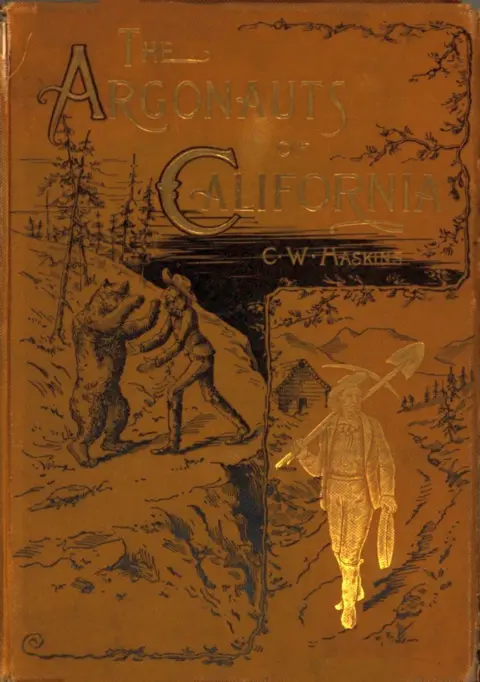
"The Argonauts of California: being the reminiscences of scenes and incidents that occurred in California in early mining days" by C. W. Haskins is a historical account written in the late 19th century. The book vividly chronicles the experiences and adventures of the early gold seekers, known as the Argonauts, who ventured westward in search of fortune during the California Gold Rush era. Haskins shares a wealth of anecdotes and perspectives that highlight not only the gold rush but also the vibrant characters and events that shaped the era. At the start of the narrative, the characters Jo and Bill converse about the recent discovery of gold in California, sparking a wave of excitement and a mass exodus of eager miners heading to seek their fortunes. Haskins recalls his own journey from New Bedford, Massachusetts, illustrating the fervor and optimism among the gold seekers as they prepared to sail around Cape Horn to California. Their conversations reveal a mix of skepticism and enthusiasm surrounding the gold rush, setting the stage for the ensuing adventures. As they embark on their journey, the opening passage establishes not just the quest for wealth but also the camaraderie and trials that the Argonauts would face in their pursuit of the American Dream.
Introduction adapted from the source catalogue; source summaries may be automatically generated.
Free to read · English · 181,790 words · No account needed
MAKE TIME FOR A GOOD BOOK
On by default. Untick to stop anonymous reading totals. Each page counts after 10 seconds in view. How this works.
Anonymous counting is on unless you have switched it off.
“His name was William B. Richards.”
“Well,” rejoined the Colonel, “that is my name.”
Sure enough, this Colonel with whom he had crossed the plains was the
long-lost brother!
It was the habit, or custom rather, in early days to give to each man a certain nickname by which he was usually known, his real name being, as a general rule, unknown, or even unasked for. “Whar air you from?” was the main question and the information most desired, and usually decided his nickname.
Here were “Old Pike,” “Big and Little Pike,” “Old Kentuck,” “Texas Jack,” “Texas Jim,” “Old Arkansas”; if Scotch, he was “Sandy,” or “Scotty”; if from the East, “Little or Big Yank,” and their mining locations would in some cases, also decide their names. There were “French Flat Pete,” “Sandy Hill Mike,” “Poverty Point Jim,” ad infinitum.
On one occasion, a young miner returned to his Eastern home for a visit, and one day, while visiting at some family acquaintances with his parents at a distance, upon looking over some daguerrotypes lying on the tables, he remarked that one of them resembled very much a young man with whom he had worked, and who was at present living in the same place, Mocklmne Hill, in a cabin near his. He could not tell the name, but he went by the name of Jack, and one day, being in his cabin, saw a book upon the table, and found upon looking at it, that it was the “Pilgrims Progress,” on the fly leaf of which was written the name of Elizabeth Andrews.
“Oh, Oh!” said a young lady present, “that is my brother, John Andrews, and we haven’t heard from him for nearly 15 years, and were afraid that some accident had happened to him somewhere.”
After the commencement of the rainy season, in the fall of ’51, the river miners flocked into the placer mining districts. Other arrivals from across the waters, soon swelled the population in all of the various mining camps. Gambling in all of its various forms became again the principal amusement. Barrooms and gambling-houses vied with each other in furnishing their patrons with the finest and loudest music, and bands could be heard playing in all of them during the greater portion of the evening, and until the wee sma’ hours of the morning. The professionals were as a general rule Southerners by birth, hailing from New Orleans, Louisville, Memphis, Richmond and St. Louis; whilst only occasionally would be found a sport claiming Boston or New York as his birthplace. Many of this class were men of good education and abilities, and many of them descendants of respectable families as well. They had been accustomed from childhood to associate with this class in their native cities, and therefore inherited or acquired the gambling trait of character. It is of course well understood that all men who gamble for money are necessarily very bad characters; but the professional gambler of early days formed, in many instances, an exception to this general rule, and should not be confounded with the lower ten-cent ante poker gambler found bumming and loafing around the gambling places of to-day. Among this former class were as many good, honest and square-dealing men as could generally be found among those engaged in any other business, and they were, as a rule, more charitable, being always ready to contribute their share, and a little more too, towards assisting those who were in distress.
Your reading position is saved on this browser. Take it to another device with a library code. Reading pages adapt to text, rather than matching a printed edition.
BEHIND THE BOOK
This eBook is for the use of anyone anywhere in the United States and most other parts of the world at no cost and with almost no restrictions whatsoever. You may copy it, give it away or re-use it under the terms of the Project Gutenberg License included with this eBook or online at www.gutenberg.org. If you are not located in the United States, you will have to check the laws of the country where you are located before using this eBook. Read the source licence.
The original source file, including credits and licence, is retained by this library. Request an original-format copy at no charge. Please include the book title and Project Gutenberg identifier #75021.
KEEP YOUR CURIOSITY GOING
Wilfrid Scawen Blunt
Wilfrid Scawen Blunt

E. W. (Edgar Watson) Howe
Cécile Tormay

Moritz Busch
John L. Ransom