The northern whale-fishery
William Scoresby
THE CLASSIC COLLECTION · 1849
"The Arctic Regions and the Northern Whale-Fishery" by William Scoresby is a scientific publication written in the early 19th century. This work explores the geography, climate, and marine life of the Arctic regions, particularly focusing on the whale-fishing industry. Scoresby, an experienced navigator and whaler, provides valuable insights into navigational discoveries, the ice formations, and the significance of these areas for trade and exploration. The opening of the book features a preface that outlines the purpose of the text and its contents, including discussions on early navigation attempts seeking a passage to Asia via the polar regions. It delves into the history of exploration, showcasing the various expeditions undertaken by prominent figures of the time and the challenges they faced in navigating the treacherous Arctic waters. Scoresby's analysis addresses the geological and hydrographic aspects of the Arctic, alongside the historical context of the burgeoning whale-fishing industry, setting the stage for a detailed examination of the unique environment and the livelihoods it supports.
Introduction adapted from the source catalogue; source summaries may be automatically generated.
Free to read · English · 44,495 words · No account needed
MAKE TIME FOR A GOOD BOOK
On by default. Untick to stop anonymous reading totals. Each page counts after 10 seconds in view. How this works.
Anonymous counting is on unless you have switched it off.
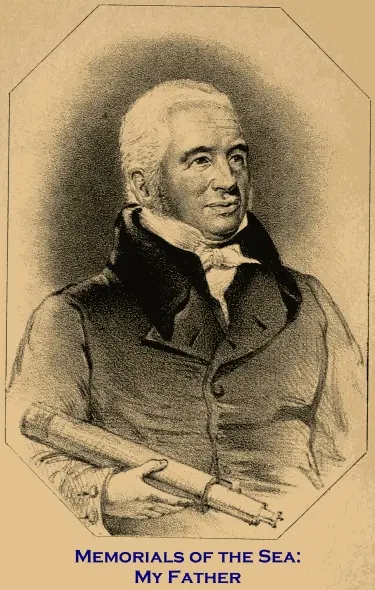
The scheme suggested by Robert Thorne, of Bristol, of finding a passage to India across the North Pole, about the year 1527, appears to have been immediately attempted by an expedition, consisting of two ships, sent out by order of Henry VIII.; one of the ships, we are informed, was lost; of the nature of the success of the other we have but a very unsatisfactory account. After this voyage, Barentz, Heemskerke, and Ryp, attempted the transpolar navigation, in 1596; Hudson, in 1607; Jonas Poole, in 1610 and 1611; Baffin and Fotherby, in 1614; Fotherby, in 1615; Phipps, in 1773; and Buchan and Franklin, in 1818. The highest latitude attained by any of these navigators did not, it would appear, exceed 81°. My father, in the ship Resolution, of Whitby, in the year 1806, with whom I then served as chief mate, sailed to a much higher latitude. Our latitude, on three occasions, in the month of May, as derived from observations taken with a sextant by myself and my father, was 80° 50′ 28″, 81° 1′ 53″, and 81° 12′ 42″; after which we sailed so far to the northward as made it about 81° 30′, which is one of the closest approximations to the Pole which I conceive has been well authenticated.
Whatever may be our opinion of the accounts brought forward by some parties to prove the occasional accessibility of the 83rd or 84th parallel of north latitude, of this we may be assured, that the opinion of an open sea round the Pole is altogether chimerical. It is urged, indeed, that the extraordinary power of the sun, about the summer solstice, is so far greater at the Pole than at the Equator, as to destroy all the ice generated in the winter season, and to render the temperature of the Pole warmer and more congenial to feeling than it is in some places lying nearer the Equator. So far, however, from the actual influence of the sun, though acknowledged at a certain season to be greater at the Pole than at the Equator, being above what it is calculated to be by the ordinary formulæ for temperature, it is found by experiment in latitude 78° to be greatly below it—how then can the temperature of the Pole be expected to be so very different? From the remarks in the ensuing pages, it will be shown that ice is annually formed during nine months of the year in the Spitzbergen sea, and that neither calm weather, nor the proximity of land, is essential for its formation. Can it, then, be supposed, that at the Pole, where the mean temperature is probably as low as 10°, the sea is not full of ice? If the masses of ice, which usually prevent the advance of navigators beyond the 82nd degree of north latitude, be extended in a continued series to the Pole, (of which, unless there be land in the way, there appears no doubt,) the expectation of reaching the Pole by sea is altogether vain. By land, however, I do not conceive the journey would be impracticable. It would not exceed one thousand two hundred miles, (six hundred miles each way,) and might be performed on sledges, drawn by dogs or reindeer, or even on foot. Foot travellers would require to draw the apparatus and provisions, necessary for the undertaking, on sledges by hand, and in this way, with good dispatch, the journey would occupy at least two months; but, with the assistance of dogs, it might, probably, be accomplished in a little less time. With favourable winds, great advantage might be derived from sails set upon the sledges, which sails, when the travellers were at rest, would serve for the erection of tents. Small vacancies in the ice would not prevent the journey, as the sledges might be adapted so as to answer the purpose of boats, nor would the usual unevenness of the ice, nor the depth or softness of the snow, be an insurmountable difficulty, as journeys of nearly equal length, and under similar inconveniences, have been accomplished.
Your reading position is saved on this browser. Take it to another device with a library code. Reading pages adapt to text, rather than matching a printed edition.
BEHIND THE BOOK
This eBook is for the use of anyone anywhere in the United States and most other parts of the world at no cost and with almost no restrictions whatsoever. You may copy it, give it away or re-use it under the terms of the Project Gutenberg License included with this eBook or online at www.gutenberg.org. If you are not located in the United States, you will have to check the laws of the country where you are located before using this eBook. Read the source licence.
The original source file, including credits and licence, is retained by this library. Request an original-format copy at no charge. Please include the book title and Project Gutenberg identifier #69389.
KEEP YOUR CURIOSITY GOING
Wilfrid Scawen Blunt
Wilfrid Scawen Blunt

E. W. (Edgar Watson) Howe
Cécile Tormay

Moritz Busch
John L. Ransom