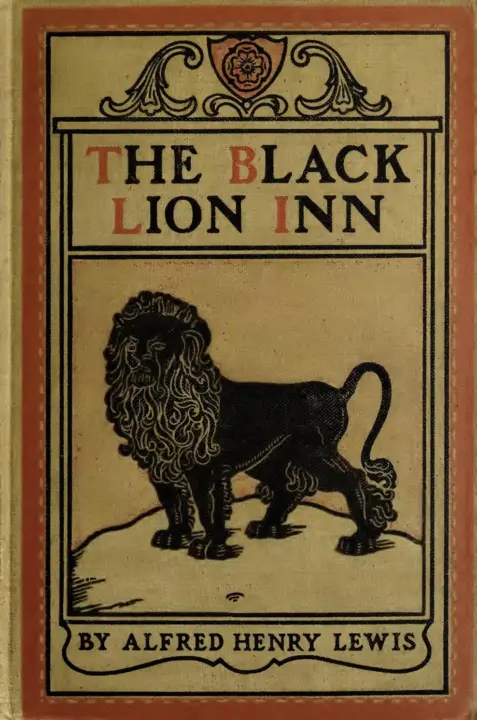
The Black Lion Inn
Alfred Henry Lewis
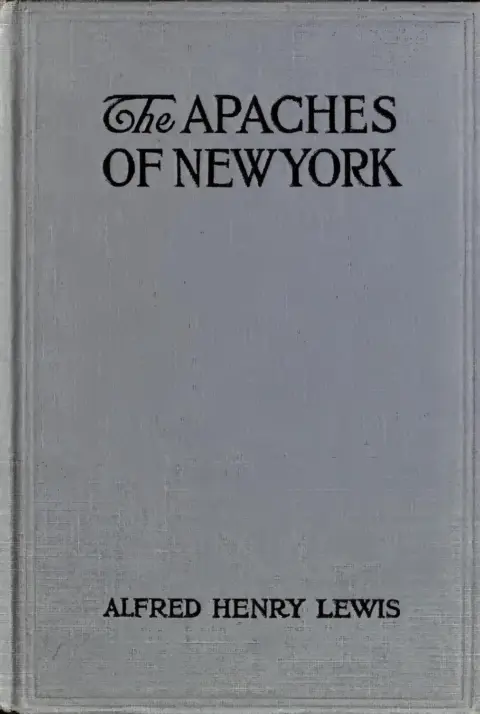
THE CLASSIC COLLECTION · 1912
"The Apaches of New York" by Alfred Henry Lewis is a collection of narratives exploring the lives of gangsters in early 20th-century New York City. Through vignettes of colorful characters and their exploits, the book delves into the gritty underbelly of urban life, illustrating the contrasts between different social strata and the moral ambiguity faced by its protagonists. The opening of the book introduces Chick Tricker, a figure involved in the city's nightlife, as he navigates bars and gangland encounters. The reader is thrust into Chatham Square, where Tricker interacts with various characters including a policeman and a street musician, showcasing the interconnectedness of crime, law enforcement, and the everyday lives of New Yorkers. The scene unfolds with tension brewing between rival gang members, hinting at imminent violence, encapsulating the atmosphere of danger and resilience that permeates the stories to come. This portion sets the stage for a deeper exploration of the lives and struggles of those living outside the law in a richly detailed urban landscape.
Introduction adapted from the source catalogue; source summaries may be automatically generated.
Free to read · English · 59,094 words · No account needed
MAKE TIME FOR A GOOD BOOK
On by default. Untick to stop anonymous reading totals. Each page counts after 10 seconds in view. How this works.
Anonymous counting is on unless you have switched it off.
“There's nothin' in that,” declared Mollie Squint. “She could touch me for th' rent, an' she's hep to it.” Then, in reproof of the questioning looks of Anna Gold: “Sure; both me an' Agnes was stuck on Indian Louie, but w'at of that? Louie's gone; an' besides, I never blames her. It's me who's th' butt-in; Agnes sees Louie first.”
“Youse 're wrong, Yetta,” spoke up the Nailer, confidently. “Agnes ain't worryin' about cush. There ain't a better producer anywhere than Sammy Hart. No one ever sees Sammy wit'out a roll.”
The Nailer lounged across to Pretty Agnes; Mollie Squint, whose heart
was kindly, followed him.
“W'y don't youse lap up your suds?” queried the Nailer, pointing to the beer. Without waiting for a return, he continued, “Where's Sammy?”
“Oh, I don't know,” returned Pretty Agnes, her manner half desperate. “Nailer, I'm simply fretted batty!”
“W'at's gone crooked, dear?” asked Mollie Squint, soothingly. “Youse ain't been puttin' on th' mitts wit' Sammy?”
“No,” replied Pretty Agnes, the tears beginning to flow; “me an' Sammy's all right. On'y he won't listen!” Then suddenly pointing with her finger, she exclaimed; “There! It's him I'm worryin' about!”
The Nailer and Mollie Squint glanced in the direction indicated by Pretty Agnes. The Ghost had just come in and was sidling into a chair. It must be admitted that there was much in his appearance to dislike. His lips were loose, his eyes half closed and sleepy, while his chin was catlike, retreating, unbased. In figure he was undersized, slope-shouldered, slouching. When he spoke, his voice drawled, and the mumbled words fell half-formed from the slack angles of his mouth. He was an eel--a human eel--slippery, slimy, hard to locate, harder still to hold. To find him you would have to draw off all the water in the pond, and then poke about in the ooze.
“It's him that's frettin' me,” repeated Pretty Agnes. “He's got me
wild!”
The Nailer donned an expression, cynical and incredulous.
“W'at's this?” said he. “W'y Agnes, youse ain't soft on that mutt, be youse? Say, youse must be gettin' balmy!”
“It ain't that,” returned Pretty Agnes, indignantly. “Do youse think I'd fall for such a chromo? I'd be bughouse!”
“Bughouse wouldn't half tell it!” exclaimed Mollie Squint fervently. “Him?”--nodding towards the Ghost. “W'y he's woise'n a wet dog!”
“Well,” returned the puzzled Nailer, who with little imagination, owned still less of sentimental breadth, “if youse ain't stuck on him, how's he managin' to fret youse? Show me, an' I'll take a punch at his lamp.”
Your reading position is saved on this browser. Take it to another device with a library code. Reading pages adapt to text, rather than matching a printed edition.
Alfred Henry Lewis
Alfred Henry Lewis
Alfred Henry Lewis
Alfred Henry Lewis
BEHIND THE BOOK
This eBook is for the use of anyone anywhere in the United States and most other parts of the world at no cost and with almost no restrictions whatsoever. You may copy it, give it away or re-use it under the terms of the Project Gutenberg License included with this eBook or online at www.gutenberg.org. If you are not located in the United States, you will have to check the laws of the country where you are located before using this eBook. Read the source licence.
The original source file, including credits and licence, is retained by this library. Request an original-format copy at no charge. Please include the book title and Project Gutenberg identifier #51909.
KEEP YOUR CURIOSITY GOING
Coulson Kernahan

Maurice Baring
Frances Wright
Cécile Tormay

Frederic Jesup Stimson

W. H. P. (William Henry Pope) Jarvis