The Black Lion Inn
Alfred Henry Lewis
THE CLASSIC COLLECTION · 1912
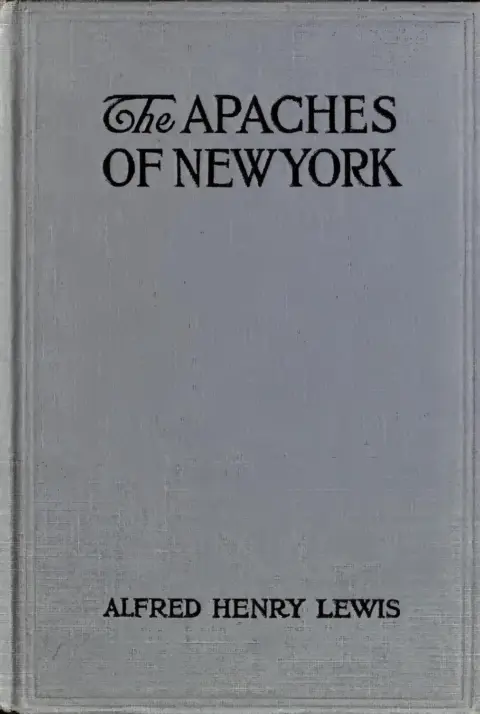
"The Apaches of New York" by Alfred Henry Lewis is a collection of narratives exploring the lives of gangsters in early 20th-century New York City. Through vignettes of colorful characters and their exploits, the book delves into the gritty underbelly of urban life, illustrating the contrasts between different social strata and the moral ambiguity faced by its protagonists. The opening of the book introduces Chick Tricker, a figure involved in the city's nightlife, as he navigates bars and gangland encounters. The reader is thrust into Chatham Square, where Tricker interacts with various characters including a policeman and a street musician, showcasing the interconnectedness of crime, law enforcement, and the everyday lives of New Yorkers. The scene unfolds with tension brewing between rival gang members, hinting at imminent violence, encapsulating the atmosphere of danger and resilience that permeates the stories to come. This portion sets the stage for a deeper exploration of the lives and struggles of those living outside the law in a richly detailed urban landscape.
Introduction adapted from the source catalogue; source summaries may be automatically generated.
Free to read · English · 59,094 words · No account needed
MAKE TIME FOR A GOOD BOOK
On by default. Untick to stop anonymous reading totals. Each page counts after 10 seconds in view. How this works.
Anonymous counting is on unless you have switched it off.
“Hello, Whitey!” exclaimed Weasel-eye cheerily, shaking hands with Whitey Dutch. “I just leaves a namesake of yours; an' say, he's in bad!”
“W'at namesake?”
“Whitey Louie. A bunch of them West Side guerrillas has him cornered, over in a dump at Twenty-seventh Street and Seventh Avenoo. It looks like there'd be somethin' doin'; an', as I don't Avant no part of it, I screws out.”
At the name of Whitey Louie, Ike the Blood arose to his feet.
“Whitey Louie?” he questioned; “Seventh Avenoo an' Twenty-seventh
Street?”
“That's th' ticket,” replied Weasel-eye; “an' youse can cash on it.”
Ike the Blood hurried out the door.
“Whitey Louie is Ike's closest pal,” observed Whitey Dutch, explaining the hurried departure. “Will there be trouble?” I asked.
“I don't t'ink so,” said Slimmy. “It's four for one they'll lay down to
Ike.”
“Don't put your swell bet on it!” came warningly from Whitey Dutch; “them Gophers are as tough a bunch as ever comes down the pike.”
“Tough nothin'!” returned Slimmy: “they'll be duck soup to Ike.”
“Why don't you look into it?” I asked, turning to my friend. As a taxpayer, I yearned for some return on that $16,000,000 a year which New York City pays for its police.
That ornament of the Central Office yawned, and motioned to the waiter
to bring his bill.
“That sort of thing is up to the cop on the beat,” said he.
“Whitey an' me 'ud get in on it,” explained Slimmy--his expression was one of half apology--“only you see we belong at th' other end of th' alley. We're Five Points; Ike an' Whitey Louie are Eastmans; an' in a clash between Eastmans an' Gophers, it's up to us to stand paws-off, see!”
“That's straight talk,” coincided Whitey.
“Suppose, seeing it's stopped raining, we drift over there,” said my friend, adjusting his Panama at the exact Central Office angle.
As we journeyed along, I noticed Slimmy and Whitey Dutch across the street. It was already written that Whitey Dutch, himself, would be shot to death in the Stag before the year was out; but the shadow of that impending taking-off was not apparent in his face. Indeed, from that face there shone forth only pleasure in anticipation, and a lively interest.
“They'd no more miss it than they'd miss a play at the theater,” remarked my friend, who saw where my glance was directed.
About a ginmill, on the corner of Seventh Avenue and Twenty-seventh Street, a crowd had collected. A patrol wagon was backing up.
An officer in uniform tossed a prisoner into the wagon, with no more ceremony than should attend the handling of a bag of bran.
Your reading position is saved on this browser. Take it to another device with a library code. Reading pages adapt to text, rather than matching a printed edition.
Alfred Henry Lewis
Alfred Henry Lewis
Alfred Henry Lewis
Alfred Henry Lewis
BEHIND THE BOOK
This eBook is for the use of anyone anywhere in the United States and most other parts of the world at no cost and with almost no restrictions whatsoever. You may copy it, give it away or re-use it under the terms of the Project Gutenberg License included with this eBook or online at www.gutenberg.org. If you are not located in the United States, you will have to check the laws of the country where you are located before using this eBook. Read the source licence.
The original source file, including credits and licence, is retained by this library. Request an original-format copy at no charge. Please include the book title and Project Gutenberg identifier #51909.
KEEP YOUR CURIOSITY GOING
Coulson Kernahan

Maurice Baring
Frances Wright
Cécile Tormay

Frederic Jesup Stimson

W. H. P. (William Henry Pope) Jarvis