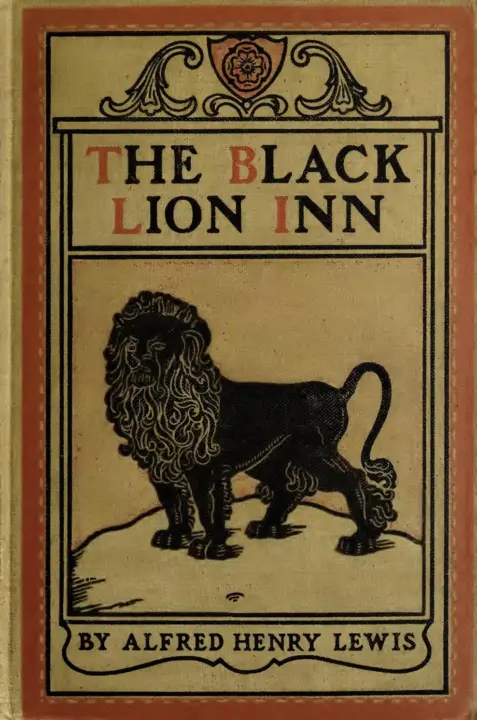
The Black Lion Inn
Alfred Henry Lewis
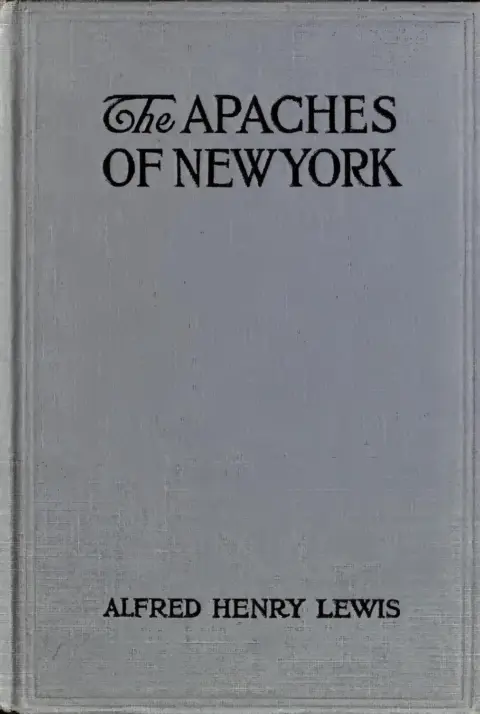
THE CLASSIC COLLECTION · 1912
"The Apaches of New York" by Alfred Henry Lewis is a collection of narratives exploring the lives of gangsters in early 20th-century New York City. Through vignettes of colorful characters and their exploits, the book delves into the gritty underbelly of urban life, illustrating the contrasts between different social strata and the moral ambiguity faced by its protagonists. The opening of the book introduces Chick Tricker, a figure involved in the city's nightlife, as he navigates bars and gangland encounters. The reader is thrust into Chatham Square, where Tricker interacts with various characters including a policeman and a street musician, showcasing the interconnectedness of crime, law enforcement, and the everyday lives of New Yorkers. The scene unfolds with tension brewing between rival gang members, hinting at imminent violence, encapsulating the atmosphere of danger and resilience that permeates the stories to come. This portion sets the stage for a deeper exploration of the lives and struggles of those living outside the law in a richly detailed urban landscape.
Introduction adapted from the source catalogue; source summaries may be automatically generated.
Free to read · English · 59,094 words · No account needed
MAKE TIME FOR A GOOD BOOK
On by default. Untick to stop anonymous reading totals. Each page counts after 10 seconds in view. How this works.
Anonymous counting is on unless you have switched it off.
As all the world knows, Mersher Miller, or as he is called among his intimates, Mersher the Strong-Arm, conducts a beer house at 171 Norfolk Street. It was a placid April evening, and Mersher's brother, as bottle-tosser, was busy behind the bar. Mersher himself was not in, which--for Mersher--may or may not have been greatly to the good.
Spanish came into the place. His hat was low-drawn over his black eyes. Mersher's brother, wiping glasses, didn't know him.
“Where's Mersher?” asked Spanish.
“Not here,” quoth Mersher's brother.
“You'll do,” returned Spanish. “Give me ten dollars out of the damper.”
Mersher's brother held this proposal in finance to be foolishly impossible, and was explicit on that head. He insisted, not without scorn, that he was the last man in the world to give a casual caller ten dollars out of the damper or anything else.
“I'll be back,” replied Spanish, “an' I bet then you'll give me that
ten-spot.”
“That's Johnny Spanish,” declared a bystander, when Spanish, muttering his discontent, had gone his threatening way.
Mersher's brother doubted it. He had heard of Spanish, but had never seen him. It was his understanding that Spanish was not in town at all, having lammistered some time before.
“He's wanted be th' cops,” Mersher's brother argued. “You don't suppose he's sucker enough to walk into their mitts? He wouldn't dare show up in town.”
“Don't con yourself,” replied the bystander, who had a working knowledge of Gangland and its notables. “That's Spanish, all right. He was out of town, but not because of the bulls. It's the Dropper he's leary of; an' now th' Dropper's in hock he's chased back. You heard what he said about comin' 'round ag'in? Take my tip an' rib yourself up wit' a rod. That Spanish is a tough kid!”
The evening wore on at Mersher's; one hour, two hours, three went peaceably by. The clock pointed to eleven.
Without warning a lowering figure appeared at the door.
“There he is!” exclaimed the learned bystander. Then he added with a note of pride, albeit shaky as to voice: “What did I tell youse?”
The figure in the doorway strode forward. It was Spanish. A second figure--hat over eyes--. followed hard on his heels. With a flourish, possible only to the close student of Mr. Beadle's dime literature, Spanish drew two Colt's pistols.
“Come through wit' that ten!” said he to Mersher's brother.
Mersher's brother came through, and came through swiftly.
“I thought so!” sneered Spanish, showing his side teeth like a dog whose feelings have been hurt. “Now come through wit' th' rest!”
Mersher's brother eagerly gave him the contents of the cash
drawer--about eighty dollars.
Your reading position is saved on this browser. Take it to another device with a library code. Reading pages adapt to text, rather than matching a printed edition.
Alfred Henry Lewis
Alfred Henry Lewis
Alfred Henry Lewis
Alfred Henry Lewis
BEHIND THE BOOK
This eBook is for the use of anyone anywhere in the United States and most other parts of the world at no cost and with almost no restrictions whatsoever. You may copy it, give it away or re-use it under the terms of the Project Gutenberg License included with this eBook or online at www.gutenberg.org. If you are not located in the United States, you will have to check the laws of the country where you are located before using this eBook. Read the source licence.
The original source file, including credits and licence, is retained by this library. Request an original-format copy at no charge. Please include the book title and Project Gutenberg identifier #51909.
KEEP YOUR CURIOSITY GOING
Coulson Kernahan

Maurice Baring
Frances Wright
Cécile Tormay

Frederic Jesup Stimson

W. H. P. (William Henry Pope) Jarvis