
Last letters from the living dead man
David Patterson (Spirit) Hatch
THE CLASSIC COLLECTION · 1907
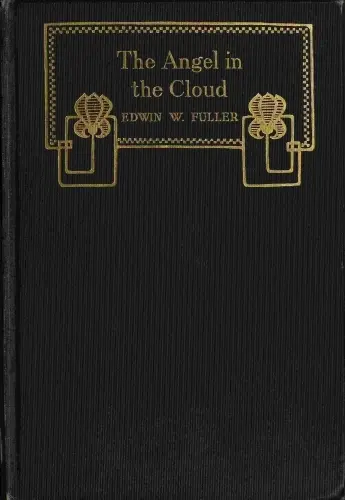
"The Angel in the Cloud" by Edwin W. Fuller is a poetic work written in the early 20th century. This volume invites readers into a deeply reflective exploration of human existence, intertwining themes of nature, spirituality, and the searching for meaning through powerful imagery and allegorical elements. The opening sets the stage for a journey both outward and inward, where the author contemplates the complexity of life and the divine. At the start of this work, the narrator experiences a day overwhelmed by oppressive heat, prompting an escape into nature. Through the vivid descriptions of the setting—a stifling summer day giving way to an enchanting park—the narrator reflects on nature's beauty and its contrasting injustices, expressing thoughts on providence and fate. A shift occurs as the narrator embarks on a dreamlike vision that takes him on a cosmic journey, encountering an angel and ultimately leading to insights about the divine and the human condition. The opening serves to evoke a sense of wonder while posing profound questions about the balance of joy and suffering in existence.
Introduction adapted from the source catalogue; source summaries may be automatically generated.
Free to read · English · 30,009 words · No account needed
MAKE TIME FOR A GOOD BOOK
On by default. Untick to stop anonymous reading totals. Each page counts after 10 seconds in view. How this works.
Anonymous counting is on unless you have switched it off.
And yet why false belief? The world believes,
And acting, moves in general harmony;
Could harmony from such an error flow?
Would all believe, would not some one
Have doubted by his works as well as faith?
The veriest skeptic walks the earth to-day,
As if he held the seal of freest will,
And shapes its course, and judges all mankind
By freedom’s rule.
Then may not that be true
Which most believe, and those who doubt profess
In every act; as that which few believe
And to which none conform?
Two paths I see,
One marked Free-Will, the other Fate. The first,
Extending far as human thought can reach,
Through lovely meads with sweetest flowers, and fruits
Of actions clearly shown as right and wrong,
Because of choice ’twixt the two; of laws
With sanction suiting agents who are free;
Of courts acquitting the insane of crime,
Of crime made crime, alone, when done as crime,
Of judgment passed by public sentiment
On action in the ratio of liberty.
Delightful view; but seek an entrance there--
The towering bars of unruled motive stand
Before the path, and none can overleap.
The field of Fate lies open; nothing bars
Our progress there. A thousand different ways
The path diverges. Every by-path leads
To some foul pit or bottomless abyss.
Along each side are strewed the whitening bones
Of venturous pilgrims, lost amid its snares,
Some broken on the rocks of gross decree,
Who hold an unchanged destiny from birth;
Who will not take a medicine if sick,
Who cant of “To be, will be,” and the time
Unalterably set to each man’s life.
Some stranded on the finer form of Fate,
Who say it works by means. Hence they believe
In using all preventives to disease,
In going boating in a rubber belt,
In placing Franklin rods upon a house,
In preaching, and in praying men repent.
These, when one dies, cry out, “It was his time.”
Or if he should recover, “It was not.”
Their fate is always ex post facto fate,
And knowing not the future, they abide
The issue of events, and then confirm
Their dogged dogmas.
Still another class,
Though fewer far in numbers, perish here.
These are the sophists; men who deeply dive
Beneath the surface of effect, and trace
Our actions to their source. They find that man,
Made in the glorious image of his God,
Is not an independent cause, but works
From motive causes out of his control.
They find that every mental act must flow
From outside source, then fearlessly ascend
The chain of being to a height divine,
And dare to fetter the Eternal mind,
And throw their bonds around Omnipotence.
As well a spider in an eagle’s nest
Might, from his hidden web among the twigs,
Attempt to throw his little gluey thread
Around the mottled wing, whose muscled strength
Beats hurried vacuums in the ocean’s spray,
Or circling upward, parts the thunder-cloud,
And bursts above; and shaking off the mists,
With rigid feathers bright as burnished steel,
Floats proudly through the tranquil air.
Which realm
Shall now be mine, Free-Will or Fate? The one
Stands open wide, but all in ruin ends;
The other, fair if once within the pale;
But how to scale the barriers none can tell.
Bah! all is doubt. I’ll leave the mystic paths
Where, on each side, are ranged the phantom shapes
Of disputants, alive and dead, who fight,
With foolish zeal, o’er myths intangible;
When each one cries “Eureka!” for his creed.
That scarcely lives a day, then yields its place.
A Roman ’gainst a Roman, Greek to Greek,
A zealous Omar with an Ali paired;
A saintly Pharisee in hot dispute
With Sadducees. Along th’ illustrious rows
Of lesser lights, who advocate the creeds
Of their respective masters, we descend
To later days and see Titanic minds
Exert their giant strength to reach the truth,
And, baffled, fall. Locke, ever elsewhere clear,
Here mystified Spinoza’s dizzy wing
O’erweighted by his strange “imperium;”
Hobbes, with his new intrinsic liberty;
And Belsham’s quaint reduction too absurd;
“Sufficient reason,” reared in Leibnitz’s strength;
Reid, Collins, Edwards, Tappan, Priestley, Clarke,
All push each other from the door of Truth.
Your reading position is saved on this browser. Take it to another device with a library code. Reading pages adapt to text, rather than matching a printed edition.
BEHIND THE BOOK
This eBook is for the use of anyone anywhere in the United States and most other parts of the world at no cost and with almost no restrictions whatsoever. You may copy it, give it away or re-use it under the terms of the Project Gutenberg License included with this eBook or online at www.gutenberg.org. If you are not located in the United States, you will have to check the laws of the country where you are located before using this eBook. Read the source licence.
The original source file, including credits and licence, is retained by this library. Request an original-format copy at no charge. Please include the book title and Project Gutenberg identifier #57504.
KEEP YOUR CURIOSITY GOING
David Patterson (Spirit) Hatch

David Patterson (Spirit) Hatch

David Patterson (Spirit) Hatch

Edwin Abbott Abbott

Richard Watson
T. G. (Theophilus Gould) Steward