
Last letters from the living dead man
David Patterson (Spirit) Hatch
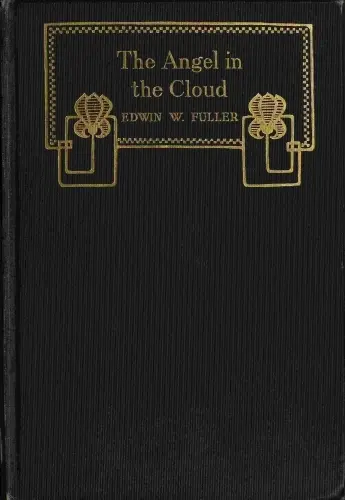
THE CLASSIC COLLECTION · 1907
"The Angel in the Cloud" by Edwin W. Fuller is a poetic work written in the early 20th century. This volume invites readers into a deeply reflective exploration of human existence, intertwining themes of nature, spirituality, and the searching for meaning through powerful imagery and allegorical elements. The opening sets the stage for a journey both outward and inward, where the author contemplates the complexity of life and the divine. At the start of this work, the narrator experiences a day overwhelmed by oppressive heat, prompting an escape into nature. Through the vivid descriptions of the setting—a stifling summer day giving way to an enchanting park—the narrator reflects on nature's beauty and its contrasting injustices, expressing thoughts on providence and fate. A shift occurs as the narrator embarks on a dreamlike vision that takes him on a cosmic journey, encountering an angel and ultimately leading to insights about the divine and the human condition. The opening serves to evoke a sense of wonder while posing profound questions about the balance of joy and suffering in existence.
Introduction adapted from the source catalogue; source summaries may be automatically generated.
Free to read · English · 30,009 words · No account needed
MAKE TIME FOR A GOOD BOOK
On by default. Untick to stop anonymous reading totals. Each page counts after 10 seconds in view. How this works.
Anonymous counting is on unless you have switched it off.
To end with perfect proof, you know you’re free.
This all the world attests, and each believes.
How subtle soe’er may his reasoning be,
He contradicts it throughout all his life;
And all his plans, and all the right and wrong
Of self and friends he bases on free-will.
If disbelief no inconvenience prove,
Few men believe what is not understood;
And yet the most familiar things of life
Are far beyond their comprehensions’ power.
Who understands the turning of the food
To sinew, muscle, blood, and bone? yet who
Will starve because he knows not how ’tis done?
Who understands the mystery of birth,
And when and where the soul originates?
And yet a million mothers bend, to-day,
O’er tender babes, and know that they exist;
A billion people know they once were born.
Who understands the mystery of death,
And how the soul is severed from its clay?
Yet who has not wept o’er departed ones,
Received the dying clasp, the dying look,
And known, full well, Death’s bitter, bitter truth?
None comprehends the movement of a limb,
Yet many boast the powers of their’s might.
Then why doubt freedom of the will, when life,
In every phase, but proves its certain truth?
The edifice of shallow theorists
Before the sweeping blade of practice falls.
Your dive into the heart yields folly’s fruit;
The selfish theory, carried to its end,
Makes wrong of right, and overturns the world.
And strong it is in seeming; for the self,
In human conduct, plays important part.
But ’tis not action’s only source, nor dims
The quality of every action’s worth.
’Tis true that Man exists in self alone,
And in himself feels pain or pleasure. True,
An instinct teaches to avoid the one,
And seek the other; true, that every act,
How small soe’er, gives pleasure or gives pain.
Yet thousand deeds are done without regard
To one or other, or effect on Self.
Howe’er an action may affect the Self,
If he that acts has not a thought of it,
The action is not selfish. You appeal
To Man, and so will I appeal to you.
You find a helpless brute, with broken limb,
Upon the roadside, moaning out its pain.
Now, though to aid will surely pleasure give,
And to neglect will cause remorseful pain,
Is there a single thought of this, when you,
With kindest hand, bind up the swollen bruise,
And hold the grateful water to its mouth?
Is not each thought to ease the sufferer’s pain?
Is not the Self first found, when on your way
You go, with lighter heart, for kindness done?
And while you think with pleasure on the deed,
Would you not feel despised in your own eyes,
If consciousness revealed ’twas done for Self?
But should you say that Self was thus concealed,
And still evoked the deed, the argument
The same; if Self was out of thought, the deed
Had other source.
In all, you thus mistake
The deed’s effect, unthought of, for its source.
God, in His wisdom, hath affixed to good
Performed, a pleasure, and to evil, pain.
But selfish actions are not good, you’ve said,
And therefore cannot slightest pleasure yield.
Here, then, your system contradicts itself;
All actions emanate from love of Self,
To find the highest pleasure for that Self;
And yet the pleasure’s lost by very search;
What good soe’er apparently is sought,
The consciousness of selfish aims destroys.
And here is wisdom manifest. When Self
Would seek the good, for pleasure to the Self,
The pleasure is not found; but when it seeks
The good alone, true pleasure is conferred.
I mean the Self of soul, not Self of flesh;
For pleasure to the sense, to be attained
Is sought; these two are mingled intricate
(And hard to separate), in thousand ways.
But when Man’s higher Self would seek its good,
It must forget the Self. In every case
You instanced, Self of soul must be unthought,
For pleasure will not come at call of Self.
Your gambler none will doubt has selfish ends;
Not so the preacher, for his pleasure sought,
Would ne’er be found; it must be out of thought.
His burning eloquence, his pastoral care,
Can not proceed from any love of Self,
For Self would suffer, when it knew their source;
But as he acts from love of good as good,
The Self is happy. When he ascertains
That some have died in sin through his neglect,
The Self is grieved, not that it was uncared,
For care of Self would not allay the pain,
But that a duty had not been performed;
That good had been neglected, as a good.
The gambler’s object may be highest good
For Self, according to his estimate;
The preacher seeks a good, but not for Self;
When Self appears, the good to evil turns.
Nor is the mystic selfish in his cave,
Save that he buries talents in himself,
That might avail for good to other men;
But all his mind is bent on pleasing God,
His only thought of Self is for its pain;
And this he deems acceptable to Heaven.
You can not judge by your analysis,
But by what passes in the actor’s mind.
One surely then could not be selfish termed,
Who only lived to mortify the Self,
Howe’er mistaken may his conduct be.
Nor is the man, who gives his wealth away,
If from right principles he gives. ’Tis true,
He finds a pleasure in the deed when done,
But if to gain that pleasure he has given,
It turns to gall and wormwood in his grasp.
If two men matches light, and know full well,
If one is dropped, a house will be consumed,
He is the most guilty that allows its fall.
The miser, then, who knows he does a wrong,
Is by that knowledge rendered criminal.
“The quality of actions must be judged”
From their intents, that often differ wide;
The man who shoots his friend by accident
Has no intent, and therefore does no wrong;
But he who murders does a score of wrongs,--
A score of basest motives prompt the deed,
All centred in the Self. The Christian’s work
Must, from its very nature, have no Self,
Or it becomes unchristian. Man can judge,
Not from effect, but motives ascertained
By inference, and experience. The law
Is formed hereon, and modified by years.
Time teaches men that punishment will stop,
And only punishment, the spread of crime.
Instinct and Nature’s order teaches you
That pain must follow wrong. A man commits
A crime; if left unpunished, he repeats;
And others, seeing his security,
Will do as he has done. So all mankind
Would hasten on to lawlessness and ruin.
But law, for real wrong inflicts a wrong,
Which would be just did it no farther go;
But it is proved expedient, inasmuch
As it prevents continued crime. Then death
By law can not be murder termed, since good
In aim and end, without malicious thought.
Thus good to many flows from wrong to one
(If that may wrong be termed that takes the rights
By conduct forfeited), who should receive,
Though none reaped benefit. For many’s good,
The law is made, yet never does a wrong
To individuals, unless deserved.
Your reading position is saved on this browser. Take it to another device with a library code. Reading pages adapt to text, rather than matching a printed edition.
BEHIND THE BOOK
This eBook is for the use of anyone anywhere in the United States and most other parts of the world at no cost and with almost no restrictions whatsoever. You may copy it, give it away or re-use it under the terms of the Project Gutenberg License included with this eBook or online at www.gutenberg.org. If you are not located in the United States, you will have to check the laws of the country where you are located before using this eBook. Read the source licence.
The original source file, including credits and licence, is retained by this library. Request an original-format copy at no charge. Please include the book title and Project Gutenberg identifier #57504.
KEEP YOUR CURIOSITY GOING
David Patterson (Spirit) Hatch

David Patterson (Spirit) Hatch

David Patterson (Spirit) Hatch

Edwin Abbott Abbott

Richard Watson
T. G. (Theophilus Gould) Steward