
Barren Ground
Ellen Anderson Gholson Glasgow
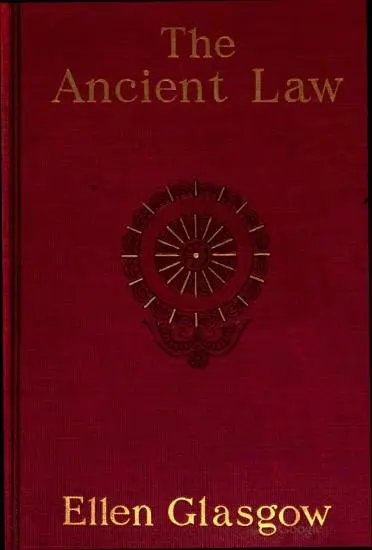
THE CLASSIC COLLECTION · 1908
"The Ancient Law" by Ellen Anderson Gholson Glasgow is a novel written in the early 20th century. The story centers around Daniel Ordway, a man recently released from prison, as he navigates his newfound freedom and struggles to reintegrate into society while coping with the remnants of his past. Themes of redemption and the pursuit of a new life amid personal and societal challenges are likely explored throughout the narrative. At the start of the novel, the reader is introduced to Daniel Ordway as he savors the taste of freedom after five years in prison. His initial journey takes him along a desolate Virginia road to the small town of Tappahannock, where he hopes to find work and begin anew. As he reflects on his past—a life of ambition that ended in disgrace—he encounters the realities of poverty and the hardships of those around him, including a kind African American woman who shares her meager food with him. Despite the bleakness of the landscape and his current situation, Ordway is filled with a newfound desire for life, setting the stage for his quest for redemption in this new chapter of his existence.
Introduction adapted from the source catalogue; source summaries may be automatically generated.
Free to read · English · 118,985 words · No account needed
MAKE TIME FOR A GOOD BOOK
On by default. Untick to stop anonymous reading totals. Each page counts after 10 seconds in view. How this works.
Anonymous counting is on unless you have switched it off.
Drawing nearer he stood before her with the spade on his shoulder and his head uncovered. The smell of the earth hung about him, and even in the moonlight she could see that his blue eyes looked almost gay. She felt all at once that he was younger, larger, more masculine than she had at first believed.
"And yet it is work," she said in her voice of cheerful authority, "and sorely needed work at that. I can thank you even though I cannot understand why you have done it."
"Let's put it down to my passion to improve things," he responded with a whimsical gravity, "don't you think the garden as I first saw it justified that explanation of my behaviour?"
"The explanation, yes--but not you," she answered, smiling.
"Then let my work justify itself. I've made a neat job of it, haven't
I?"
"It's more than neat, it's positively ornamental," she replied, "but even your success doesn't explain your motive."
"Well, the truth is--if you will have it--I needed exercise."
"You might have walked."
"That doesn't reach the shoulders--there's the trouble."
She laughed with an easy friendliness which struck him as belonging to
her gallant manner.
"Oh, I assure you I shan't insist upon a reason, I'm too much obliged to you," she returned, coming inside the gate. "Indeed, I'm too good a farmer, I believe, to insist upon a reason anyway. Providence disposes and I accept with thanks. I may wish, though, that the coloured population shared your leaning toward the spade. By the way, I see it isn't mine. It looks too shiny."
"I borrowed it from Mrs. Twine, and it is my suspicion that she scrubs
it every night."
"In that case I wonder that she lets it go out to other people's
gardens."
"She doesn't usually," he laughed as he spoke, "but you see I am a very useful person to Mrs. Twine. She talks at her husband by way of me."
"Oh, I see," said Emily. "Well, I'm much obliged to her."
"You needn't be. She hadn't the remotest idea where it went."
Her merriment, joining with his, brought them suddenly together in a
feeling of good fellowship.
"So you don't like divided thanks," she commented gaily.
"Not when they are undeserved," he answered, "as they are in this case."
For a moment she was silent; then going slowly back to the gate, she turned there and looked at him wonderingly, he thought.
"After all, it must have been a good wind that blew you to
Tappahannock," she observed.
Your reading position is saved on this browser. Take it to another device with a library code. Reading pages adapt to text, rather than matching a printed edition.
Ellen Anderson Gholson Glasgow

Ellen Anderson Gholson Glasgow

Ellen Anderson Gholson Glasgow

Ellen Anderson Gholson Glasgow
BEHIND THE BOOK
This eBook is for the use of anyone anywhere in the United States and most other parts of the world at no cost and with almost no restrictions whatsoever. You may copy it, give it away or re-use it under the terms of the Project Gutenberg License included with this eBook or online at www.gutenberg.org. If you are not located in the United States, you will have to check the laws of the country where you are located before using this eBook. Read the source licence.
The original source file, including credits and licence, is retained by this library. Request an original-format copy at no charge. Please include the book title and Project Gutenberg identifier #34419.
KEEP YOUR CURIOSITY GOING
Coulson Kernahan

Maurice Baring
Frances Wright
Cécile Tormay

Frederic Jesup Stimson

W. H. P. (William Henry Pope) Jarvis