
Barren Ground
Ellen Anderson Gholson Glasgow
THE CLASSIC COLLECTION · 1908
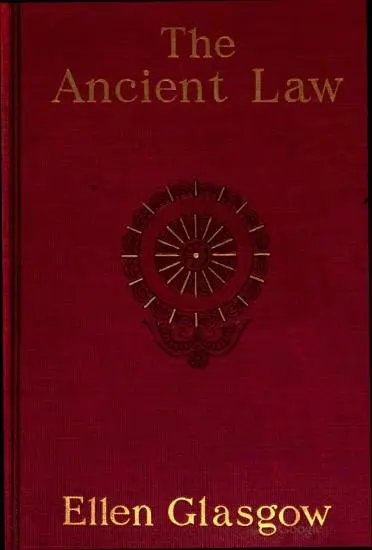
"The Ancient Law" by Ellen Anderson Gholson Glasgow is a novel written in the early 20th century. The story centers around Daniel Ordway, a man recently released from prison, as he navigates his newfound freedom and struggles to reintegrate into society while coping with the remnants of his past. Themes of redemption and the pursuit of a new life amid personal and societal challenges are likely explored throughout the narrative. At the start of the novel, the reader is introduced to Daniel Ordway as he savors the taste of freedom after five years in prison. His initial journey takes him along a desolate Virginia road to the small town of Tappahannock, where he hopes to find work and begin anew. As he reflects on his past—a life of ambition that ended in disgrace—he encounters the realities of poverty and the hardships of those around him, including a kind African American woman who shares her meager food with him. Despite the bleakness of the landscape and his current situation, Ordway is filled with a newfound desire for life, setting the stage for his quest for redemption in this new chapter of his existence.
Introduction adapted from the source catalogue; source summaries may be automatically generated.
Free to read · English · 118,985 words · No account needed
MAKE TIME FOR A GOOD BOOK
On by default. Untick to stop anonymous reading totals. Each page counts after 10 seconds in view. How this works.
Anonymous counting is on unless you have switched it off.
All her old fascination had come back to her with her change of mood, and he forgot to listen to her words while he watched the merriment sparkle in her deep blue eyes. It was a part of his destiny that he should submit to her spell, as, he supposed, even Geoffrey submitted at times.
He was about to make some vague comment upon her story, when her face changed abruptly into an affected gravity, and turning his head, he saw that Lydia had come noiselessly into the room, and was advancing to meet her daughter with outstretched arms.
"Why, Alice, my child, what a beautiful surprise! When did you come?"
As Alice started forward to her embrace, Ordway noticed that there was an almost imperceptible tightening of the muscles of her body.
"Only a few minutes ago," she replied, with the characteristic disregard of time which seemed, in some way, to belong to her inability to consider figures, "and, oh, I am so glad to be back! You are just as lovely as ever."
"Well, you are lovelier," said Lydia, kissing her, and adding a moment afterward, as the result of her quick, woman's glance, "what a charming gown!"
Alice shrugged her shoulders, with a foreign gesture which she had picked up. "Oh, you must see some of my others," she replied, "I wish that my trunks would come, but I forgot they were all sent to the other house, and I haven't even a nightgown. Will you lend me a nightgown, mamma? I have some of the loveliest you ever saw which were embroidered for me by the nuns in a French convent."
"So, you'll spend the night?" said Lydia, "I'm so glad, dear, and I'll go up and see if your bed has sheets on it."
"Oh, it's not only for the night," returned Alice, defiantly, "I've come back for good. I've left Geoffrey, haven't I, papa?"
"I hope so, darling," answered Ordway, coming for the first time over to
where they stood.
"Left Geoffrey?" repeated Lydia. "Do you mean you've separated?"
"I mean I'm never going back again--that I detest him--that I'd rather die--that I'll kill myself before I'll do it."
Lydia received her violence with the usual resigned sweetness that she presented to an impending crisis.
"But, my dear, my dear, a divorce is a horrible thing!" she wailed.
"Well, it isn't half so horrible as Geoffrey," retorted Alice.
Ordway, who had turned away again as Lydia spoke, came forward at the girl's angry words, and caught the hand that she had stretched out as if to push her mother from her.
Your reading position is saved on this browser. Take it to another device with a library code. Reading pages adapt to text, rather than matching a printed edition.
Ellen Anderson Gholson Glasgow

Ellen Anderson Gholson Glasgow

Ellen Anderson Gholson Glasgow

Ellen Anderson Gholson Glasgow
BEHIND THE BOOK
This eBook is for the use of anyone anywhere in the United States and most other parts of the world at no cost and with almost no restrictions whatsoever. You may copy it, give it away or re-use it under the terms of the Project Gutenberg License included with this eBook or online at www.gutenberg.org. If you are not located in the United States, you will have to check the laws of the country where you are located before using this eBook. Read the source licence.
The original source file, including credits and licence, is retained by this library. Request an original-format copy at no charge. Please include the book title and Project Gutenberg identifier #34419.
KEEP YOUR CURIOSITY GOING
Coulson Kernahan

Maurice Baring
Frances Wright
Cécile Tormay

Frederic Jesup Stimson

W. H. P. (William Henry Pope) Jarvis