
Barren Ground
Ellen Anderson Gholson Glasgow
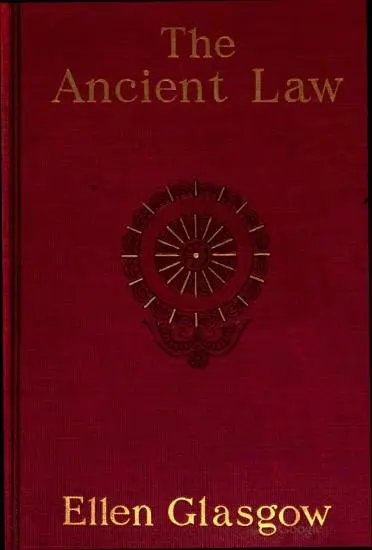
THE CLASSIC COLLECTION · 1908
"The Ancient Law" by Ellen Anderson Gholson Glasgow is a novel written in the early 20th century. The story centers around Daniel Ordway, a man recently released from prison, as he navigates his newfound freedom and struggles to reintegrate into society while coping with the remnants of his past. Themes of redemption and the pursuit of a new life amid personal and societal challenges are likely explored throughout the narrative. At the start of the novel, the reader is introduced to Daniel Ordway as he savors the taste of freedom after five years in prison. His initial journey takes him along a desolate Virginia road to the small town of Tappahannock, where he hopes to find work and begin anew. As he reflects on his past—a life of ambition that ended in disgrace—he encounters the realities of poverty and the hardships of those around him, including a kind African American woman who shares her meager food with him. Despite the bleakness of the landscape and his current situation, Ordway is filled with a newfound desire for life, setting the stage for his quest for redemption in this new chapter of his existence.
Introduction adapted from the source catalogue; source summaries may be automatically generated.
Free to read · English · 118,985 words · No account needed
MAKE TIME FOR A GOOD BOOK
On by default. Untick to stop anonymous reading totals. Each page counts after 10 seconds in view. How this works.
Anonymous counting is on unless you have switched it off.
"I don't want to be hard on you," said Ordway at last; "it's out of the question that you should have Milly Trend, but if you'll give up that idea and go away I'll do what I can to help you--I'll send you half my salary for the next six months until you are able to find a job."
Wherry looked at him with a deliberate wink.
"So you'd like to save your own skin, after all, wouldn't you?" he
inquired.
Taking up his hat from the table, Ordway turned toward the door and laid his hand upon the knob before he spoke.
"Is it decided then that I shall go to Jasper Trend?" he asked.
"Well, I wouldn't if I were you," said Wherry, "but that's your affair. On the whole I think that you'll pay more than your share of the price."
"It's natural, I suppose, that you should want your revenge," returned Ordway, without resentment, "but all the same I shall tell him as little as possible about your past. What I shall say is that I have reason to believe that your wife is still living."
"One or more?" enquired Wherry, with a sneer.
"One, I think, will prove quite sufficient for my purpose."
"Well, go ahead," rejoined Wherry, angrily, "but before you strike you'd better be pretty sure you see a snake in the grass. I'd advise you for your own sake to ask Milly Trend first if she expects to marry me."
"What?" cried Ordway, wheeling round, "do you mean she has refused you?"
"Oh, ask her--ask her," retorted Wherry airily, as he turned back to the
whiskey bottle.
In the street, a moment later, Ordway passed under the red flag, which, inflated by the wind, swelled triumphantly above his head. From the opposite sidewalk a man spoke to him; and then, turning, waved his slouch hat enthusiastically toward the flag. "If he only knew," thought Ordway, looking after him; and the words brought to his imagination what disgrace in Tappahannock would mean in his life. As he passed the dim vacancy of the warehouse he threw toward it a look which was almost one of entreaty. "No, no, it can't be," he insisted, as if to reassure himself, "it is impossible. How could it happen?" And seized by a sudden rage against circumstances, he remembered the windy afternoon upon which he had come for the first time to Tappahannock--the wide stretches of broomsedge; the pale red road, which appeared to lead nowhere; his violent hunger; and the Negro woman who had given him the cornbread at the door of her cabin. A hundred years seemed to have passed since then--no, not a hundred years as men count them, but a dissolution and a resurrection. It was as if his personality--his whole inner structure had dissolved and renewed itself again; and when he thought now of that March afternoon it was with the visual distinctness that belongs to an observer rather than to an actor. His point of view was detached, almost remote. He saw himself from the outside alone--his clothes, his face, even his gestures; and these things were as vivid to him as were the Negro cabin, the red clay road, and the covered wagon that threw its shadow on the path as it crawled by. In no way could he associate his immediate personality either with the scene or with the man who had sat on the pine bench ravenously eating the coarse food. At the moment it seemed to him that he was released, not only from any spiritual bondage to the past, but even from any physical connection with the man he had been then. "What have I to do with Gus Wherry or with Daniel Ordway?" he demanded. "Above all, what in heaven have I to do with Milly Trend?" As he asked the question he flushed with resentment against the girl for whom he was about to sacrifice all that he valued in his life. He thought with disgust of her vanity, her shallowness, her insincerity; and the course that he had planned showed in this sudden light as utterly unreasonable. It struck him on the instant that in going to Wherry he had been a fool. "Yes, I should have thought of that before. I have been too hasty, for what, after all, have I to do with Milly Trend?"
Your reading position is saved on this browser. Take it to another device with a library code. Reading pages adapt to text, rather than matching a printed edition.
Ellen Anderson Gholson Glasgow

Ellen Anderson Gholson Glasgow

Ellen Anderson Gholson Glasgow

Ellen Anderson Gholson Glasgow
BEHIND THE BOOK
This eBook is for the use of anyone anywhere in the United States and most other parts of the world at no cost and with almost no restrictions whatsoever. You may copy it, give it away or re-use it under the terms of the Project Gutenberg License included with this eBook or online at www.gutenberg.org. If you are not located in the United States, you will have to check the laws of the country where you are located before using this eBook. Read the source licence.
The original source file, including credits and licence, is retained by this library. Request an original-format copy at no charge. Please include the book title and Project Gutenberg identifier #34419.
KEEP YOUR CURIOSITY GOING
Coulson Kernahan

Maurice Baring
Frances Wright
Cécile Tormay

Frederic Jesup Stimson

W. H. P. (William Henry Pope) Jarvis