
Barren Ground
Ellen Anderson Gholson Glasgow
THE CLASSIC COLLECTION · 1908
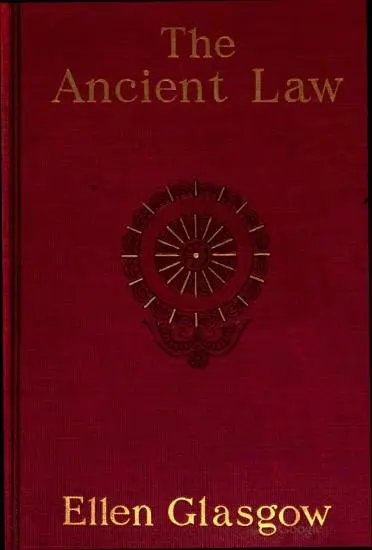
"The Ancient Law" by Ellen Anderson Gholson Glasgow is a novel written in the early 20th century. The story centers around Daniel Ordway, a man recently released from prison, as he navigates his newfound freedom and struggles to reintegrate into society while coping with the remnants of his past. Themes of redemption and the pursuit of a new life amid personal and societal challenges are likely explored throughout the narrative. At the start of the novel, the reader is introduced to Daniel Ordway as he savors the taste of freedom after five years in prison. His initial journey takes him along a desolate Virginia road to the small town of Tappahannock, where he hopes to find work and begin anew. As he reflects on his past—a life of ambition that ended in disgrace—he encounters the realities of poverty and the hardships of those around him, including a kind African American woman who shares her meager food with him. Despite the bleakness of the landscape and his current situation, Ordway is filled with a newfound desire for life, setting the stage for his quest for redemption in this new chapter of his existence.
Introduction adapted from the source catalogue; source summaries may be automatically generated.
Free to read · English · 118,985 words · No account needed
MAKE TIME FOR A GOOD BOOK
On by default. Untick to stop anonymous reading totals. Each page counts after 10 seconds in view. How this works.
Anonymous counting is on unless you have switched it off.
"By Jove!" exclaimed Ordway, and the moment afterward, "Come, now, out with it, Banks. How has she been behaving this time?"
Banks lowered his voice, while he glanced suspiciously up at the branches of the cherry tree beneath which they sat.
"She hates the sight of me," he answered, with a groan.
"Nonsense," rejoined Ordway, cheerfully. "Love has before now worn the
mask of scorn."
"But it hasn't worn the mask of boredom," retorted the despairing Banks.
For a minute his answer appeared final even to Ordway, who stared blankly over the ripened cornfield across the road, without, for the life of him, being able to frame a single encouraging sentence in reply.
"If it's the last word I speak," pursued Banks, biting desperately at the stem of his pipe, "she cannot abide the sight of me."
"But how does she show it?" demanded Ordway, relieved that he was not expected to combat the former irrefutable statement.
"She tried to keep me away from the springs where she went, and when I would follow her, whether or no, she hardly opened her mouth to me for the first two days. Then if I asked her to go to walk she would say it was too hot for walking, and if I asked her to drive she'd answer that she didn't drive with men. As if she and I hadn't been together in a dog-cart over every road within twenty miles of Tappahannock!"
"But perhaps the custom of the place was different?"
"No, sir, it was not custom that kept her," replied Banks, in a bitterness that scorned deception, "for she went with others. It was the same thing about dancing, too, for if I asked her to dance, she would always declare that she didn't have the strength to use her fan, and the minute after I went away, I'd see her floating round the ball-room in somebody else's arms. Once I did get her to start, but she left off after the first round, because, she said, we could not keep in step. And yet I'd kept in step with her ever since we went on roller skates together."
He broke off for an instant, knocked the cold ashes out of his pipe, and plucking a long blade of grass, began chewing it nervously as he talked.
"And yet if you could only have seen her when she came down to the ball-room in her white organdie and blue ribbons," he exclaimed presently, in an agony of recollection.
"Well, I'm rather glad on the whole that I didn't," rejoined Ordway.
"You'd have fallen in love with her if you had--you couldn't have helped
it."
Your reading position is saved on this browser. Take it to another device with a library code. Reading pages adapt to text, rather than matching a printed edition.
Ellen Anderson Gholson Glasgow

Ellen Anderson Gholson Glasgow

Ellen Anderson Gholson Glasgow

Ellen Anderson Gholson Glasgow
BEHIND THE BOOK
This eBook is for the use of anyone anywhere in the United States and most other parts of the world at no cost and with almost no restrictions whatsoever. You may copy it, give it away or re-use it under the terms of the Project Gutenberg License included with this eBook or online at www.gutenberg.org. If you are not located in the United States, you will have to check the laws of the country where you are located before using this eBook. Read the source licence.
The original source file, including credits and licence, is retained by this library. Request an original-format copy at no charge. Please include the book title and Project Gutenberg identifier #34419.
KEEP YOUR CURIOSITY GOING
Coulson Kernahan

Maurice Baring
Frances Wright
Cécile Tormay

Frederic Jesup Stimson

W. H. P. (William Henry Pope) Jarvis