THE CLASSIC COLLECTION✦The anatomy of plantsCLASSIC FREE BOOKS
The anatomy of plants
Nehemiah Grew
THE CLASSIC COLLECTION · 1672
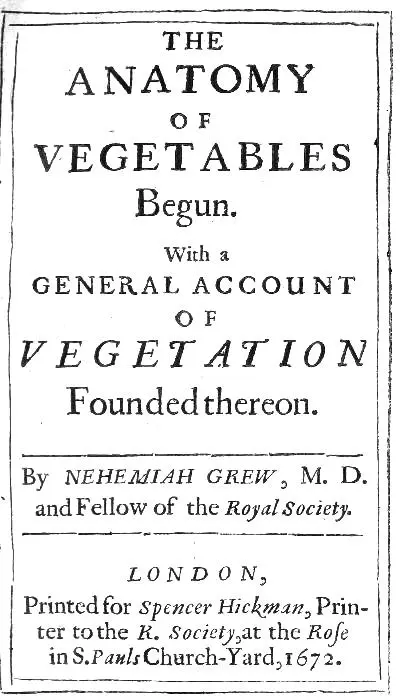
"The Anatomy of Vegetables Begun" by Nehemiah Grew is a scientific publication written in the late 17th century. The work delves into the anatomical structure and functions of plants, particularly focusing on the process of vegetation from seed to plant. Grew presents detailed observations and dissections of various vegetable parts, emphasizing the underlying principles of plant growth. At the start of this treatise, Grew outlines his methodology and intentions, emphasizing the lack of prior comprehensive work on vegetable anatomy compared to animal anatomy. He introduces the garden bean as a primary subject for dissection, detailing its layers and internal structures. The opening chapters describe the anatomy of the seed, including its coats, main structures, and the roles of the radicle and plume in the growth of the plant. Grew encourages a systematic examination of vegetable anatomy to enhance understanding of the natural processes governing plant life.
Introduction adapted from the source catalogue; source summaries may be automatically generated.
Free to read · English · 29,010 words · No account needed
MAKE TIME FOR A GOOD BOOK
On by default. Untick to stop anonymous reading totals. Each page counts after 10 seconds in view. How this works.
Anonymous counting is on unless you have switched it off.
The Skin, its original. 67. The original of the Cortical Body. 67. Of the lignous. 68. Of the Insertment and Pith. 68. The Latitudinal Shooting of the lignous Body, wherein observable. 69. The Pores of the lignous Body, where and how most remarkable. 70. The Pith of the same Pores. 70. A lesser sort of Pores. 71. A third sort only visible through a Microscope. Observed in Wood or Char-coal. 71. Observed in the Fibres of the Trunks of Plants. 72. 73. The Insertions where more visible. 73, 74. The smaller Insertions, only visible through a Microscope. 74, 75. The Pores of the Insertions. 76. Of the Pith. 77, 79.
How the Trunk ascends. 80. 81. The disposition of its Parts consequent to that Ascent. 81, 82. Consequent to the different Nature of the Sap. 83, 84. The effects of the said Differences. 84, 89. Which way, and how the Sap ascends. 89-98.
The Appendix.
Of Trunk-Roots and Claspers.
Trunk-Roots of two kinds. 99. Claspers of one kind. 100. The use of
both. 100, 103.
Of the Germen, Branch, and Leaf.
The Parts of the Germen and Branch the same with those of the Trunk. 104, 105. The manner of their growth. 105, 107. How nourished. 107. And the use of Knots. 108. How secur’d. 109. The Parts of a Leaf. 110. The Positions the Fibres of the Stalks of Leaves. 110, 111. The visible cause of the different shape of Leaves. 112. And of their being flat. 113. The Foulds of Leaves, their kinds and Use. 114-118. The Protections of Leaves. 119, 120. The use of the Leaf. 120, 123.
The Appendix.
Of Thorns, Hairs and Globulets.
Thorns of two kinds. 124, 125. Hairs of divers. 126. Their use. 127. Globulets of two kinds. 128.
Of the Flower.
Its Impalement of divers kinds. 129, 130. Their use. 130, 132. The Foliation, its nature. 132. Foulds. 133, 134. Protections. 135. Downs. 135. Globulets. 136. Its Use. 137, 139. The Attire of two kinds. The Description of the first. 140, 142. Of the other. 143, 145. Their use. 145-148.
Of the Fruit.
The Number, Description, and Original of the Parts of an Apple. 149-152. Of a Pear. 153, 155. Of a Plum. 155-159. Of a Nut. 159, 161. Of a Berry. 161, 162. The use of the Fruit. 163-167.
Of the Seed in its state of Generation.
The Case, its Figures. 168. The outer Coat, its Figures. 170. Various Surface. 170, 171. And Mucilages. 171, 172. The nature of the outer Coat. 172. Its Original. 173, 174. The Original of the inner. 174. Its Nature. 175, 176. The Secondine. 177, 178. The Colliquamentum herein. 178. The Navel Fibres. 179, 180.
In the Generation of the Seed, the Sap first prepared in the Seed-Branch. 181. Next in the inner Coat. 182. With the help of the outer. 182. The use of the Secondine. 183, 184. Of the Ramulets of the Seed-Branch. ib. Of their Inosculation. ib. How the Colliquamentum becometh a Parenchyma. 185, 186.
Cl. Glissonius in Prolegomenis præfixis Libro de Hepatis Anatomia, c.
1.
Your reading position is saved on this browser. Take it to another device with a library code. Reading pages adapt to text, rather than matching a printed edition.
BEHIND THE BOOK
This eBook is for the use of anyone anywhere in the United States and most other parts of the world at no cost and with almost no restrictions whatsoever. You may copy it, give it away or re-use it under the terms of the Project Gutenberg License included with this eBook or online at www.gutenberg.org. If you are not located in the United States, you will have to check the laws of the country where you are located before using this eBook. Read the source licence.
The original source file, including credits and licence, is retained by this library. Request an original-format copy at no charge. Please include the book title and Project Gutenberg identifier #58138.
KEEP YOUR CURIOSITY GOING

John Muir

Asa Gray
Asa Gray

Florence Nightingale
Elizabeth Robins Pennell
Denison Olmsted