READ · DISCOVER · ENJOYClassic literature · Always free
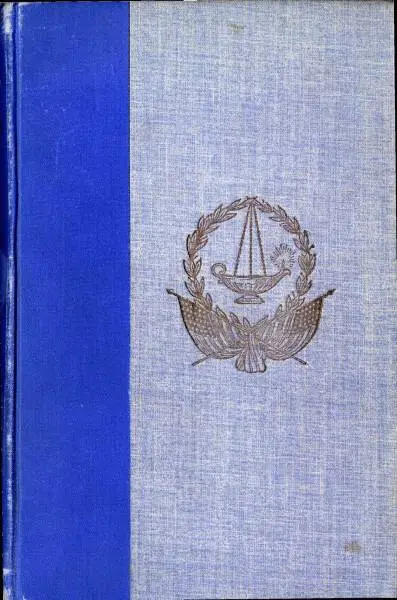
The American Jew as Patriot, Soldier and Citizen — digital edition cover

THE CLASSIC COLLECTION · 1895

The American Jew as Patriot, Soldier and Citizen

"The American Jew as Patriot, Soldier and Citizen" by Simon Wolf is a historical account written in the late 19th century. This work seeks to highlight the contributions of Jewish individuals to American history, particularly during key conflicts such as the Revolutionary War and the Civil War. The book aims to combat prevailing prejudices by documenting the vital role that Jews played in the establishment and defense of the United States, emphasizing their patriotism and commitment as citizens. The opening of the text presents an editor's preface that lays the groundwork for the book's purpose—challenging misconceptions about Jewish loyalty and service through a detailed examination of historical facts and records. It introduces readers to the context of rising anti-Semitism in the late 19th century and outlines Wolf’s motivation to compile evidence that demonstrates the contributions of Jewish soldiers and citizens to the nation. The preface suggests that the author accessed numerous historical documents and testimonies, aiming to create a comprehensive account that honors the sacrifices made by Jewish patriots in American history.

Introduction adapted from the source catalogue; source summaries may be automatically generated.

Start reading ↓

Free to read · English · 156,503 words · No account needed

MAKE TIME FOR A GOOD BOOK

The American Jew as Patriot, Soldier and Citizen

On by default. Untick to stop anonymous reading totals. Each page counts after 10 seconds in view. How this works.

Anonymous counting is on unless you have switched it off.

The American Jew as Patriot, Soldier and Citizen

Under these circumstances I felt myself impelled to reply to the writer in the North American Review, and at once sent to that magazine a letter embodying a statement of a few indisputable facts bearing on the subject. This statement the publishers of the magazine declined to print on the ground that they had received so many articles on the subject that they could not undertake to discriminate in favor of any one of them, and that they would therefore publish none. My cursorily compiled citations were, however, published at the time in the Washington Post, and as germane to my present subject I reprint them in the main, as follows:--

"Has this much-traveled and keen observer, Mr. Rogers, ever heard of General Edward S. Salomon, who enlisted as Lieutenant-Colonel of the 82d Illinois? He became Colonel of the regiment after Colonel Frederick Hecker's retirement, was made Brigadier-General, was subsequently appointed by General Grant governor of Washington Territory, and, at present residing in San Francisco, has been Department Commander of the Grand Army of the Republic, and is recognized as one of the bravest and most gallant officers that ever sat in saddle. This encomium I have from the lips of General Grant himself, and it will be cheerfully endorsed by General O. O. Howard, or by any of the officers yet living who served with him. In the same regiment, as I have learned from General Salomon, were more than one hundred private soldiers and subalterns of Jewish faith. General L. C. Newman, of the city of New York, who was fatally wounded in the first battle of the Rebellion, died in the city of Washington, while President Lincoln, who had brought Newman's commission as Brevet Brigadier-General, was with him at his bedside. General Leopold Blumenberg, of Baltimore, who, as Major of his regiment, was severely wounded at the battle of Antietam, and crippled for life and who was subsequently brevetted for his meritorious services, was one of the most loyal and brave of officers. Colonel M. M. Spiegel, of the 120th Ohio, who was severely wounded before Vicksburg, was entreated to retire from the army, but continued in the service and was killed in the campaign of General Banks, in Louisiana. Lieutenant Sachs, of the 32d Indiana, in command of a company of his regiment at Green River, in 1862, stood single-handed and alone against a company of Texas Rangers, and after killing and wounding eight of his assailants, fell riddled to death. His heroism and bravery had meanwhile given the command time to rally, and they thereupon dispersed the enemy. Captain A. Hart, of the 73d Pennsylvania, now of this city, who was Adjutant of his regiment, was severely wounded in the early part of the war, and is now a pensioner of the United States. Lieutenant Henry Franc, of the Kansas Volunteers, living in this city to-day, did splendid service. Judge. P. J. Joachimson, Lieutenant-Colonel of the 59th New York; Isidore Pinkson, Henry Pinkson and Moses Landauer, of the 110th New York; Captain Lyon and Lieutenant Ababot, of the 5th New York Cavalry; Theodore Wise, of the same regiment; Herman White, and A. T. Gross, of the 2d Maryland, and I. Feldstein, now a member of Koltes Post, New York, acquitted themselves with ample credit in their respective spheres. The 11th New York was more than half composed of men of Jewish faith. In the 2d Pennsylvania Artillery, serving under Captain R. M. Goundy, who lives in this city, there were three Jewish soldiers; Lieutenant Liebschutz, who served throughout the war and was promoted for gallantry on the field, now living in this city to-day; Leo Karpeles, who is now a clerk in the Post Office Department, to whom a special medal was awarded by Congress for bravery and for the capture with his own hands of rebel flags on the field of battle, and Simon Stern, who died lately in this city and whose widow has been granted a pension. George Stern, who died from disease contracted in the service, also left a widow, now pensioned. Dr. A. Behrend, of this city, who served in our army with great ability, not only as a hospital steward, but as an officer in the field, tells me that in 1863 a general order was issued permitting Jews to be furloughed over their Holy Days, and that at Fairfax Seminary he furloughed eleven on that occasion. Dr. Herman Bendall, of Albany, a prominent citizen of that city, was promoted to the grade of Lieutenant-Colonel in recognition of his meritorious services and was subsequently appointed by General Grant superintendent of Indian affairs of Arizona. Jacob Hirsch, of this city, died from disease contracted in the service and his orphan children are now receiving a pension for their father's sacrifice; Captain Cohn, of New York City, now connected with the Baron de Hirsch Trust Fund, was as brave an officer as ever did duty. M. L. Peixotto, of the 103 Ohio (a brother of the well-known Benjamin F. Peixotto), died last year in consequence of wounds received and disease contracted in the service. Mr. Bruckheimer, now a practicing physician in this city, Charles Raum, one of our leading merchants, Mr. Hoffa, Sol Livingston, M. Erdman, M. Augenstein, and S. Goodman, all of this city, Edward S. Woog, a clerk in the Interior Department; Morris Cohen, clerk in the War Department; Henry Blondheim, of Alexandria, Va., were soldiers in the late war. Captain Morris Lewis, of the 18th New York Cavalry, now living in this city, served on General Kearney's staff; he receives a special pension, having been shot through the body and paralyzed in his lower limbs. August Bruckner was killed at the second battle of Bull Run. Colonel M. Einstein and Colonel M. Friedman, both of Philadelphia, commanded regiments; Uriah P. Levy was Commodore of the United States Navy. Jacob Hayes, of the city of New York, Mr. Phillips, son of the sexton of the Portuguese congregation of that city, E. J. Russell, of the 19th Indiana, a resident of this city, and so severely wounded as to render him almost incapable of work; L. Myers, of the same regiment, and Julius Steinmeyer, of the 7th United States Infantry "stood shoulder to shoulder" at the front. General William Meyer, editor of several New York papers, served with credit and distinction during the draft riots in the city of New York, and has in his possession an autograph letter from President Lincoln thanking him for his eminent services during those hours of darkness. William Durst, of Philadelphia, is one of the few survivors of the memorable fight between the Monitor and the Merrimac; when volunteers were called for he went to his duty with death staring him in the face, and Admiral Worden himself told me some months ago that Durst was a man of distinguished bravery, whose services should be specially recognized by Congress. Major Joseph G. Rosengarten, of Philadelphia, is a soldier of national reputation and an author of ability, whose brother Adolph G. Rosengarten was killed at Stone River while acting as staff officer. Quartermaster Rosenfield, of the 13th Kansas, not only discharged the duties of that office with ability, but served also in the ranks. Lieutenant Rosenberg, of this city, is now dead, and his widow is pensioned. Colonel H. A. Seligson, who died some two months ago, led a Vermont regiment during the war, and achieved a high reputation as a soldier. Captain Frederick Leavy, of the 1st New York Infantry; Captain Max Conheim, of New York, and now of San Francisco, and Major H. Koenigsberger, of Cincinnati, were officers of distinction, and so, too, were David Ezekiel and Lieutenant Louis Blumenthal, of New Hampshire. Sergeant Elias Leon Hyneman, of the 5th Pennsylvania Cavalry, was one of the heroes of the war, in which he served from the beginning. In June, 1864, during a cavalry sortie about Petersburg, while his command was retreating before the main body of the enemy, he hurried to the relief of a dismounted and wounded comrade. He lifted him into his own saddle and enabled him to escape, and started to make his own way on foot. On his way he met another comrade, barefooted and bleeding; he took off his own boots and gave them to the sufferer. But he himself was captured, and after months of agony in Andersonville, he died.

Your reading position is saved on this browser. Take it to another device with a library code. Reading pages adapt to text, rather than matching a printed edition.

BEHIND THE WORDS

About Simon Wolf

Simon Wolf (1836–1923). Explore The American Jew as Patriot, Soldier and Citizen in this collection. These books span history.

Explore this author’s books →

THE READERS’ VERDICT

How did this story stay with you?

Not rated yet
Your rating for The American Jew as Patriot, Soldier and Citizen

Be the first to share your verdict.

One rating per browser, which you can change or remove. A necessary browser identifier remembers your vote. How ratings work

A GOOD STORY DESERVES COMPANY

Pass this book along.

A great read is even better when it’s shared.

SEND A LITTLE INSPIRATION

Share this book

BEHIND THE BOOK

Edition & source details.

Title
The American Jew as Patriot, Soldier and Citizen
Author
Simon Wolf
First publication (Open Library catalogue match)
1895
Digital edition publisher
Project Gutenberg
Gutenberg release date
2014-10-16
Language
English
Source edition imprint
Not stated in source catalogue
Source identifier
Project Gutenberg #47135
Contributors
Louis Edward Levy (edt)

Public-domain source & licence

This eBook is for the use of anyone anywhere in the United States and most other parts of the world at no cost and with almost no restrictions whatsoever. You may copy it, give it away or re-use it under the terms of the Project Gutenberg License included with this eBook or online at www.gutenberg.org. If you are not located in the United States, you will have to check the laws of the country where you are located before using this eBook. Read the source licence.

Full source licence and obtaining an original copy

The original source file, including credits and licence, is retained by this library. Request an original-format copy at no charge. Please include the book title and Project Gutenberg identifier #47135.

the full Project Gutenberg License must appear
prominently whenever any copy of a Project Gutenberg work (any work
on which the phrase “Project Gutenberg” appears, or with which the
phrase “Project Gutenberg” is associated) is accessed, displayed,
performed, viewed, copied or distributed:

This eBook is for the use of anyone anywhere in the United States and most
other parts of the world at no cost and with almost no restrictions
whatsoever. You may copy it, give it away or re-use it under the terms
of the Project Gutenberg™ License included with this eBook or online
at www.gutenberg.org. If you
are not located in the United States, you will have to check the laws
of the country where you are located before using this eBook.

1.E.2. If an individual Project Gutenberg electronic work is
derived from texts not protected by U.S. copyright law (does not
contain a notice indicating that it is posted with permission of the
copyright holder), the work can be copied and distributed to anyone in
the United States without paying any fees or charges. If you are
redistributing or providing access to a work with the phrase “Project
Gutenberg” associated with or appearing on the work, you must comply
either with the requirements of paragraphs 1.E.1 through 1.E.7 or
obtain permission for the use of the work and the Project Gutenberg
trademark as set forth in paragraphs 1.E.8 or 1.E.9.

1.E.3. If an individual Project Gutenberg electronic work is posted
with the permission of the copyright holder, your use and distribution
must comply with both paragraphs 1.E.1 through 1.E.7 and any
additional terms imposed by the copyright holder. Additional terms
will be linked to the Project Gutenberg License for all works
posted with the permission of the copyright holder found at the
beginning of this work.

1.E.4. Do not unlink or detach or remove the full Project Gutenberg
License terms from this work, or any files containing a part of this
work or any other work associated with Project Gutenberg.

1.E.5. Do not copy, display, perform, distribute or redistribute this
electronic work, or any part of this electronic work, without
prominently displaying the sentence set forth in paragraph 1.E.1 with
active links or immediate access to the full terms of the Project
Gutenberg License.

1.E.6. You may convert to and distribute this work in any binary,
compressed, marked up, nonproprietary or proprietary form, including
any word processing or hypertext form. However, if you provide access
to or distribute copies of a Project Gutenberg work in a format
other than “Plain Vanilla ASCII” or other format used in the official
version posted on the official Project Gutenberg website
(www.gutenberg.org), you must, at no additional cost, fee or expense
to the user, provide a copy, a means of exporting a copy, or a means
of obtaining a copy upon request, of the work in its original “Plain
Vanilla ASCII” or other form. Any alternate format must include the
full Project Gutenberg License as specified in paragraph 1.E.1.

1.E.7. Do not charge a fee for access to, viewing, displaying,
performing, copying or distributing any Project Gutenberg works
unless you comply with paragraph 1.E.8 or 1.E.9.

1.E.8. You may charge a reasonable fee for copies of or providing
access to or distributing Project Gutenberg electronic works
provided that:

• You pay a royalty fee of 20% of the gross profits you derive from
the use of Project Gutenberg works calculated using the method
you already use to calculate your applicable taxes. The fee is owed
to the owner of the Project Gutenberg trademark, but he has
agreed to donate royalties under this paragraph to the Project
Gutenberg Literary Archive Foundation. Royalty payments must be paid
within 60 days following each date on which you prepare (or are
legally required to prepare) your periodic tax returns. Royalty
payments should be clearly marked as such and sent to the Project
Gutenberg Literary Archive Foundation at the address specified in
Section 4, “Information about donations to the Project Gutenberg
Literary Archive Foundation.”

• You provide a full refund of any money paid by a user who notifies
you in writing (or by e-mail) within 30 days of receipt that s/he
does not agree to the terms of the full Project Gutenberg™
License. You must require such a user to return or destroy all
copies of the works possessed in a physical medium and discontinue
all use of and all access to other copies of Project Gutenberg™
works.

• You provide, in accordance with paragraph 1.F.3, a full refund of
any money paid for a work or a replacement copy, if a defect in the
electronic work is discovered and reported to you within 90 days of
receipt of the work.

• You comply with all other terms of this agreement for free
distribution of Project Gutenberg™ works.


1.E.9. If you wish to charge a fee or distribute a Project
Gutenberg™ electronic work or group of works on different terms than
are set forth in this agreement, you must obtain permission in writing
from the Project Gutenberg Literary Archive Foundation, the manager of
the Project Gutenberg™ trademark. Contact the Foundation as set
forth in Section 3 below.

1.F.

1.F.1. Project Gutenberg volunteers and employees expend considerable
effort to identify, do copyright research on, transcribe and proofread
works not protected by U.S. copyright law in creating the Project
Gutenberg™ collection. Despite these efforts, Project Gutenberg™
electronic works, and the medium on which they may be stored, may
contain “Defects,” such as, but not limited to, incomplete, inaccurate
or corrupt data, transcription errors, a copyright or other
intellectual property infringement, a defective or damaged disk or
other medium, a computer virus, or computer codes that damage or
cannot be read by your equipment.

1.F.2. LIMITED WARRANTY, DISCLAIMER OF DAMAGES - Except for the “Right
of Replacement or Refund” described in paragraph 1.F.3, the Project
Gutenberg Literary Archive Foundation, the owner of the Project
Gutenberg™ trademark, and any other party distributing a Project
Gutenberg™ electronic work under this agreement, disclaim all
liability to you for damages, costs and expenses, including legal
fees. YOU AGREE THAT YOU HAVE NO REMEDIES FOR NEGLIGENCE, STRICT
LIABILITY, BREACH OF WARRANTY OR BREACH OF CONTRACT EXCEPT THOSE
PROVIDED IN PARAGRAPH 1.F.3. YOU AGREE THAT THE FOUNDATION, THE
TRADEMARK OWNER, AND ANY DISTRIBUTOR UNDER THIS AGREEMENT WILL NOT BE
LIABLE TO YOU FOR ACTUAL, DIRECT, INDIRECT, CONSEQUENTIAL, PUNITIVE OR
INCIDENTAL DAMAGES EVEN IF YOU GIVE NOTICE OF THE POSSIBILITY OF SUCH
DAMAGE.

1.F.3. LIMITED RIGHT OF REPLACEMENT OR REFUND - If you discover a
defect in this electronic work within 90 days of receiving it, you can
receive a refund of the money (if any) you paid for it by sending a
written explanation to the person you received the work from. If you
received the work on a physical medium, you must return the medium
with your written explanation. The person or entity that provided you
with the defective work may elect to provide a replacement copy in
lieu of a refund. If you received the work electronically, the person
or entity providing it to you may choose to give you a second
opportunity to receive the work electronically in lieu of a refund. If
the second copy is also defective, you may demand a refund in writing
without further opportunities to fix the problem.

1.F.4. Except for the limited right of replacement or refund set forth
in paragraph 1.F.3, this work is provided to you ‘AS-IS’, WITH NO
OTHER WARRANTIES OF ANY KIND, EXPRESS OR IMPLIED, INCLUDING BUT NOT
LIMITED TO WARRANTIES OF MERCHANTABILITY OR FITNESS FOR ANY PURPOSE.

1.F.5. Some states do not allow disclaimers of certain implied
warranties or the exclusion or limitation of certain types of
damages. If any disclaimer or limitation set forth in this agreement
violates the law of the state applicable to this agreement, the
agreement shall be interpreted to make the maximum disclaimer or
limitation permitted by the applicable state law. The invalidity or
unenforceability of any provision of this agreement shall not void the
remaining provisions.

1.F.6. INDEMNITY - You agree to indemnify and hold the Foundation, the
trademark owner, any agent or employee of the Foundation, anyone
providing copies of Project Gutenberg™ electronic works in
accordance with this agreement, and any volunteers associated with the
production, promotion and distribution of Project Gutenberg™
electronic works, harmless from all liability, costs and expenses,
including legal fees, that arise directly or indirectly from any of
the following which you do or cause to occur: (a) distribution of this
or any Project Gutenberg work, (b) alteration, modification, or
additions or deletions to any Project Gutenberg work, and (c) any
Defect you cause.

Section 2. Information about the Mission of Project Gutenberg

Project Gutenberg is synonymous with the free distribution of
electronic works in formats readable by the widest variety of
computers including obsolete, old, middle-aged and new computers. It
exists because of the efforts of hundreds of volunteers and donations
from people in all walks of life.

Volunteers and financial support to provide volunteers with the
assistance they need are critical to reaching Project Gutenberg’s
goals and ensuring that the Project Gutenberg collection will
remain freely available for generations to come. In 2001, the Project
Gutenberg Literary Archive Foundation was created to provide a secure
and permanent future for Project Gutenberg and future
generations. To learn more about the Project Gutenberg Literary
Archive Foundation and how your efforts and donations can help, see
Sections 3 and 4 and the Foundation information page at www.gutenberg.org.

Section 3. Information about the Project Gutenberg Literary Archive Foundation

The Project Gutenberg Literary Archive Foundation is a non-profit
501(c)(3) educational corporation organized under the laws of the
state of Mississippi and granted tax exempt status by the Internal
Revenue Service. The Foundation’s EIN or federal tax identification
number is 64-6221541. Contributions to the Project Gutenberg Literary
Archive Foundation are tax deductible to the full extent permitted by
U.S. federal laws and your state’s laws.

The Foundation’s business office is located at 41 Watchung Plaza #516,
Montclair NJ 07042, USA, +1 (862) 621-9288. Email contact links and up
to date contact information can be found at the Foundation’s website
and official page at www.gutenberg.org/contact

Section 4. Information about Donations to the Project Gutenberg
Literary Archive Foundation

Project Gutenberg™ depends upon and cannot survive without widespread
public support and donations to carry out its mission of
increasing the number of public domain and licensed works that can be
freely distributed in machine-readable form accessible by the widest
array of equipment including outdated equipment. Many small donations
($1 to $5,000) are particularly important to maintaining tax exempt
status with the IRS.

The Foundation is committed to complying with the laws regulating
charities and charitable donations in all 50 states of the United
States. Compliance requirements are not uniform and it takes a
considerable effort, much paperwork and many fees to meet and keep up
with these requirements. We do not solicit donations in locations
where we have not received written confirmation of compliance. To SEND
DONATIONS or determine the status of compliance for any particular state
visit www.gutenberg.org/donate.

While we cannot and do not solicit contributions from states where we
have not met the solicitation requirements, we know of no prohibition
against accepting unsolicited donations from donors in such states who
approach us with offers to donate.

International donations are gratefully accepted, but we cannot make
any statements concerning tax treatment of donations received from
outside the United States. U.S. laws alone swamp our small staff.

Please check the Project Gutenberg web pages for current donation
methods and addresses. Donations are accepted in a number of other
ways including checks, online payments and credit card donations. To
donate, please visit: www.gutenberg.org/donate.

Section 5. General Information About Project Gutenberg electronic works

Professor Michael S. Hart was the originator of the Project
Gutenberg concept of a library of electronic works that could be
freely shared with anyone. For forty years, he produced and
distributed Project Gutenberg eBooks with only a loose network of
volunteer support.

Project Gutenberg eBooks are often created from several printed
editions, all of which are confirmed as not protected by copyright in
the U.S. unless a copyright notice is included. Thus, we do not
necessarily keep eBooks in compliance with any particular paper
edition.

Most people start at our website which has the main PG search
facility: www.gutenberg.org.

This website includes information about Project Gutenberg,
including how to make donations to the Project Gutenberg Literary
Archive Foundation, how to help produce our new eBooks, and how to
subscribe to our email newsletter to hear about new eBooks.


KEEP YOUR CURIOSITY GOING

Your next chapter awaits.

Your privacy choices

Reading is always free. You can change these settings at any time.

Book banners link to our books on simonward.net. They do not use advertising cookies or tracking.

Privacy & cookie policy · Reading data and privacy controls